A recording of a class playing together can be useful evidence. Its value depends on whether the teacher can explain what the pupils have learned, which parts still need help and what happened next. Filling a folder with recordings does not settle any of those questions.
For music leads in England's maintained schools and academies, the useful preparation is a clear account of everyday teaching and access to music. There is no special Ofsted music evidence folder to assemble. The current school inspection toolkit says evidence mainly comes from professional conversations and observing ordinary school work; it does not require specially produced inspection documents or a particular presentation format.
What the current guidance actually says
This post uses the inspection materials in force from September 2026, checked in November. Their scope is state-funded school inspection in England. A private instrumental academy or conservatoire should not treat them as its own inspection rules.
The immediate music discussion came from Music Mark’s account of its 6 October Ofsted update, published on 8 October. It reports that inspectors do not require written assessment for music and do not request music development plans. It also distinguishes these points from a school's own assessment policy. That is helpful clarification from the event organiser, rather than a new legal requirement.
The current inspection operating guide describes evidence gathering through professional dialogue, learning walks, pupils' work and discussions, and case sampling. Preparing a set of polished answers to supposed music “deep-dive questions” risks missing the actual teaching and provision leaders need to explain.
Schools still have documents they must make available. The inspection information for schools lists strategic, operational, attendance, behaviour and safeguarding information required by the first morning. A music department does not need to duplicate those central records or turn sensitive information into a presentation.
Required, useful or a local choice?
The distinction matters when someone asks a teacher to produce another spreadsheet. Establish who needs it and what decision it supports before calling it an inspection requirement.
| Record or activity | Its status | A sensible use |
|---|---|---|
| The school's required inspection information | Required under the inspection information guidance; available by 8am on the first day. | Work through the school's established arrangements. The full list belongs with the inspection lead. |
| A special music evidence folder or new presentation format | Not required by the toolkit. | Make existing material easy to find when it explains a real example. |
| Written music assessment and records of verbal feedback | Written music assessment is not an Ofsted requirement in Music Mark’s account. Written proof of oral feedback is also excluded from the documents schools need to provide. | A school may have its own recording policy. Discuss its purpose and workload locally; do not silently disregard it. |
| A music development plan summary on the website | DfE asks schools to publish a summary and update it before each academic year. Its template is not mandatory. | Help families understand the offer and explain what the school intends to improve. |
| Recordings, repertoire lists and brief teaching notes | Possible working records. The 2023 music subject report cautions against collecting recordings merely to prove activities happened. | Retain material that helps a teacher revisit learning, adjust teaching or explain a particular change. |
| A choir register or club participation total | An ordinary local record; it answers a different question from assessment of musical learning. | Check who joins, who cannot attend and whether a change to provision has helped. |
The toolkit also says inspectors will not review internal assessment data, although they may discuss how leaders use it and the decisions it informs. That does not mean inspectors ignore all data: published outcomes and the required school records are different. See the achievement section, page 29.
A conversation that gets beyond “we covered rhythm”
Consider a class learning to sustain a short repeated accompaniment while another group plays a melody. The accompaniment is an ostinato: a pattern that repeats. The musical difficulty is keeping that pattern going when a different rhythm enters, then balancing the sound so the melody can be heard.
The following conversation between a class teacher and a music lead is fictional. It illustrates a useful review of teaching, not an inspection transcript or a list of questions inspectors will ask.
Music lead: What did you want the pupils to be able to do by this point?
Class teacher: Keep the four-beat accompaniment steady while the melody enters. Last term they could copy the pattern and play it together with me. This time I wanted them to keep their own part when they could hear something different.
Music lead: What did you hear in the first attempt?
Class teacher: The accompaniment was secure on its own. When the melody started, several players copied its rhythm. Some recovered when I tapped the pulse, so I knew the pattern was familiar, but they still depended on my cue to keep it going.
Music lead: What did you change?
Class teacher: I kept the same accompaniment and shortened the melody. We alternated listening and playing, then tried two small groups together. I began with the pulse cue and gradually stopped giving it. Changing the piece would have added new notes before we had solved the listening problem.
Music lead: Did the whole class improve?
Class teacher: The group sound became steadier, but that did not tell me enough about every pupil. I listened to smaller groups and changed who was next to whom. A few pupils could sustain the part independently. Others managed it with a partner but lost it when the melody became louder.
Music lead: So what comes next?
Class teacher: More chances for those pupils to hold the accompaniment with a shorter, quieter melody. With the pupils who can already do that, I will work on balancing the two parts and recovering together after a mistake. Then we can try the skill in another piece.
There is enough musical detail here to understand both the progress and its limits. The teacher distinguishes copying a familiar pattern from maintaining it independently. They identify a particular listening demand, explain an adjustment and avoid claiming that a successful class performance proves every pupil can do the same thing alone.
A repertoire list would provide some context, but the title of the piece would not explain this development. Nor would a tick beside “ensemble work”. The useful account connects the music selected with the skill being developed and the pupils' actual response.
Ofsted's 2023 music subject report found examples of assessment focused on whether activities had been completed, alongside recordings kept without a clear teaching purpose. Those are findings from visits in 2022–23, not a new 2026 study. The fictional lesson above shows a practical alternative: listen for a defined musical change, then use what you hear.
When a recording earns its place
For that lesson, a short recording could help the teacher and music lead hear the moment the melody disrupts the accompaniment. A later attempt could help them judge whether the change in teaching made a difference. Record the passage that answers the question; a ten-minute video of everyone finding an instrument may add little.
The comparison needs context. If the second recording has a slower tempo, a stronger pupil playing the exposed part or the teacher audibly doubling the accompaniment, the improvement may be real but narrower than it first sounds. A brief note can preserve that distinction without creating a transcript of the lesson.
A possible working note: Repeated accompaniment holds when the melody enters in the smaller groups. Several pupils still need a pulse cue in the full class. Next lesson: keep the pattern, reduce the melodic distraction and listen again without the cue.
This is an example of a note that could help the next lesson, not a required wording or weekly form. Sometimes the teacher already remembers the issue and the next lesson plan captures the response. Sometimes a recording lets colleagues hear something that would be difficult to describe. Choose the record for that purpose.
Use the school's existing arrangements for recording, storage and access. There is no need to upload identifiable pupil performances publicly to make them useful for teaching. A recording that serves an internal discussion and a performance shared with families are different decisions.
Similar care helps with individual instrumental lessons. A pupil who can play a phrase accurately after several prompts has achieved something, but “independent performance” would overstate it. Our examples of end-of-term music reports show how to describe that kind of distinction clearly for families.
Look at who can take part in the school's musical life
A busy concert calendar can sit alongside barriers that are easy to miss. A choir may be open to everyone on paper while its rehearsal time excludes pupils who rely on a particular bus. An instrument loan may exist, but a family may not know how to request it or where the instrument can be practised.
Music Mark's October account describes discussion of access, inclusion and the leadership work behind a school's musical culture. Its examples include the relationship between classroom music, ensembles, visiting tutors and performances. The practical question for a school is how those opportunities work for its own pupils.
Imagine a school where several pupils say they would like to sing, but cannot attend the after-school choir. A participation total identifies the size of the choir; it does not explain their absence. A conversation reveals that transport is the obstacle for some, while others are unsure whether they can join without an audition.
Moving a rehearsal to lunchtime might help, but it creates other questions. Can pupils eat without rushing? Does it clash with learning support or another activity they value? Is there a room and an adult available? A leader has to resolve those practical details with the teacher rather than announce a new club and assume access has improved.
A useful follow-up would ask whether the pupils who wanted to join can now attend, whether they keep attending and what they are learning. If the timetable change does not work for a particular pupil, that remains a problem to discuss. A higher total alone would conceal it.
The musical content matters too. A choir might give pupils time to sustain a harmony part while hearing a melody, shape a phrase together or respond to a conductor's cue. Explain what is being taught and how it relates to earlier learning. Participation describes an opportunity; listening to the singing helps establish what pupils can do with it.
Where pupils prepare individual parts between rehearsals, a clear assignment can make participation more manageable. Our post on preparing between ensemble rehearsals shows how to identify the passage, reference and next rehearsal task without sending everyone an unstructured pile of files.
Where individual teaching records can help
Some schools also need a clearer view of their instrumental and vocal teaching. A music lead may need to know what a pupil is preparing with a visiting teacher, whether an upcoming programme is complete or what a colleague has already noticed.
Practis, our product, brings individual repertoire, programmes, recorded practice and teacher readiness judgements into a shared institution workspace. Its printable student report can bring together relevant lesson, programme, repertoire and practice information. Teachers still need to interpret those records; logged minutes do not demonstrate musical attainment, and an empty log does not establish that no practice happened.
That is a narrower job than evaluating a whole school music curriculum. Practis does not certify inspection readiness or turn a performance status into a national-curriculum assessment. The useful buying question is whether it helps your staff understand and support the pupils they teach.
See Practis for your school's instrumental and vocal teaching. Bring one ordinary teaching situation to the conversation, such as sharing a pupil's programme and the teacher's current concerns.
Give the music development plan a real job
The DfE guidance says schools should have a music development plan and asks them to publish a summary on their website, updated before each academic year. Its supplied template can be adapted and is not mandatory. That expectation remains relevant even though Music Mark's account says Ofsted does not request the plan.
A useful public summary lets a family understand the music available to their child and the changes the school is working towards. It need not reproduce a staff discussion or expose individual pupil information. For the fictional choir example, it could explain the current rehearsal arrangements, how to join and the intended improvement to access.
Internally, the plan needs someone able to make the decision. “Increase participation” leaves the music teacher with a large ambition and no additional means. “Agree a lunchtime rehearsal room and staffing, explain the joining process to families, then review whether interested pupils can attend” gives leaders a concrete responsibility to discuss.
The classroom example leads to a different priority. If teachers can demonstrate the pattern but struggle to hear why the class loses it, useful support might be time with a music specialist to listen together and plan the next lesson. Asking those teachers for more assessment entries would not address that difficulty.
Begin the next review with one piece of music pupils are learning and one opportunity they may be missing. Let the teacher explain what can be heard, what remains difficult and what help would change it. The resulting decision should be something the school can act on during an ordinary week.
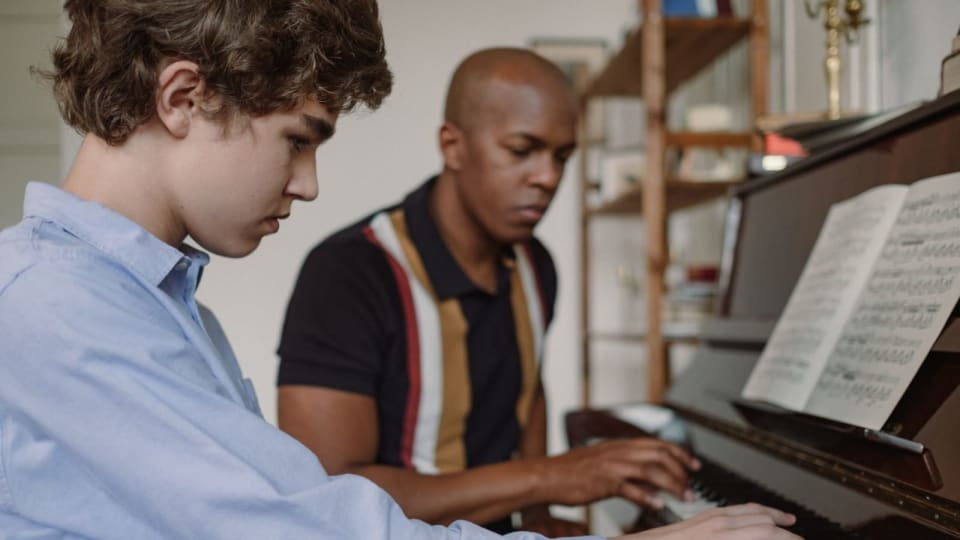
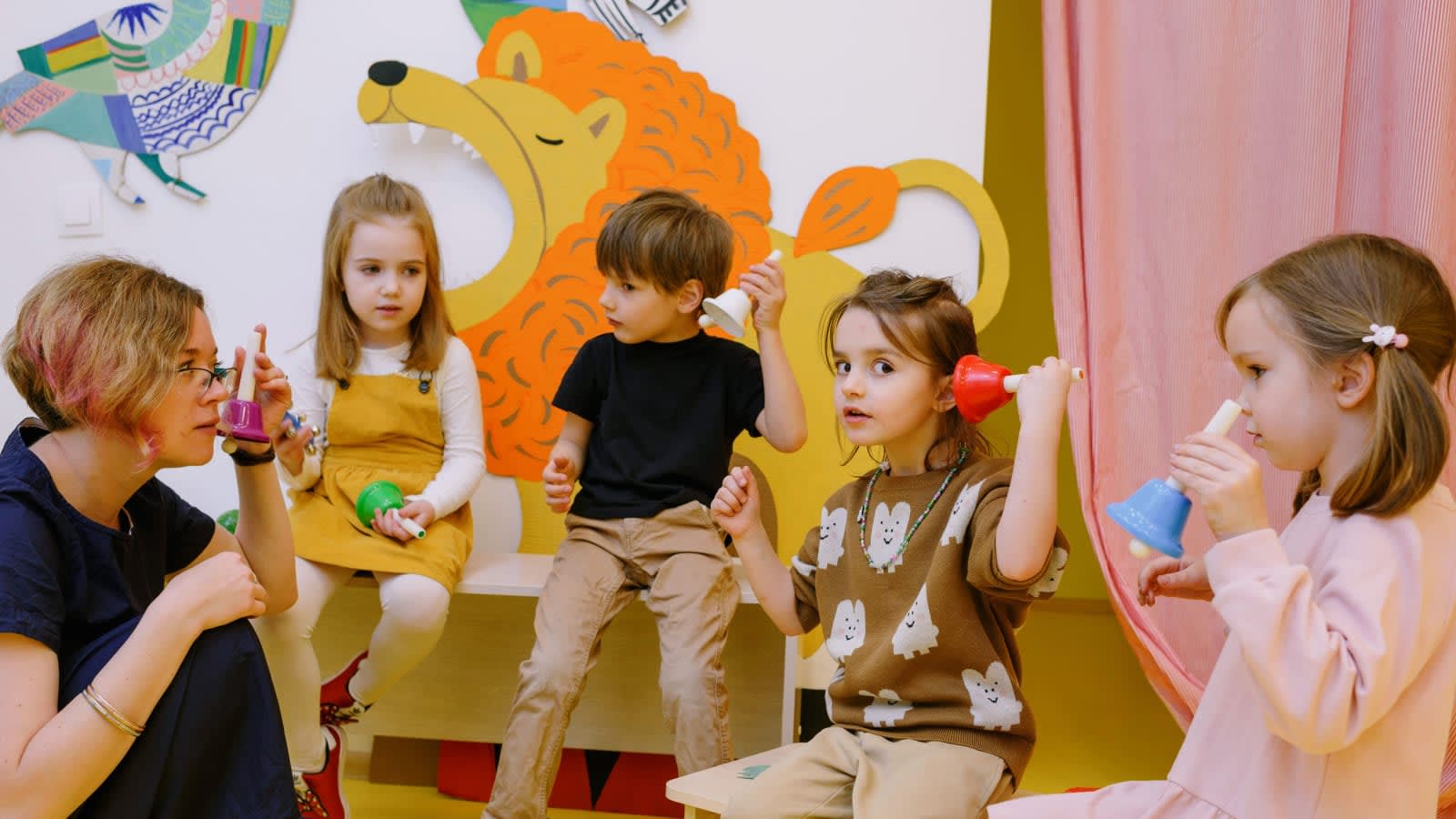
Featured classroom photograph: Ksenia Chernaya / Pexels. The photograph is illustrative; the teaching and school examples in this post are fictional.