
Between Ensemble Rehearsals: A Part-Specific Preparation Pack
Give each ensemble player a useful home task. Download an original flute, violin and cello score, marked parts and a ten-minute rehearsal plan.
Mia
Community & Content. Writer and lifelong pianist. Writes about gear, production, and the business side of making music.
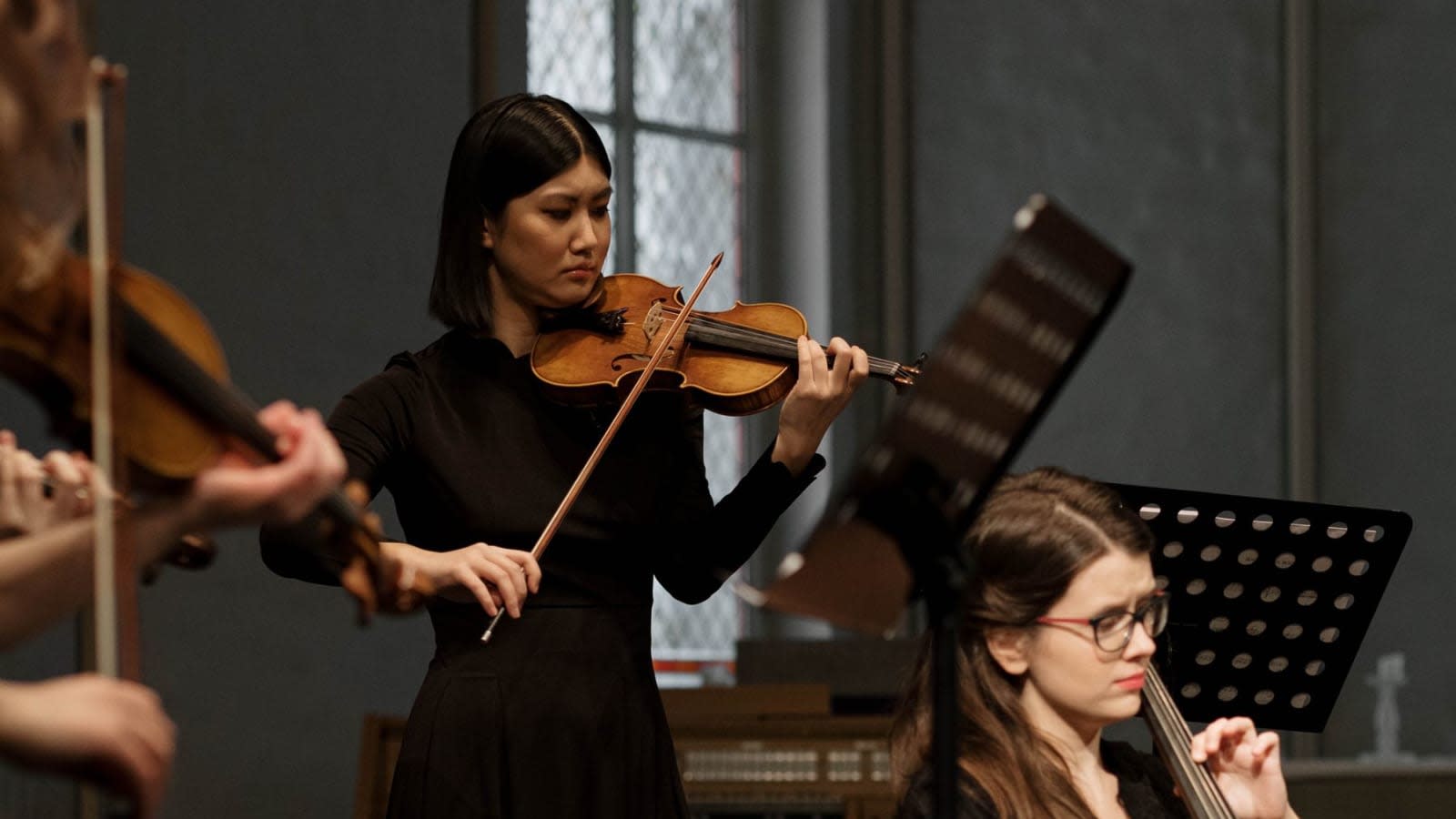
“Practise your part” leaves several decisions with the student. Should the flautist spend the week polishing the tune, or counting the silence before it? Does the cellist know that a missing rest is what makes the next entrance feel rushed? A useful ensemble assignment names the moment each player needs to prepare.
Give each player one entrance, one listening job and a clear starting point for the next rehearsal. The free pack below demonstrates that approach with Three Entrances, an original twelve-bar exercise for flute, violin and cello.
Essentials: the three instruments, a music stand or readable screen for each player, and a teacher to set a suitable tempo and technique. Players should already read their clef, count four beats and understand quarter, half, dotted-half and whole notes and rests. The PDFs need no account or paid software. A metronome is optional. This is an adaptable exercise, not a graded syllabus piece.
Start with the same version of the music
The piece is in C major and 4/4. Rehearsal letters A, B and C begin at bars 1, 5 and 9. The suggested tempo is quarter note = 72; lower it when a player needs more time. At that tempo, twelve uninterrupted bars take about forty seconds.
The ranges are G4–E5 for flute, D4–A4 for violin and G2–F3 for cello, with middle C labelled C4. Check these against your players before assigning it, and agree breathing and bowing in the lesson. These are sounding-pitch parts for the named instruments; they are not ready-made clarinet or saxophone substitutes.
Three Entrances: score, parts and preparation sheet
Five one-page A4 PDFs. The ZIP also includes editable MusicXML and MuseScore files, prepared in MuseScore Studio 4.7.5.
Download the complete ZIP packYou may copy, adapt and share this original music and worksheet. For students using paper, print their individual part rather than shrinking the full score. Keep the conductor's score yourself. If you change the music, give every affected player a clearly named new version; the annotated-score handoff workflow helps prevent two versions arriving at the same rehearsal.
The flute part has a few entry reminders already marked. Its opening silence is part of the task.

Give the players different homework
Demonstrate the counting once together before sending the parts home. Then write the passage, the entry beat and what the student should notice. A number of repetitions is less useful if the player keeps restarting immediately before the note and never practises the rest.
Flute: arrive on the second beat
At A, the flute has two complete bars of rest, followed by one quarter-note rest in bar 3. Count “one, two, three, four” twice, then count beat one of the third bar before playing G on beat two. Practise that sequence without the instrument first, then with the notes.
During the group run, listen to the violin's sustained note at the start of bar 3 while continuing to count. It supplies a useful reference, but waiting for another player's sound cannot replace knowing where the entrance belongs.
The second task is bar 7: hold C for beats one and two, then release on beat three. The violin enters at that same point. Leave time to breathe where the teacher has agreed, rather than trying to stretch a breath through the entire section.
Violin: practise the silence at B
The first violin entry is on beat two of bar 1. Later, B begins with two whole bars of rest. In bar 7, count a further two beats before playing E on beat three and F on beat four. Starting each attempt on that E would miss most of the preparation task.
Ask the violinist to begin at B and count all the way to the entrance. In rehearsal, the flute's release and violin's new note should meet on beat three. The player still needs their own count if the flute makes a mistake.
Here is bar 7 across the three parts. Each column is one quarter-note beat.
Cello: make room for the rest before C
The cello's long notes can make its part appear finished sooner than the others. Its assignment is to maintain four beats through those notes and prepare the change at bar 8: G lasts for three beats, followed by a quarter-note rest on beat four. The new C arrives with the group on bar 9, beat one.
Practise bars 7–9 as one unit, including that silent beat. Keep the pulse audible in a spoken count or a comfortable metronome click during preparation. The intended quiet dynamic should still produce a clear pitch; ask the teacher about a suitable bow distribution instead of guessing from the note length alone.
For a listening activity beyond this exercise, Carnegie Hall's Listen and Learn resources include guided ensemble excerpts on texture and articulation, with discussion prompts. Choose one specific listening question for your group.
Use the next ten minutes to check those tasks
The preparation sheet includes this suggested agenda. It is a starting allocation: spend longer on a difficulty when the group needs it. Students should have their parts ready before the first count-in.
- 0–2 minCount or clap the entry patterns without instruments. Include the rests. Check that everyone can locate A, B and C.
- 2–5 minBegin at B. Hear the bar 7 flute-to-violin change, then the cello's rest in bar 8. Stop for one named correction and repeat from B.
- 5–8 minStart at A and check the opening entries. Then begin at C to agree balance and the ending. All three parts hold their final note for four beats and release together after beat four.
- 8–10 minPlay the complete exercise. Choose the next passage needing work and let each player note their own task before leaving.
If someone gets lost, name the bar and restart from an agreed letter. Do not let repeated full runs hide which entrance is failing. The broader habits behind this are covered in preparing alone for ensemble playing.
A useful student question: “At bar 7, do we change on beat three together? We were leaving a gap after the flute.” That gives the teacher a place to start. “The middle is difficult” does not yet identify the problem.
With a larger class, record the next task against each part or player, including anyone who missed the rehearsal. Group-class practice tracking is the separate organisational job; the musical assignment still needs a bar, a beat and an intended result.
For the next piece, keep the same small packet: the correct part, one marked entrance, one listening task and the next rehearsal's starting point. Change the musical details to match what actually happened in the room.
Further reading
 Apps
AppsShare Annotated Sheet Music Without Losing the Latest Version
Share annotated sheet music with a clear revision trail: conductor marks, private notes, Newzik layers and a downloadable PDF handoff example.
7 min read Practice Methods
How Ensemble Playing Should Change the Way You Practice Alone
Ensemble playing is not solo practice plus other people later. This guide shows musicians how to change their individual work so pulse, cues, counting, balance, and recovery actually transfer into rehearsals.
12 min read Teaching
Group Classes and Practice Tracking: What Changes With 10+ Students
The tracking habits that work beautifully in a one-to-one studio quietly assume a number — and somewhere past ten students, every one of them breaks. What actually changes in group classes, and the triage system that scales where deep reading can't.
10 min read