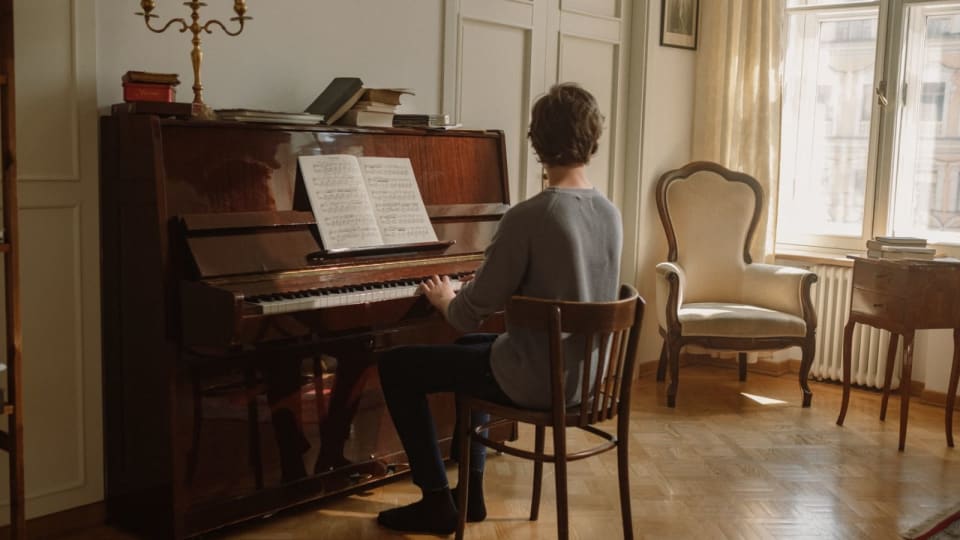
When a used acoustic and a new digital carry the same advertised price, the digital is easier to price with confidence. The acoustic may be much more rewarding to play, but that conclusion has to survive an inspection, a moving quote, and a realistic allowance for immediate work.
This guide assumes that two specific offers are already on the shortlist. The broader category choice belongs in our post on buying an acoustic or digital piano first. Here, the job is to turn an asking price into a completed offer before deciding which instrument deserves the budget.
Start with one all-in budget
Set the spending ceiling before comparing instruments. If that ceiling is $2,000, a private upright advertised at $1,800 has already used 90 percent of it while inspection, moving, and service remain unresolved. A digital at the same price may also exceed the limit after a stand, three pedals, bench, or delivery are added.
This $2,000 example is illustrative; it is not a claim about the value of any particular upright. Used-piano asking prices vary with model, age, condition, location, and local demand. Piano Buyer's valuation guidance explains why a seller's number cannot serve as a dependable market comparison on its own.
Give each line in the budget one of three labels: included, quoted, or unknown. An unknown repair figure should remain visible. Folding it into a hopeful zero makes the two offers look more similar than they are.
- Seller's price
- Independent on-site inspection
- Professional move, including stairs and access
- Post-move tuning or pitch correction
- Immediate repairs, regulation, or worn parts
- Bench and any needed humidity control
- Piano and power supply
- Rigid stand or furniture cabinet
- Three-pedal unit with half-pedal support
- Adjustable bench and headphones
- Delivery, assembly, and return freight
- Authorized-seller warranty coverage
The same budget also has to fit the room. Confirm usable practice hours, floor and wall transmission, the route through the building, and the piano's final position. For an acoustic, seasonal conditions may add a climate-control plan; the practical thresholds are covered in our guide to piano humidity control. Work through these questions before committing to the purchase.
A private-sale upright is an unfinished quote
A useful listing provides the make, exact model, serial number, location, and clear photographs. Ask where the piano has lived, when it was last tuned, and whether it has been stored, moved, exposed to water, or repaired. Service invoices are more informative than "recently tuned." Record the serial number because a founding date cast into the plate may have no connection to the instrument's manufacture date. Age establishes context, but it cannot describe the present condition of the pinblock, bridges, hammers, or action.
Visit before paying for an inspection. Play every key at more than one dynamic, use every pedal, and listen for severe unevenness, buzzes, rattles, notes that fail to stop, sluggish keys, corrosion, water or pest evidence, and missing strings. If it remains a candidate, agree on an independent inspection before any deposit. The Piano Technicians Guild's private-sale guidance notes that these purchases normally have no warranty, leave moving to the buyer, and often require extra service. PTG recommends an on-site evaluation by a Registered Piano Technician before purchase.
A dealer-prepared acoustic is a different offer. The higher price may include delivery, an initial tuning, a short warranty, preparation work, rental credit, or a trade-up policy. Ask which work was completed, who completed it, how tuning stability is handled after delivery, and what the warranty excludes. Record each answer in the ledger because preparation varies between dealers and instruments.
What the technician's report must settle
The technician is there to resolve the costly unknowns that a pianist cannot see from the bench. PTG's Registered Piano Technician credential requires examinations in tuning, repair, and maintenance. For an unusually old instrument or one likely to need rebuilding, ask about experience with that type of piano as well.

A useful report converts mechanical findings into decisions. It should cover the following questions.
| Area | What the report should settle | What belongs in the offer |
|---|---|---|
| Pitch and tuning | Current pitch, tuning-pin and pinblock condition, and whether the piano is likely to hold a normal tuning | Ordinary tuning, pitch correction, follow-up visit, or a reason to withdraw |
| Structure | Plate, bridges, bridge pins, soundboard, ribs, rim or back, strings, and evidence of environmental damage | Monitor, repair now, rebuild later, or decline the instrument |
| Action and pedals | Hammer wear, dampers, bushings, repetition, soft control, regulation, pedal operation, and obsolete parts | Immediate regulation or repair plus likely medium-term work |
| Musical condition | Evenness of touch and tone, bass clarity, sustain, noise, and suitability for the buyer's level and repertoire | The work required to reach the standard used in the comparison |
| Value | Condition-adjusted value in the local market and whether the proposed repairs make economic sense | A supported offer price and a clear ceiling for the transaction |
Piano Buyer's inspection checklist is helpful for understanding the systems involved. It also corrects a common overreaction: a hairline soundboard crack does not automatically ruin a piano. Tone, remaining crown, rib attachment, the extent of the cracking, and the rest of the structure determine its significance. Loose tuning pins, displaced bridge pins, a cracked plate, extensive corrosion, or a heavily worn action can have very different consequences.
Ask for a written division between work needed now and work that can wait. Tuning, pitch correction, regulation, voicing, repair, and rebuilding describe different jobs. A seller's statement that the piano "only needs tuning" should remain unpriced until the technician has checked it.
PTG provides a searchable Registered Piano Technician directory. Hire the technician independently and confirm in advance whether the visit includes repair estimates and an opinion on value. Obtain the inspection before booking the mover.
Complete the new-digital side
The digital side is easier to document because its specifications and protections can be checked before purchase. The Yamaha P-525 is one current model near the illustrative budget used here.
The wooden-key action, two wired headphone outputs, USB audio/MIDI, and published weight make it practical to quote as a complete home setup. Its optional stand, three-pedal unit, and bench still belong in the total.
Affiliate notice: Some links are paid links. As an Amazon Associate, we earn from qualifying purchases.
View on Amazon Official specificationsOn September 2, 2026, Yamaha's US store displayed the P-525 at $1,799.99 and marked it out of stock. It has 88 GrandTouch-S keys with wooden white keys and escapement, weighs 48 pounds 8 ounces, includes a continuous sustain pedal, and supports optional furniture stands and three-pedal units. Treat the figure as a dated manufacturer reference because stock and dealer packages can change.
Warranty eligibility depends on the purchaser, seller, and place of use. Yamaha currently gives P, YDP, and DGX600 digital pianos a three-year limited US warranty for the original owner when the new instrument is bought from an authorized US dealer and used in the US or District of Columbia. Confirm the seller's status at checkout. The retailer's return window, return freight, original-packaging requirement, and exchange process are separate terms, so inspect a delivered unit promptly and keep its packaging until that window has passed.

Buyers working with a lower ceiling can use our current digital pianos under $1,000 to obtain additional quotations. A less expensive model may leave enough room for a rigid stand, three pedals, bench, and headphones while the used acoustic consumes most of the budget before inspection.
Test musical fit after the condition risk is known
A healthy upright can justify the extra work. The player controls a physical hammer, string, damper, and soundboard system, with sound arriving through the room instead of a pair of speakers. Fine changes in attack and pedal can feel more continuous, and a good acoustic may support advanced work for many years with regular service.
Whether those advantages are present depends on the specific piano. A worn action that misses quiet notes, an unstable tuning system, weak bass strings, or inconsistent dampers can make practice less precise.
Use the same familiar excerpt on both instruments. Note whether quiet attacks speak reliably, repeated notes respond as expected, gradual pedal release is clear, and the normal playing volume works in the room. Test the digital through its speakers and the headphones intended for practice. These notes describe the two instruments being considered; another upright or digital may behave differently.
A teacher can help identify which differences matter for the student's technique and repertoire. PianoTechSupport offers individualized Zoom lessons covering technique, repertoire, sight-reading, and musicianship. A teacher can clarify the playing requirement, while the local piano technician remains responsible for the mechanical condition report.
Decide from the completed totals
Enter actual quotations for the acoustic inspection, immediate work, and move, then enter the digital seller's package and delivery total. Use the upper end of any repair range when the spending ceiling is firm. Keep later maintenance separate from the purchase total, but make sure the household can carry it. An unpriced repair remains an unresolved risk, so that acoustic is not ready for a same-budget comparison.
For a first-time buyer with a fixed budget, the new digital has an advantage because most costs and protections can be documented before checkout. That does not settle the musical preference. If the upright is the instrument the player responds to, its condition report and completed quotes show whether that preference is affordable. Put the playing notes beside the two totals and make the decision from those specific offers.