
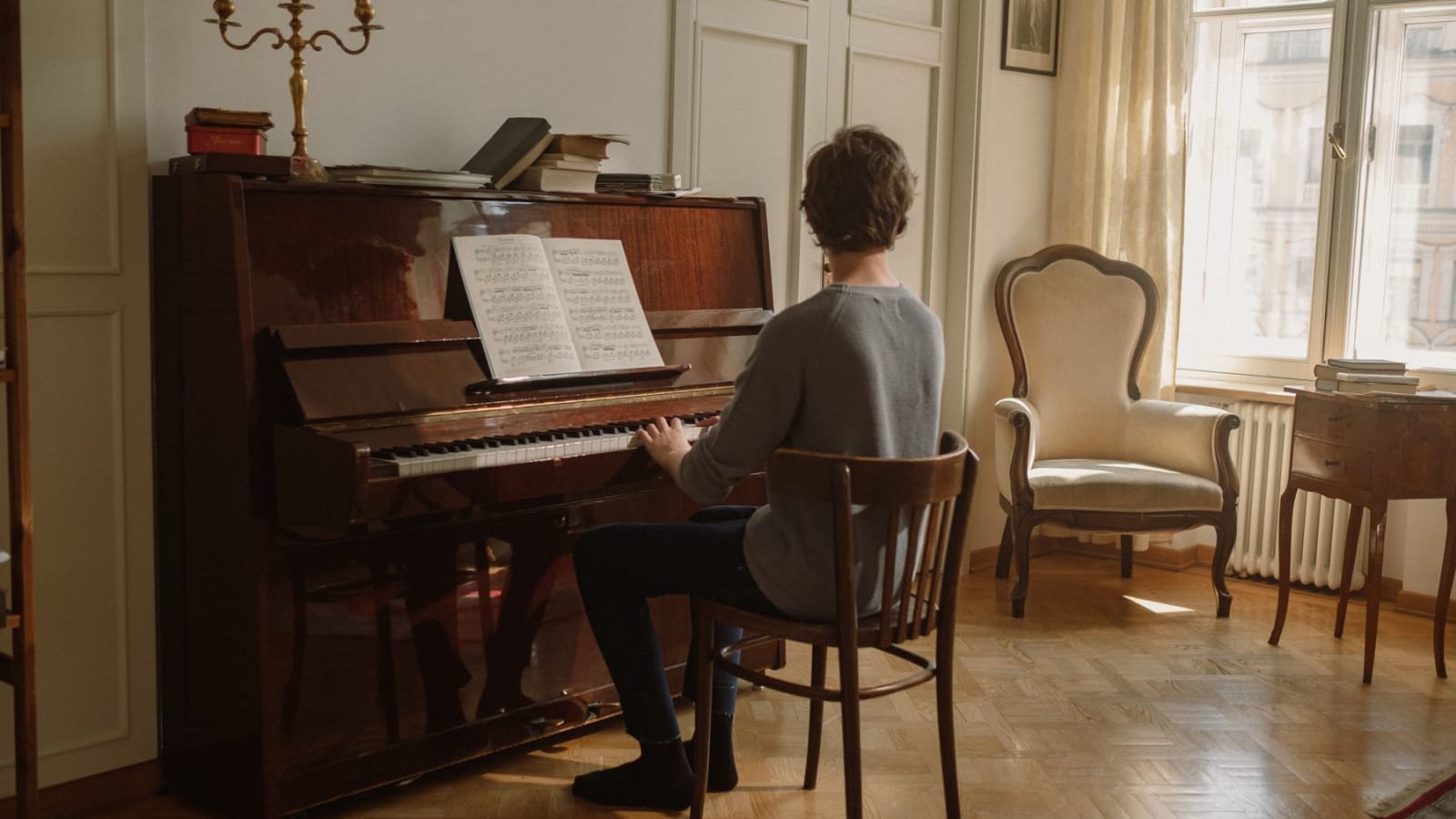
For most first-time buyers, the right first piano is an 88-key weighted digital. Buy an acoustic first only when you have a stable room, a household that accepts its volume, a recurring maintenance budget, a long-term piano goal, and a specific instrument that has passed a technician's inspection.
Here, “electric piano” means the modern instrument most shoppers are looking for: a digital piano. A true electric piano such as a Rhodes or Wurlitzer is a different instrument, built around amplified tines or reeds rather than a sampled or modelled acoustic-piano sound.
Your first piano should be easy to reverse
Buying first is not the same as buying forever. The first instrument has one job: make regular practice possible while you learn what kind of player you are becoming. If lessons stop, the family moves, a neighbour complains, or the learner discovers that headphone practice is essential, a portable digital is easier to sell, store, or take to another room than a 400-pound upright.
This is why the cost of being wrong matters more than abstract arguments about which category is superior. A healthy acoustic produces a richer physical interaction between hammer, string, soundboard, pedal, and room. A good digital trades some of that complexity for quiet practice, predictable condition, recording and app connections, lower entry cost, and much easier logistics. Our broader digital-versus-acoustic guide for beginners explains those mechanical and practical differences in depth; this post is about which commitment to make first.
Uncertainty should move you toward the reversible end of the decision. Certainty about the room, the budget, the instrument, and the player's direction can justify moving toward an acoustic. That is not settling for less and later graduating to a “real” piano. It is matching the permanence of the purchase to the evidence you have today.
First-piano commitment line
Move right only when uncertainty has been removed
A first instrument does not need to be your final instrument. The less certain the room, routine, or long-term plan, the more useful reversibility becomes.
A console digital can be a sensible middle point. It still offers headphones and electronic connections, but its fixed stand, pedal board, larger speakers, and furniture cabinet make it feel ready rather than temporary. It is less portable than a slab and does not gain an acoustic action merely by looking like an upright, so test the exact keybed rather than buying the cabinet.

Four vetoes make digital the sensible first buy
Any one of the following constraints is enough to rule out an ordinary acoustic for now. They are vetoes because they affect whether practice can happen, not because digital pianos always sound or feel better.
The digital still needs to qualify as a piano. Start with 88 full-size, touch-sensitive, weighted keys, a stable stand, an adjustable bench, headphone output, and support for a proper sustain pedal. If space forces a smaller instrument, make that compromise knowingly; our post on choosing between 61, 76, and 88 keys shows where reduced range starts to matter.
A current entry model shows how low the practical barrier can be. Yamaha listed its 88-key P-145BT at $469.99 on August 22, 2026. Yamaha's specifications put the body at 24 pounds 8 ounces, with headphones, USB audio and MIDI, Bluetooth audio, speakers, a footswitch, and a power adapter. That price is not the complete setup, because the bench, rigid stand, better pedal, and headphones may be separate, but it makes the first decision relatively easy to unwind.
Headphones silence the speakers, not the keys themselves. Kawai's action-noise guidance notes that digital mechanisms still make physical noise, which becomes more noticeable at low volume. A solid stand, a rug or isolation layer, and considerate hours can reduce transmitted thumps. They cannot make a hammer-action keyboard physically silent.
“The better first piano is the one that protects five ordinary practice days, not the one that wins an ideal-room comparison.”
If digital survives those filters, do not restart the whole category debate for every model. Compare the current shortlist in our beginner digital-piano buying guide, try the actions in person, and choose the compromise you notice least. USB audio or MIDI can also make early recording and session review simpler; a practice record in Practis is more useful than another month spent comparing brochure features.
If digital is your answer
Three sensible starting points
These pianos occupy a similar first-instrument lane but solve different problems. Your room, practice access, and response to the key action still matter more than the brand name.
Affiliate notice: Some links are paid links. As an Amazon Associate, we earn from qualifying purchases.
Start here when controllable key feel matters more than generous audio connections.
View on AmazonA strong fit when speaker output and proper line outputs matter more than Bluetooth.
View on AmazonChoose it when compact size and Bluetooth audio make play-along practice easier.
View on AmazonCheck what the listing includes. A stand, bench, upgraded pedal, and headphones may be separate.
When an acoustic deserves to be first
An acoustic becomes the stronger first purchase when all the practical questions have good answers. The player expects sustained piano study rather than casual keyboard use. The room is permanent enough to justify professional moving, the household accepts unrestricted sound at realistic practice times, and the budget remains comfortable after delivery and maintenance are included.
The specific instrument must also be worth the commitment. “Acoustic” is not a quality guarantee. A responsive, stable upright can teach fine control of tone, repetition, balance, and pedal from the beginning; a worn action and unstable tuning can teach the player to compensate for faults. For a private used purchase, the Piano Technicians Guild recommends an on-site evaluation by a Registered Piano Technician and warns that a free or cheap piano can become the most expensive option when it needs major work.
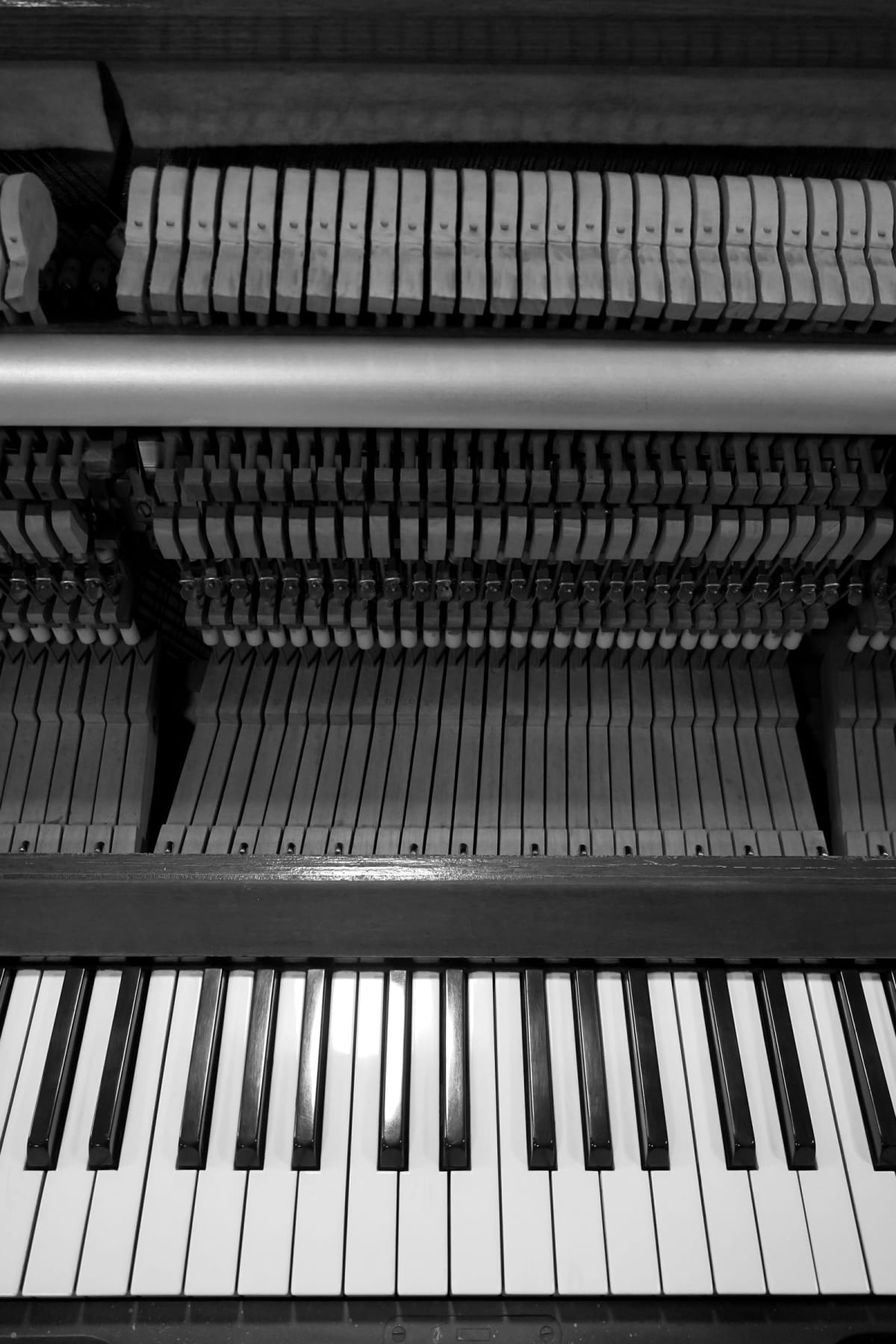
Serious classical plans strengthen the acoustic case, but they do not make a suitable digital useless after six months. Trinity College London's February 2026 piano requirements allow touch-sensitive weighted digital pianos at all graded digital-exam levels, while requiring an acoustic for solo piano diplomas. That is a useful boundary: a capable digital can support substantial learning, while advanced repertoire and professional pathways eventually make regular acoustic access increasingly important.
Acoustic ownership also means climate and service are part of the instrument. The Piano Technicians Guild explains that changes in humidity affect wood, felt, tuning, tone, and action response. Manufacturer recommendations vary, so use the schedule set by the maker and a local technician rather than assuming one universal number. Placement away from heating or cooling vents, direct sun, and frequently opened doors is a practical requirement, not fussy piano folklore.
“Buy an acoustic first because you can support that specific piano, not because ‘real piano’ sounds more serious.”
Compare complete ownership, not two price tags
The sticker gap is real, but the more useful comparison follows each instrument through the door. These are dated US reference points, not promises about every brand, dealer, or used market.
| Cost or commitment | Weighted portable digital | Acoustic upright |
|---|---|---|
| Current reference | Yamaha P-145BT: $469.99 | Yamaha b1: $5,699 published price |
| Before first practice | Stand, bench, useful pedal, headphones if needed | Access check, specialist delivery, bench, settling time |
| Recurring care | Cleaning and eventual electronic or mechanical repair | Tuning, plus regulation or voicing when needed |
| Moving reference | P-145BT body: 24 lb 8 oz | Yamaha b1: 384 lb |
| If plans change | Store, move, or resell with relatively little friction | Condition, access, moving, and buyer confidence affect the exit |
The P-145BT price and weight come from Yamaha's current US store and specifications. The acoustic reference comes from Piano Buyer's Spring 2026 model and price guide and Yamaha's b-series specifications. One is a portable entry digital and the other a new entry acoustic, so the comparison illustrates commitment rather than equal musical quality.
A used acoustic can narrow the purchase-price gap dramatically. It cannot erase inspection, delivery, service, or condition. A digital can also become expensive when a convincing console action and speaker system matter, but the buyer can choose that higher commitment after the practice habit and room requirements are known.
A used acoustic is a separate decision
A used upright is not simply the acoustic column at a discount. Its age, storage, service history, action wear, tuning stability, bridge, soundboard, pinblock, strings, and hammers all belong to the price. A polished cabinet reveals almost none of them.
Screen the piano before paying for an inspection. Play every note softly and firmly, repeat notes, use every pedal, listen for rattles and severe pitch instability, ask where it has lived, and obtain a moving quote for the actual route. If the piano still interests you, stop there and hire an independent technician before agreeing to buy or move it. Paying to inspect a piano you reject is cheaper than paying to move a piano that cannot be made stable at a sensible cost.
A dealer instrument may cost more but can include preparation, warranty, delivery, an initial tuning, or a trade-up policy. Get each promise in writing and ask what “reconditioned” included. A private seller usually transfers more of the uncertainty to the buyer. Neither route is automatically better, but the risks are not priced the same way.
Used digitals need a different inspection. Test every key at several dynamic levels, both speakers, headphones, pedals, controls, USB or MIDI ports, Bluetooth if present, and the exact power adapter. Listen for intermittent notes and mechanical clatter. Confirm that any companion app still supports your phone or computer, then judge the instrument without counting features you will never use.
Make the decision in twenty minutes, then stop shopping
Online research should produce a short list, not replace contact with the instrument. Use the same sequence on every candidate so memory and showroom volume do not choose for you.
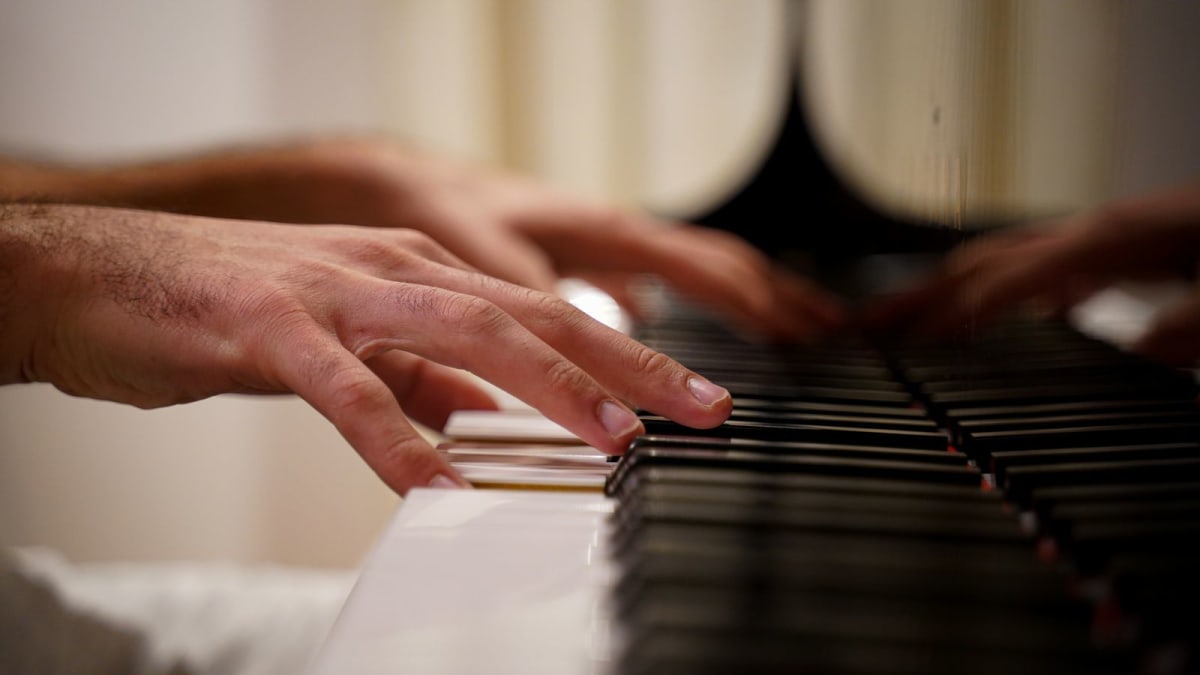
Twenty-minute first-piano test
If the winner is digital, check that soft notes respond consistently and the stand does not move under firm playing. If the winner is acoustic, the twenty-minute test earns it an inspection, not an immediate purchase. After it arrives, expect an adjustment between instruments; our guide to moving between digital and acoustic touch gives that transition a practical routine.
Choose digital first if even one acoustic veto remains unresolved. Choose acoustic first when the room, routine, budget, long-term goal, and exact piano all support it. Then stop comparing categories and play the instrument you can use tomorrow.


