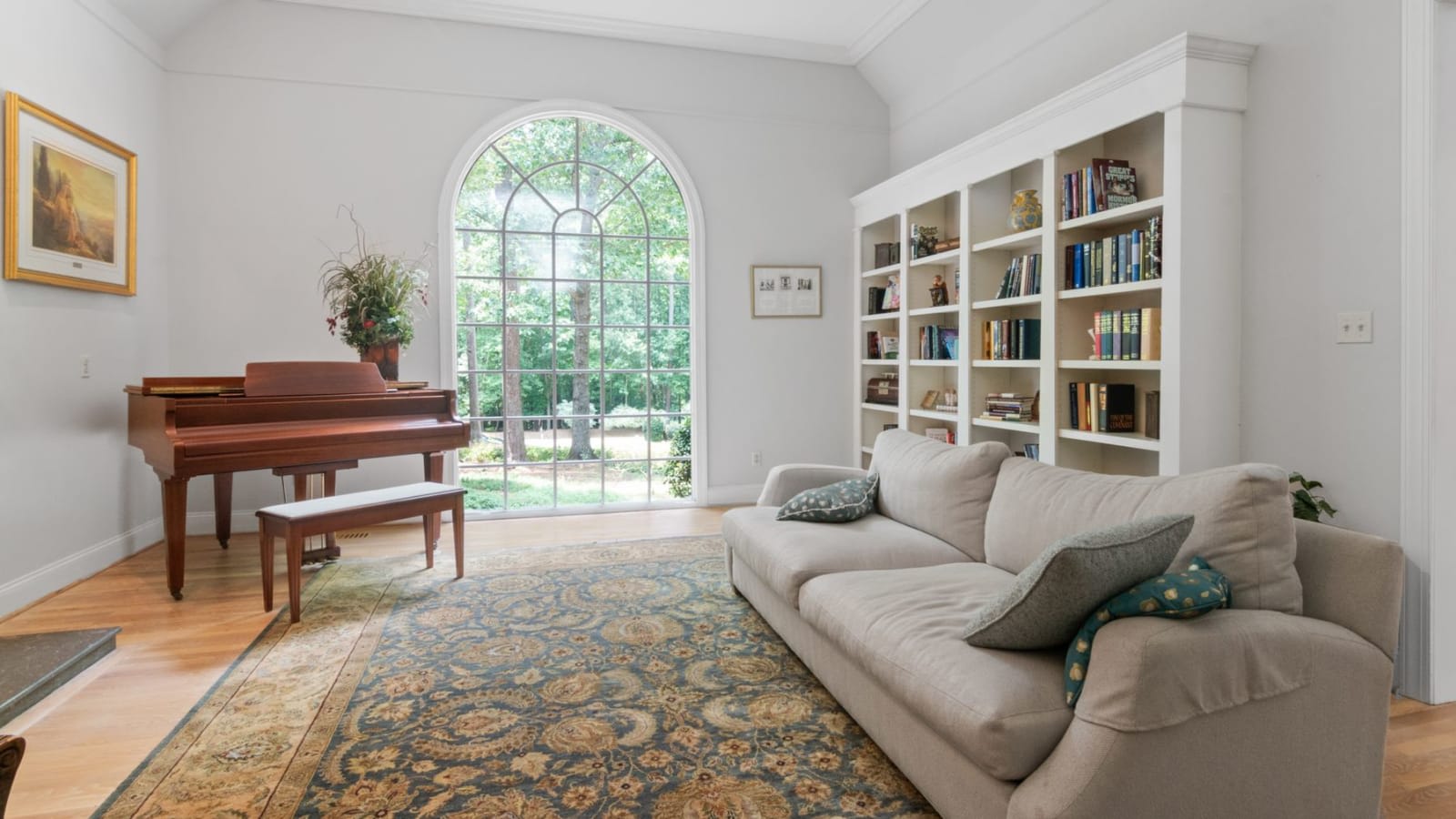
A hygrometer can show whether an acoustic piano room needs a humidifier or dehumidifier. Persistent dry air, persistent damp, and a room that crosses both extremes over the seasons call for different responses.
A Dampp-Chaser, now sold as the Piano Life Saver System, becomes relevant when seasonal swings continue despite practical room control. It conditions the piano's immediate environment and requires professional installation and continuous power, with refilling and pad service for complete two-way systems.
Begin with the room's actual pattern
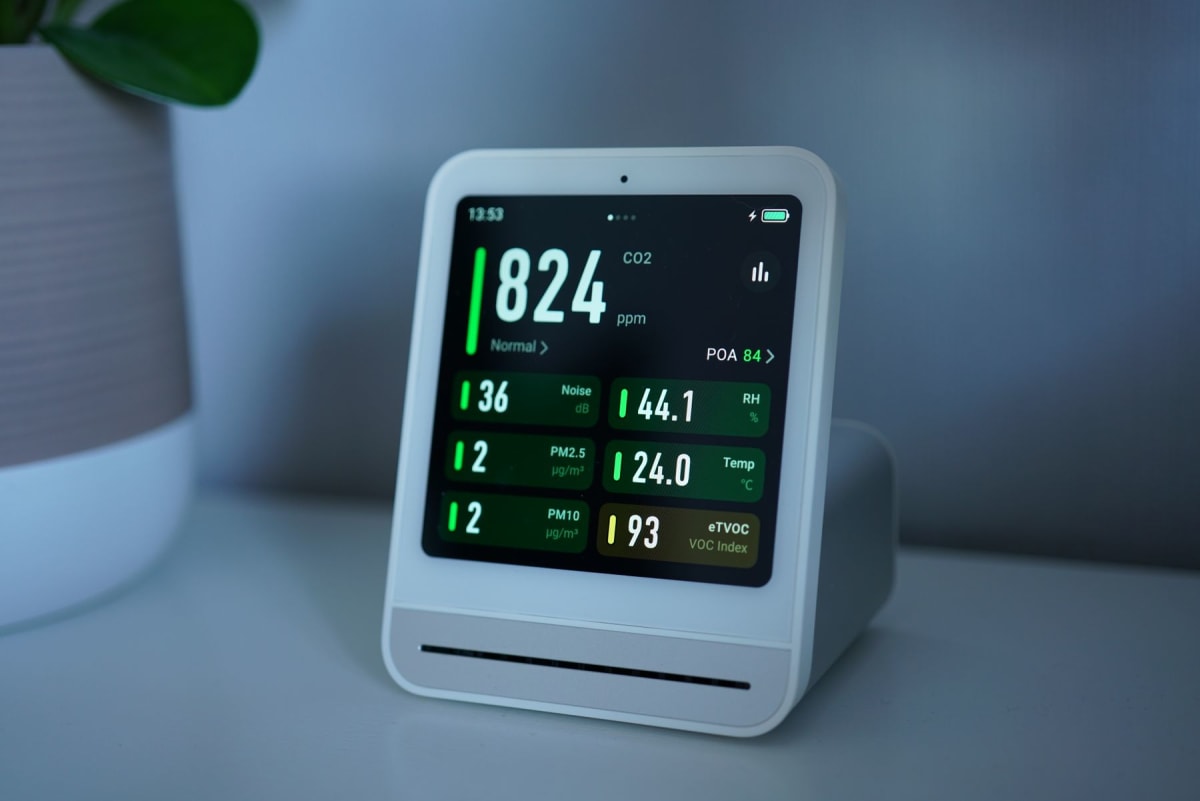
Relative humidity changes with both moisture and temperature. Heating a cold room can lower its RH even if no water has left the air, while an open window, cooking, showers, or air conditioning can change a reading quickly. Put the sensor in the same part of the room as the piano, roughly at case height, away from direct sun, windows, vents, radiators, and the output of any climate appliance.
Record the current reading plus the daily high and low for at least a week during the season that causes concern. Repeat the exercise when the heating or cooling season changes. A Bluetooth logger is convenient because it catches the overnight low and the afternoon high without relying on memory.
Piano makers publish overlapping ranges rather than one universal number. This table puts four useful references side by side.
| Source | Published guidance | Useful reading |
|---|---|---|
| Piano Technicians Guild | Installed systems described as designed around 42% RH | Consistency reduces soundboard and action movement |
| Yamaha | 35–55% RH, with 45% described as optimal | Keep a room unit near the piano without placing it too close |
| Steinway & Sons | 40–60% RH and 68–78°F | Avoid direct sun, HVAC airflow, and close humidifier placement |
| Shigeru Kawai | About 45% RH ideal; 35–70% described as acceptable | Below 25% and above 80% are identified as especially harmful |
Taken together, the ranges overlap most comfortably around the mid-40s. Keeping a room near 40–50% RH is a practical working aim, while the instrument's manual and technician take priority. A household sensor with ±3% RH accuracy also cannot support anxious adjustments between 42% and 45%; the trend and size of the seasonal swing are more informative.
Why humidity moves pitch and action
The soundboard is a crowned wooden panel connected to the strings through the bridge. The Piano Technicians Guild explains the seasonal mechanism: moisture makes the soundboard expand and its crown increase, pushing harder against the strings so pitch tends to rise. Dry conditions reduce the crown and the pitch tends to fall. The middle of the keyboard often moves more than the ends because the soundboard does not change uniformly.
Wood is only part of the instrument. Felt, cloth, and leather change dimension and friction as they absorb and release moisture. High RH can contribute to sluggish action parts, and prolonged damp or condensation can corrode strings, tuning pins, and hardware. Very dry conditions can contribute to loose joints, noisy action, and cracking in vulnerable wood.
- Step 1Room RH changesWeather, heating, cooling, doors, and moisture sources alter the air.
- Step 2Materials respondWood, felt, cloth, and leather gain or lose moisture over time.
- Step 3Clearances shiftSoundboard crown, bridge pressure, and action friction change by small amounts.
- Step 4The player noticesPitch drifts, touch changes, or keys begin to feel uneven or slow.
Humidity control can reduce this seasonal movement. It does not repair an existing crack, corroded string, loose tuning pin, or damaged action, and it does not remove the need for tuning and regulation. Our broader electric-piano-versus-acoustic comparison covers those acoustic-piano maintenance costs.

Hygrometers, humidifiers and dehumidifiers
These examples represent three jobs: measuring the room, adding moisture, and removing it. A humidifier or dehumidifier still needs to be sized for the actual space; manufacturer coverage figures are best-case estimates, and output depends on room size, leakage, temperature, and starting RH.
Affiliate notice: Some links are paid links. As an Amazon Associate, we earn from qualifying purchases.
Govee H5075 Bluetooth hygrometer
$11.04 single-unit manufacturer snapshot · ±3% RH · app alerts and CSV history · Bluetooth, no Wi-FiVornado EVDC300 evaporative humidifier
$89.99 manufacturer snapshot · 1-gallon tank · automatic humidity control · low-water indicatorMidea Cube 20-pint dehumidifier
$199.99 list-price snapshot · 20 pints per day · drain hose included · no built-in pumpUS manufacturer prices shown as of August 27, 2026; they may change.
The Govee stores readings for later export and can alert a nearby phone when a threshold is crossed, but it is Bluetooth-only. Put it near the piano and compare its reading with the humidifier or dehumidifier's built-in sensor before trusting either control.
For a dry room, the EVDC300 uses a fan and wet wick to evaporate water without producing a visible mineral-bearing mist. The EPA's humidifier guidance says evaporative units generally disperse far fewer minerals than ultrasonic and impeller models. It also advises emptying, drying, and refilling portable units daily, cleaning them every third day, using low-mineral water when practical, and keeping active humidification at or below 50% RH. The fan is audible, and its disposable MD1-0034 wick is rated for roughly four to eight weeks depending on use; an official two-pack is $14.99 as of August 27, 2026. Keep the humidifier across the room from the piano, and reduce or stop its output if nearby surfaces collect moisture.
The Midea is for persistent high RH. Its 20-pint rating describes water removal under test conditions, while its included hose allows continuous gravity drainage to a suitable drain. There is no pump, so the hose cannot climb uphill. The manual calls for filter cleaning at least every two weeks and regular bucket cleaning. A separate hygrometer beside the piano still matters because the air at the dehumidifier intake may not match the far side of the room.

Room control and an in-piano system cover different areas
A room humidifier, dehumidifier, air conditioner, or whole-home system changes the air around the entire instrument. The action, cabinet, soundboard, other wooden instruments, and the building all share that environment. This is attractive when the room can be closed and controlled without excessive water use, noise, or condensation.
The Piano Life Saver creates a smaller controlled zone inside an upright or beneath a grand. In a complete system, its humidistat switches between a humidifier and dehumidifying heater rods as conditions change. The rods do not collect or drain water; they warm the local air, lowering its relative humidity and encouraging circulation. In an upright, the enclosed cabinet lets that local environment reach much of the action as well as the soundboard. Under a grand, the system is concentrated around the soundboard, while the action above still experiences the room.
The table separates their coverage, setup, upkeep, and limitations.
| Question | Room or whole-home control | Piano Life Saver |
|---|---|---|
| What it conditions | The whole room, including action, cabinet, people, and other instruments | A local zone inside an upright or beneath a grand |
| Setup | Portable appliance, HVAC adjustment, or building work sized for the space | Model-specific installation by a piano technician or participating retailer |
| Ongoing work | Tank cleaning, water, wicks or filters, bucket emptying, and seasonal settings | Continuous power; full systems also need water-light refills, branded treatment, and pad service |
| Main limitation | Open plans, air leakage, and exterior moisture can overwhelm a portable unit | It does not correct humidity elsewhere in the room or building |
A wet basement, roof leak, plumbing problem, visible mold, or recurring window condensation is a building-moisture issue first. An in-piano system cannot make that room healthy, and a portable dehumidifier should not delay repair of the water source.
When a Dampp-Chaser is worth the quote
A Dampp-Chaser becomes plausible when an acoustic piano moves through a dry heating season and a humid summer while the room remains hard to control. Large open plans, rented rooms with limited HVAC control, and uprights near unavoidable exterior influences can all make localized control more attractive. It can also suit an intermittently occupied building when someone is responsible for checking the panel, adding water, and arranging service. Repeated seasonal pitch movement or action changes give the technician something concrete to compare with the humidity log.
A complete Piano Life Saver System is different from a standalone heater rod. It is sold through professional piano technicians and participating retailers as installed equipment, with the configuration chosen for the instrument. Where measurements show high humidity throughout the year, a technician may specify a humidistat-controlled dehumidification-only system. Player systems, unusually narrow uprights, restored pianos, and grands of different sizes need model-specific placement. The manufacturer does not publish a universal installed price, so local quotes are the useful comparison.
Every configuration needs continuous power from an outlet that is not controlled by a wall switch. A system that includes the humidifier also needs regular refills and scheduled pad service. A flashing yellow light requests water; distilled water is preferred, and salt-softened water should not be used. The manufacturer recommends technician pad service, generally twice a year, and specifies Dampp-Chaser-brand Humidifier Treatment. Its care page explains the light signals and refill routine. Have the power cord inspected during service, and make sure no caster or piano leg can damage it.
Professional installation matters because component and baffle placement control where moisture collects. It is also a condition of the system's limited warranty. For grand systems, current installation instructions advise waiting at least three weeks after installation before tuning while the piano's moisture content adjusts. The qualified-installer locator is the appropriate starting point for a quote. Even with the system running correctly, the piano still needs ordinary tuning and action service.
Bring the humidity record to the next tuning
A useful log contains the daily high and low, the dates when heating or air conditioning began, and any matching change in pitch or touch. Photos of condensation, corrosion, cracks, or sticking keys also help. Have a technician inspect those symptoms before changing the room setup. If mold or mildew is visible inside the piano, stop and arrange professional assessment; cleaning chemicals can damage felt, wood, and finishes.
Digital pianos do not have the acoustic string-and-soundboard system that a Dampp-Chaser is designed to protect. Some digital and hybrid instruments still contain wooden, felted, or mechanical action parts, so their maker's environmental limits apply. All electronic instruments belong away from condensation, leaks, and direct heat. Owners who alternate between acoustic and digital instruments may also find the touch and sound adjustments in our post on practising on a digital piano after acoustic training useful.
Start the log before buying climate equipment and repeat it in the opposite season. At the next tuning, the technician can compare those readings with the instrument's pitch and action, then recommend room control, an installed system, or continued monitoring with evidence from the piano's actual home.