What would you ask Danny Elfman to write if you had a cello and his attention? Gautier Capuçon’s answer became a substantial concerto, shaped through conversations with the composer. Their starting point was the kind of music the cellist loved, and the sound Elfman might build around him.
Danny Elfman: Cello Concerto & Film Music is scheduled for 20 November 2026 on Warner Classics/Erato. Two recordings already available offer a way in: the concerto’s third movement, Meditazione, and “Ice Dance” from Edward Scissorhands. Here is the story behind that pairing, with both recordings below.
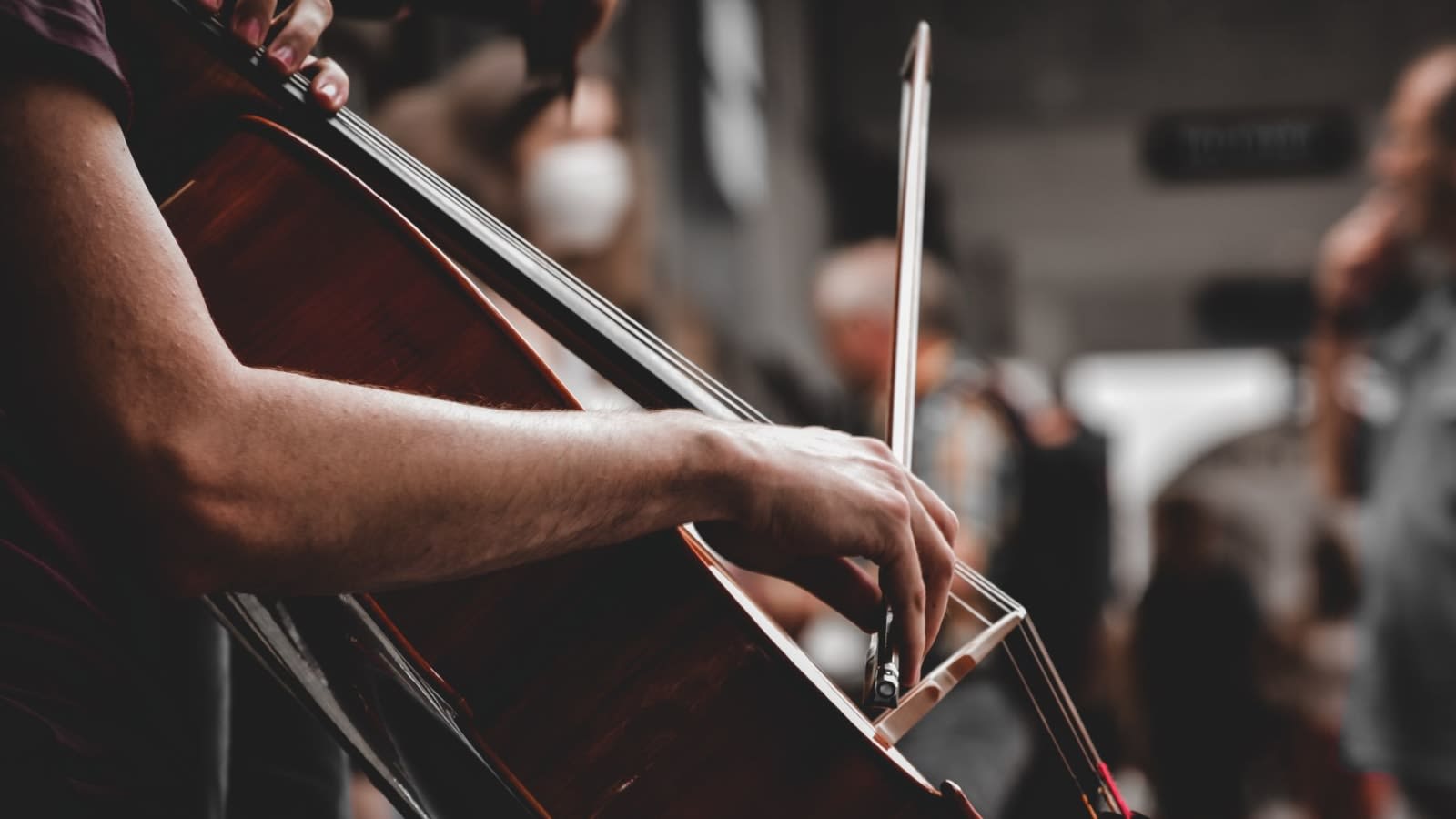
Featured photograph: Alexas Fotos / Pexels. An illustrative cello photograph, not a photograph of Capuçon.
A concerto began with a conversation about melody
In Steve Holt’s 2022 interview for the San Francisco Symphony, the two musicians recall discussing Shostakovich, Dvořák and Prokofiev. Elfman came away understanding Capuçon’s enthusiasm for melody and romantic expression. Capuçon also urged him to keep his own musical personality when writing for the concert hall. Elfman describes giving himself room for humour:
“I don’t have to be deathly serious every moment, just because it’s a classical work.”
Danny Elfman, San Francisco Symphony programme, November 2022
The interview describes a working exchange through calls, messages and played examples. Suggestions went both ways, and small adjustments followed the Vienna premiere. The soloist was involved while the piece took shape, rather than simply receiving a finished score.
That is an encouraging detail for anyone who plays new music. A passage can look settled on the page while the people making it are still discovering how it works. Useful feedback can be very specific: where a phrase wants to go, whether a gesture speaks clearly, or what changes when another instrument joins it. A composer and a performer bring different information to those questions.
On his own concerto page, Elfman identifies Capuçon’s playing as his inspiration and describes wanting both to challenge him and to give him melody. The work was commissioned jointly by five organisations, including the Vienna Symphony and San Francisco Symphony. Its world premiere took place in Vienna on 18 March 2022, with Capuçon, the Vienna Symphony and David Robertson.
The forthcoming album therefore introduces the work’s first recording, several years after its first public performance. For this recording, Capuçon is joined by Lionel Bringuier and the BBC Concert Orchestra, as confirmed in Warner’s release announcement.
Begin with the five-minute Meditazione
The released third movement gives you a complete stretch of the concerto to explore before the album arrives. Its title means “meditation.” Listen once without trying to decide what film it reminds you of; give the cello line time to establish its own associations.
On a second pass, choose one phrase that stays with you. Where does it seem to be heading? At what point do you expect it to settle? If the accompaniment changes beneath it, does the same melodic direction feel different? These are useful questions even if you cannot name a chord or read a cello score.
Players can take that a little further. Try singing the outline of the phrase you remember, then return to the recording. Your memory may preserve its broad direction while missing a pause or a change of emphasis. The discrepancy tells you something more useful than whether you “liked the tune”: it reveals which details made the phrase convincing to you.
Meditazione sits third in a four-movement work. The album’s track listing gives the following titles. Their meanings suggest a broad journey, but leave plenty for the music to determine:
| Movement | Meaning of the title |
|---|---|
| I. Cercare | To search |
| II. Moto quasi perpetuo | Almost perpetual motion |
| III. Meditazione | Meditation |
| IV. Ritorno a casa | Return home |
When the full recording is available, return to the third movement after hearing the first two. A movement encountered alone can feel self-contained; in sequence, the same music may acquire a different weight from what comes before it. That comparison is worth making before treating a single preview as a portrait of the entire concerto.
Ice Dance asks a different question
The album pairs the concerto with film and television music arranged by Jérôme Ducros. These are new settings of existing pieces. “Ice Dance” gives listeners a familiar point of entry, while the concerto was conceived around the soloist from the beginning.
If you know the film, notice whether a scene appears in your mind before you have consciously followed the melody. Then try listening with your attention on the instrument: how long does a musical idea hold together, and what makes it feel complete? Familiar screen music gives you two things to respond to, the remembered scene and the performance happening now.
An arrangement involves choices about who carries a line, which accompanying details survive, and how the texture fits the available players. A melody that has a voice in the cinema needs an instrumental way of speaking in a recital. Recognition gets the listener through the door; phrasing and balance still have work to do.
The album also varies the forces. Its credits identify “Ice Dance” as an orchestral arrangement, while The Simpsons theme is arranged for cello and piano, with Ducros at the keyboard. That difference matters if the recording makes you want to play one of the pieces: check the instrumentation of the edition you find, rather than assuming every track corresponds to a cello-and-piano score.
For another example of familiar material acquiring a different instrumental life, our guide to the music behind Jess Gillam’s Shine follows songs and older works into a saxophonist’s programme.
The concerto has a large orchestral world around it
Faber Music’s work catalogue lists an approximate duration of 36 minutes and a substantial orchestra: woodwind and brass, timpani and four percussion players, celesta, harp and strings. The percussion includes bells, vibraphone and xylophone. Those are the forces available to the composer, not a promise that every passage uses them all.
For a listener, that opens another route into the piece. Follow the orchestra for a while instead of keeping your attention fixed on the soloist. Ask what it supplies: support, an answering idea, a change of colour, or resistance to the direction you thought the cello was taking. Our guide to three contrasting concertos explores other ways a solo instrument can relate to an ensemble.
For cellists interested in the written music, Faber provides a score-viewing page and lists the score and orchestral parts for hire. Anyone planning a performance should start with the publisher to establish the required materials and terms. An album purchase does not supply performing parts.
The full recording will let listeners follow the concerto’s larger span. For now, the two released tracks offer a worthwhile comparison: a new work developed with a particular musician, and a familiar screen melody finding a new instrumental setting. Hear what interests you in each, and carry that question into the complete album.