The best way into a programme of waltzes and polkas is to follow what changes: the length of a phrase, the weight of an accompaniment, the way an instrument releases a note. Four selections from Vienna’s 2027 New Year’s Concert make those differences especially rewarding to explore.
The Vienna Philharmonic’s announced concert takes place on 1 January 2027 at 11:15 in the Musikverein’s Golden Hall, conducted by Tugan Sokhiev. This guide uses earlier recordings and published scores to prepare for the music; the interpretations on the day remain something to discover.
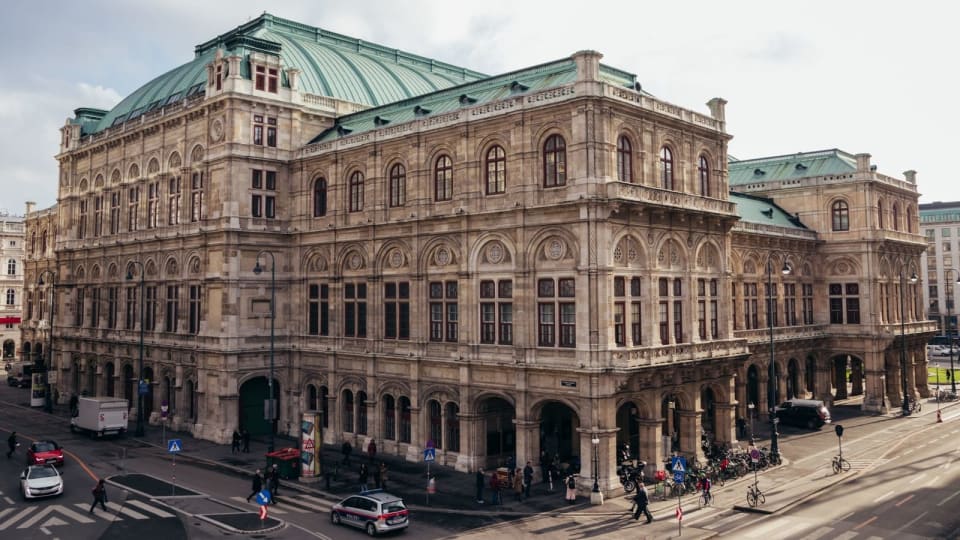
Featured photograph: the Musikverein exterior, by Minsu B / Pexels.
Josef Strauss: Delirien, Op. 212
Start with the moment the waltz becomes a waltz. In Josef Strauss’s piano arrangement of Delirien, the introduction begins in 12/8, with repeated low notes, chromatic movement and abrupt changes of register. Only later does the heading Tempo di Valse introduce 3/4. Trying to impose “one, two, three” on the opening misses the change the score has prepared.
On a first listen, let the introduction establish its own motion. Notice when the accompaniment settles into a repeating bass-and-chord pattern and the longer melody takes over. That arrival gives you a landmark without needing a timestamp, which would change between performances.

The excerpt shows two layers with different jobs. Below, each complete bar starts with a bass note followed by two chords. Above, the tune uses longer notes, ties and slurs that carry attention across the bar line. Three beats belong to each bar, but the melody does not restart its thought every three beats.
Follow the bass for a few bars, then transfer your attention to the tune while keeping the bass in the background. Which notes feel like departures, and which feel like arrivals? When the melody climbs, does the accompaniment seem to help it move forward, hold it steady, or both? Those are questions to test against the performance, rather than descriptions to accept in advance.
The piano reduction makes the rhythmic relationship visible; the orchestra adds a further question. As the successive waltz sections arrive, follow the relationship between the singing upper line and the lower accompaniment. Listen for changes of register, instrumental colour and density. A new colour can announce a new section even before you are confident that the tune has changed.
If you play piano, try only the first few complete bars of the excerpt at a comfortable pace. Play the accompaniment alone, then sing the upper line over it. Give the bass enough presence to locate the bar while keeping the following chords light enough that the tune can continue. The useful discovery is how a phrase travels over the pattern, even before you attempt orchestral tempo.
Cécile Chaminade: Callirhoë, Air de Ballet, Op. 37 No. 4
Chaminade offers a different kind of dance. The programme names Op. 37 No. 4 in an arrangement by W. Dörner. When looking for recordings or sheet music, keep that number: the familiar Scarf Dance, or Pas des écharpes, is another selection. The French national library’s catalogue identifies Callirhoë as the fourth air de ballet for piano.
The older piano score below gives us a useful way into its musical character. It is in 2/4, marked Allegretto. The left hand establishes alternating lower notes and higher chords; the right-hand entrance brings short, detached sixteenth notes, with p leggiero asking for a quiet, light touch. The small dots matter as much as the number of notes.

Look along the third system for the written long pause, lunga pausa, followed by a return of the opening right-hand figure. The phrase has a theatrical interruption built into it. Keeping a sense of pulse does not mean pretending that an explicitly marked pause is an ordinary beat.
For an earlier piano performance, choose Callirhoë, Air de Ballet on Peter Jacobs’s Chaminade: Piano Music, Vol. 1 from Hyperion. Follow the little descending figure and its return. Does your attention go to the individual detached notes, the direction of the whole gesture, or the gap that interrupts it? Try hearing the passage once as a succession of attacks and again as one shape.
That piano version also creates a good question for the concert: how will the arrangement distribute those gestures among the instruments? Listen for who carries the quick figure, who supplies the lower pulse, and whether those roles stay together or separate. The piano score lets you recognise the material without predicting which orchestral colours Dörner and the performers will give it.
A small playing experiment makes the distinction tangible. Tap two steady beats with one hand. With the other, tap four light subdivisions during the first beat and leave the second beat empty. Repeat, allowing the empty beat to remain part of the motion. This is an original rhythm exercise, not a transcription: its purpose is to feel how a quick gesture can belong to a slower two-beat frame.
Johann Strauss II and Josef Strauss: Pizzicato-Polka
The programme specifies the first version of the brothers’ Pizzicato-Polka. Its central colour comes from strings plucked with the fingers. The National Arts Centre’s listening notes explain the contrast with the usual bowing action. Without a bow sustaining each note, the attack and the sound’s decay become particularly easy to follow.
Listen first for the lower plucked notes that orient the dance. Then attend to the upper line and the spaces between its gestures. A gap may feel like a breath, a held expectation or the end of an idea. Notice which of those possibilities the surrounding phrase makes convincing.
Now compare its phrase endings with Delirien. In a bowed or sung line, a performer can shape a note while sustaining it. With a plucked sound, much of the shaping must come through the attack, spacing and relationship to the next note. Listen for continuity despite those separate attacks. A line can remain connected in your attention without every sound physically joining the next.
Players can test this on one repeated pitch. Make four equally spaced notes, then repeat them with the same spacing but progressively lighter attacks. Next keep their strength similar and shorten the first three. Those changes produce different gestures without adding a single pitch. On piano, leave the sustaining pedal off for this experiment; on a string instrument, use an easy open string if that keeps the action comfortable.
Return to the recording after the experiment. Rather than trying to count every note, choose one short phrase and listen for what makes its ending feel complete. Our guide to learning from recordings develops this way of comparing a specific musical choice.
Tchaikovsky: Waltz from The Sleeping Beauty
Tchaikovsky brings another 3/4 dance into the programme, but sharing a time signature with Delirien does not make the two works interchangeable. The orchestral score of the Act I waltz immediately offers several layers to follow: upper woodwind and string movement, longer supporting notes, and lower rhythmic foundations.
At the opening, compare the upper staves with the bassoons and horns. Their rhythms are not all identical. A little later, at rehearsal figure 1, high woodwind trills sit above descending string figures. That contrast gives you something concrete to seek in an orchestral performance: a relatively fixed, shimmering upper sound against movement below it.
On the first pass, follow a melody whenever it is clear, without worrying about every instrument. On the second, choose the lower accompaniment. Does a phrase remain recognisable when your attention moves away from its tune? On a third pass, listen to the upper woodwinds and notice when they reinforce a line and when they contribute a separate detail.
This is also a useful place to distinguish a bar from a phrase. Try tracing a small circle for each bar, then use a larger movement for the stretch that feels like one melodic sentence. If you cannot yet locate those longer spans, sing a short portion back to yourself and notice where you naturally want to breathe. Check that impression on the next hearing; it is a starting hypothesis, not proof of where every performer must phrase.
Compare the scale of these gestures with Chaminade’s quick figures and marked pause. Both are ballet music, yet the score gives each a different way to move. Keeping that contrast in mind makes the programme more interesting than treating every dance as a variation on the same cheerful pulse.
Use the count to find your place, then listen beyond it
The written metres give you a foothold. In an ordinary 3/4 waltz bar, count three quarter-note beats; in 2/4, count two. The accompaniment may divide those beats into smaller notes. Chaminade’s four sixteenths within a quarter-note beat do not turn the bar into four main beats.
Waltz accompaniment: bass on 1, chord on 2, chord on 3.
Two-beat practice pattern: bass on 1, chord on “and,” bass on 2, chord on “and.”
These are starting patterns for the exercise. The complete scores contain other rhythms, rests and changes.
Set a comfortable quarter-note pulse and alternate between those two patterns. At quarter note = 90, the clicks have the same spacing in both; the point at which a new bar begins changes. Use one pitch for the bass and a small, easy chord so that finding notes does not absorb all your attention.
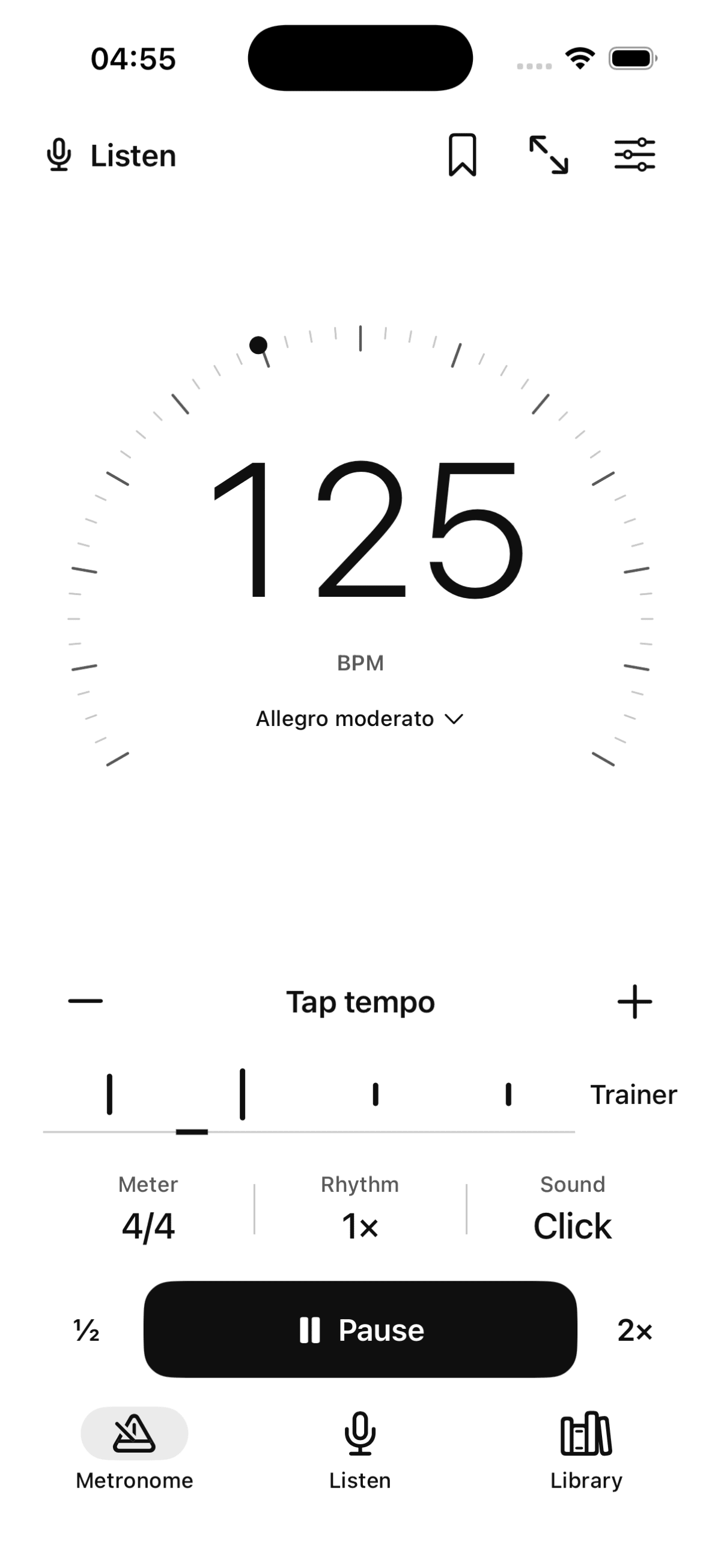
In Takt, our metronome app, the iPhone Meter controls let you set three beats per bar with a quarter-note unit for 3/4, or two with the same unit for 2/4. Keep Rhythm at 1× for a click on each quarter. Our guide to metre and metronome settings explains the controls and note units in more detail.


Screenshots and controls shown here are from Takt for iPhone and iPad.
Once you can keep your place, switch the click off and sing a phrase over the accompaniment. Experiment with lighter chords, a more definite bass attack and a longer melodic direction before changing the beat spacing. An accompaniment can feel heavy because its chords are too loud or too sustained, even when its timing is regular.
It is tempting to turn Viennese style into a formula about moving one beat early or late. That cannot tell you how a particular melody, accompaniment and phrase ending work together. Use Delirien to compare the melody’s continuation with the accompaniment’s repeated pattern. If a performance makes a phrase breathe, ask which layer changes and what happens next. Do not apply the same alteration automatically to every bar.
Give the concert one question to answer
You do not need to prepare the entire programme. Choose the piece that made you curious, hear it once without taking notes, then return to one passage with a question: how does the waltz emerge, how does a pause prepare a return, how do separate plucks form a line, or how do woodwinds and strings share a texture?
If you play, take one manageable phrase to the instrument. Keep the title and the question together in a notebook or repertoire record, so the next session begins with something more specific than “practise the waltz.” The listening and playing can then inform each other without requiring you to learn an entire orchestral arrangement.
For a wider view of how listening and performance sit alongside formal study in the city, our article on Vienna’s music-training culture provides that context. For the concert itself, keep the current Vienna Philharmonic programme handy, then leave room for Sokhiev and the orchestra to answer your musical question in their own way.