Don't Get Scammed: How to Spot Fake Online Music Courses
If you've ever scrolled through YouTube or Instagram and seen ads promising you'll "master piano in 30 days" or "learn guitar 10x faster than traditional methods," you're not alone. These courses are everywhere—and many of them are complete scams.
As musicians and teachers, we need to talk about this. I've seen too many students waste hundreds (or thousands) of dollars on fraudulent courses that not only fail to deliver but can actually teach bad habits that take months to fix.
Let's break down how to spot these scams so you can protect yourself and focus on legitimate learning.
A Case Study: When $3,000 Buys Four Chords
In 2024, NPR's investigative journalism team exposed a piano course charging $1,400-$3,000 to teach four basic chords—C Major, A Minor, F Major, and G Major. That's literally what you'd learn in the first week of any beginner method book.
According to the NPR investigation, the operation worked like this: A "free masterclass" that was actually a 2-3 hour sales presentation with minimal teaching. Students sat through the whole thing excited to learn, only to get hit with high-pressure sales tactics at the end.
The investigation uncovered multiple red flags:
- Claims of learning "150x faster than traditional methods"
- Fabricated media endorsements (publications confirmed they never covered the course)
- An "original price" of $14,000 permanently "discounted" to $3,000
- Website designed to mimic legitimate educational platforms
When music educators reviewed the teaching methods, they found techniques that could promote bad habits for beginners.
Red Flags in Marketing Language
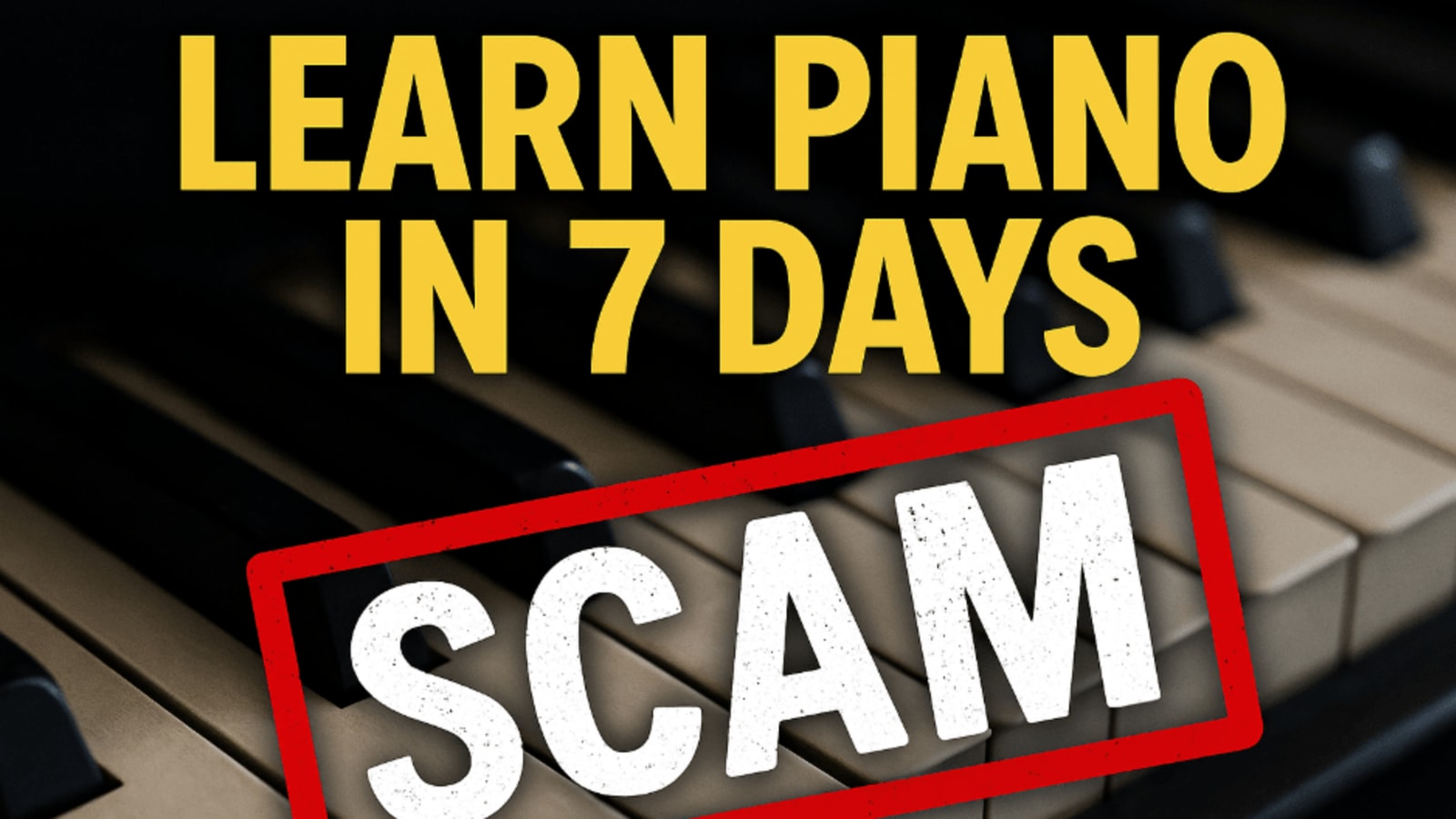
Unrealistic timelines: Any course promising "mastery in 30 days" is lying. Musical skill development takes months to years of consistent practice. There are no shortcuts.
"Secret methods": Legitimate teachers reference established pedagogical approaches (Suzuki, Russian school, Taubman Method, etc.). Scammers claim they've discovered a "revolutionary system" that's really just repackaged basics.
Vague promises: Real courses give specific outcomes like "develop sight-reading skills for Grade 3 repertoire." Fake ones say "unlock your musical genius" or "become a master musician."
Income guarantees: No legitimate educator promises you'll "earn six figures as a musician." Musical careers depend on talent, practice, and market conditions—not a single online course.
If you see phrases like "what piano teachers don't want you to know"—run. It's conspiracy-style framing designed to make basic information seem exclusive.
Pricing Tactics That Scream "Scam"
Fake discounts: That $14,000 course "on sale" for $3,000? The sale never ends. It's anchor pricing manipulation.
Countdown timers: If it resets when you refresh the page, it's fake urgency.
Hidden auto-renewal: Even some platforms with real content use predatory auto-renewal billing. People report being charged months after canceling, with companies refusing full refunds.
Multiple upsells: Having to wade through 3+ pages of additional offers during checkout, each adding subscriptions you didn't request.
No refunds or complicated refund processes: Legitimate courses offer 7-30 day money-back guarantees.
Protect Yourself: The Checklist
Before enrolling in any online music course:
- Search "[Course Name] + scam" on Reddit—music subreddits actively expose problematic courses
- Check BBB ratings and Trustpilot reviews (focus on negative experiences)
- Verify instructor credentials through independent databases
- Examine the actual curriculum—demand specifics before paying
- Assess if promises align with realistic skill development timelines
- Confirm the refund policy is fair
- Look for established pedagogical methods, not proprietary "secret systems"