
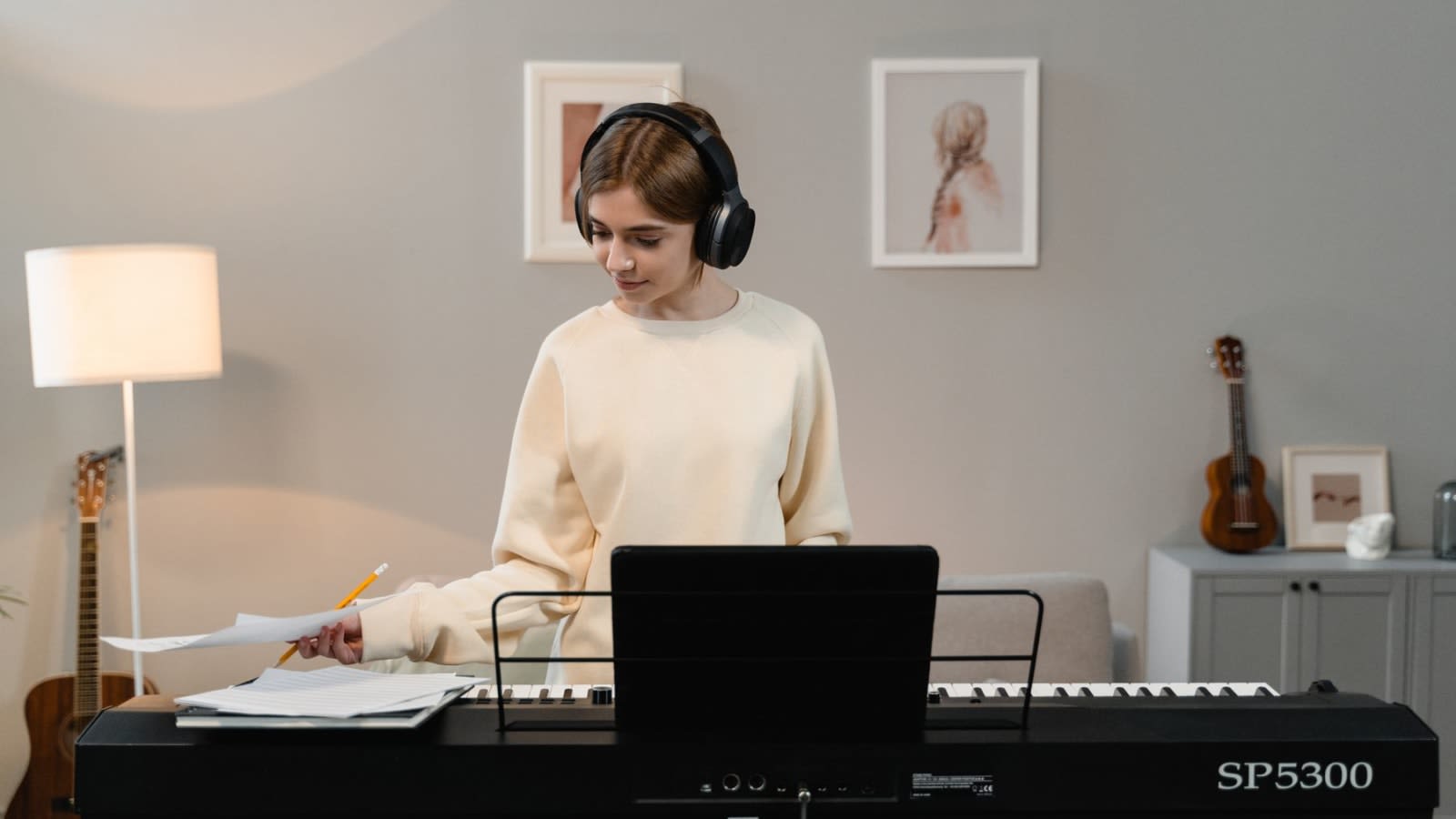
The best headphones for a digital piano are chosen by the room before they are chosen by price. In a shared or noisy room, start with a wired closed-back pair. In a private, quiet room, an open or semi-open pair can make a sampled piano feel less boxed in.
For most beginners, the Audio-Technica ATH-M20x is the sensible $59 default. The Yamaha HPH-50B is the lightweight pick below $40, the Sennheiser HD 280 PRO is the isolation-first choice, the AKG K240 Studio is the quiet-room value, and the beyerdynamic DT 770 PRO 80Ω and Sennheiser HD 599 are the two premium answers for opposite rooms.
Your room chooses the cup before your budget chooses the model
Room size is not the useful variable. A tiny, silent study can suit open-back headphones beautifully. A large living room with conversation, television, traffic, or an air conditioner usually calls for closed cups. The real questions are how much sound enters your ears and how much of your piano escapes to the person beside you.
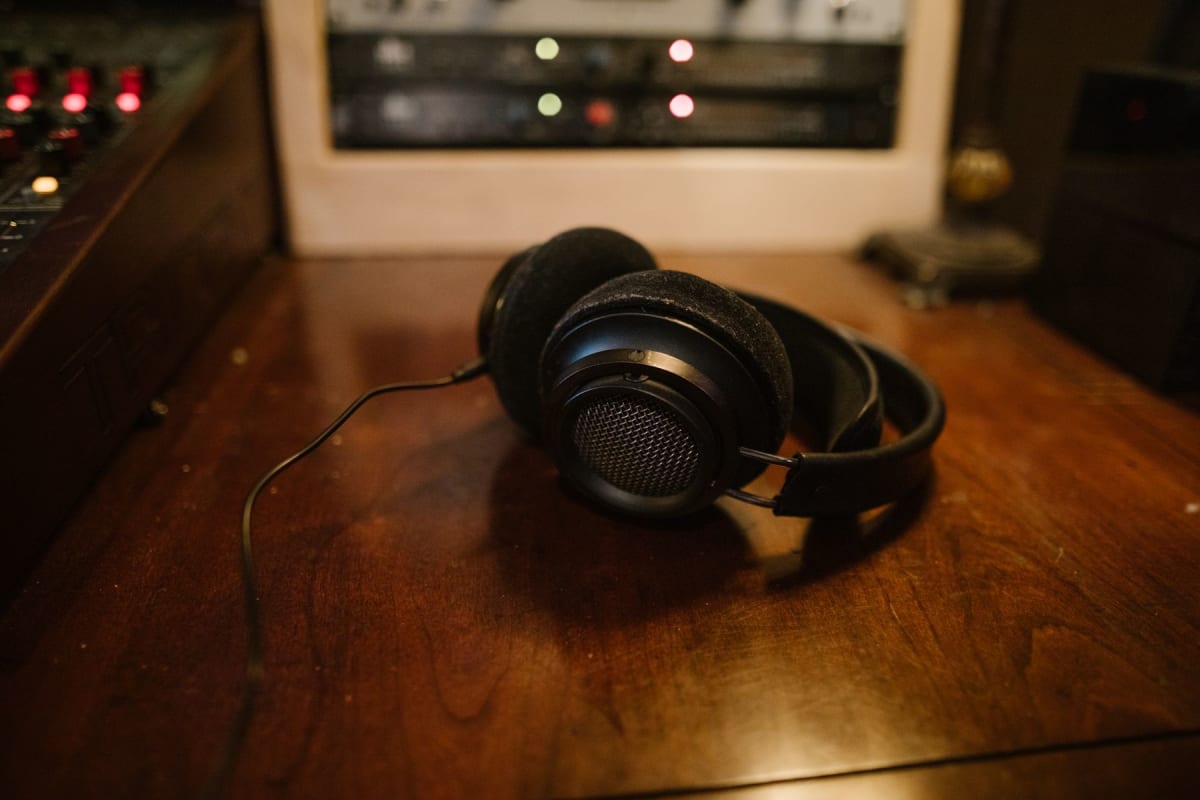
Closed-back headphones put a solid shell behind each driver. They generally reduce outside sound and keep more of your practice private, although none of these passive studio models creates silence. Open-back headphones deliberately vent the rear of the driver. That can produce a more spacious presentation, but it also lets room noise in and music out. Semi-open designs sit between the two, though in a shared room they should still be treated as leaky.
If the conditions conflict: privacy and outside-noise control beat soundstage. Choose closed-back.
There is one limit that no headphone fixes. Plugging in usually mutes the piano's speakers, but weighted keys still thump, pedals still move, and vibrations can still travel through a stand and floor. The distinction matters in an apartment, and the same physical-noise check appears in our post on digital-piano buying mistakes.
“Room size is not the deciding variable. What matters is what the room sends in and what the cups send out.”
The six picks, with the compromises visible
These are wired headphones because a direct cable is the dependable digital-piano connection. Practis did not bench-test the six models side by side. The recommendations use current manufacturer specifications, manuals, and US retailer listings checked on August 24, 2026. Prices below are non-Amazon snapshots so the affiliate buttons do not imply an Amazon price or permanent availability.
| Model | Room fit | Design | Cable and plug | Price snapshot |
|---|---|---|---|---|
| Yamaha HPH-50B | Shared room, short sessions | Closed, on-ear 35Ω · 133g* | 2m fixed, two-sided 3.5mm + 6.3mm adapter | $35.99 |
| Audio-Technica ATH-M20x | Best for most beginners | Closed, over-ear 47Ω · 190g† | 3m fixed, one-sided 3.5mm + 6.3mm adapter | $59 |
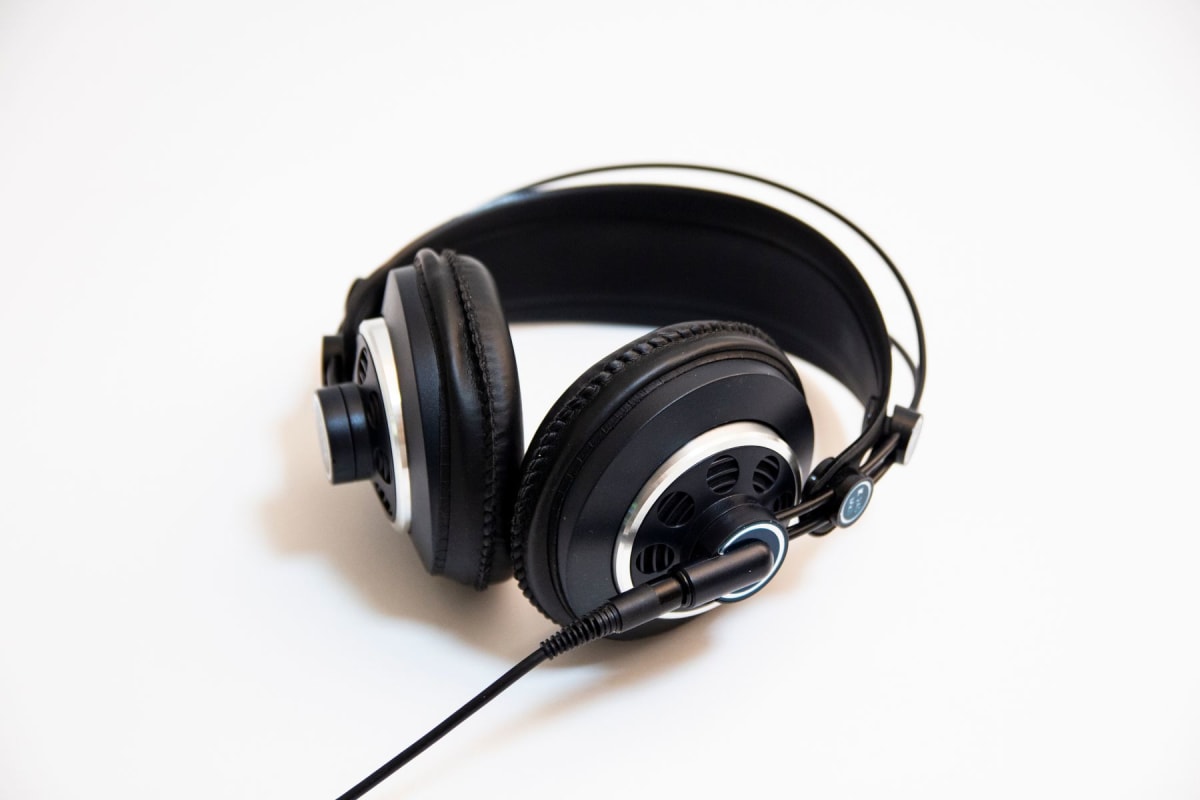
| AKG K240 Studio | Private, quiet room | Semi-open, over-ear 55Ω · 240g | 3m detachable, one-sided 3.5mm + 6.3mm adapter | $79 sale normally $99 |
| Sennheiser HD 280 PRO | Noisy household | Closed, over-ear 64Ω · 285g† | 1.3m coiled, 3m extended 3.5mm + 6.3mm adapter | $99.95 |
| beyerdynamic DT 770 PRO 80Ω | Premium shared-room use | Closed, over-ear 80Ω · 270g† | 3m fixed, one-sided 3.5mm + 6.35mm adapter | $199.99 |
| Sennheiser HD 599 | Premium private room | Open, over-ear 50Ω · 250g | Retail package lists 3m/6.3mm + 1.2m/3.5mm‡ | $239.95 sale normally $319.95 |
*Yamaha's published weight includes the cable. †Published weight excludes the cable. ‡HD 599 box contents vary by market and listing; verify the actual retailer package before ordering. Prices checked August 24, 2026.
Affiliate notice: Some links are paid links. As an Amazon Associate, we earn from qualifying purchases.
Below $100: buy the right fit, not the badge
Yamaha HPH-50B: the lightweight pair below $40
The HPH-50B is the inexpensive answer for a new setup, a child who finds full-size studio headphones bulky, or a household that needs a spare. Yamaha specifies a closed-back, on-ear design at 35Ω, a two-metre cable, and a weight of 133g including that cable. The small 3.5mm plug has a 6.3mm adapter in the box, so it can move between a phone-sized socket and the larger jack found on many pianos.
The compromise is physical, not mysterious. Its pads sit on the ears rather than surrounding them, and the cable enters both cups. A player who tolerates on-ear pads may find that acceptable for a shorter session; it is less attractive for long practice with glasses or frequent page turning. Choose it because it is light and complete, not because a piano logo makes it electrically special.
Audio-Technica ATH-M20x: the $59 default
The ATH-M20x is the cleanest general recommendation here. Audio-Technica specifies a closed-back, circumaural design, 47Ω impedance, 190g weight without the cable, and a fixed three-metre lead that enters one side. That cable is long enough for a rear or underside piano socket without putting an extension joint beside your knees. The supplied 6.3mm adapter covers the larger output.
Why not call it perfect? Audio-Technica describes the M20x as tuned for enhanced low-frequency performance, so it is not the neutral or most spacious choice in the group. The fixed cable also means cable failure is not a simple unplug-and-replace repair. Still, closed cups, low weight, a sensible impedance, and a $59 snapshot make it the pair least likely to create a new problem for a first-time buyer.
AKG K240 Studio: the $79 quiet-room value
The K240 Studio is the budget choice for a room where nobody is watching television, sleeping, or taking a call nearby. AKG specifies a semi-open design, 55Ω impedance, 240g weight, and a detachable three-metre cable with a screw-on 6.3mm adapter. The replaceable mini-XLR cable is a meaningful durability advantage over both cheaper picks.
Its weakness follows directly from its strength. The cups leak, and they do little to hide an air conditioner, traffic, or conversation. If you raise the piano volume to defeat the room, you have erased the main benefit of choosing an open design. Buy the K240 for an undisturbed room and an airy presentation, not as a universal bargain.
From $100 to $250: pay for isolation, comfort, or space
Sennheiser HD 280 PRO: when the household is the problem
The HD 280 PRO makes sense when outside sound is causing you to turn the piano up. Sennheiser specifies a closed circumaural design, 64Ω impedance, 285g weight without the cable, and up to 32dB of ambient-noise attenuation. The cable is fixed and coiled, roughly 1.3 metres relaxed and three metres extended, with a 6.3mm adapter included.
That construction is excellent for staying connected in a studio, but not every pianist enjoys a coiled lead pulling toward the socket. The headband also needs enough pressure to maintain its seal, so this is a model to fit-check with glasses. Choose it over the M20x because the room is genuinely noisy, not simply because a three-digit price looks more serious.
beyerdynamic DT 770 PRO 80Ω: the premium closed-back pick
The 80Ω DT 770 PRO combines closed cups, replaceable velour ear pads, and a fixed three-metre straight cable. beyerdynamic lists 270g without the cable and about 18dBA of ambient-noise isolation. It is a good fit for a shared home when you want an over-ear pad that is less heat-trapping than common imitation-leather surfaces.
The caveat is output level. An 80Ω impedance number does not by itself predict loudness, and digital-piano headphone amplifiers vary. This version may provide less headroom on a weak output than the lower-impedance options in the table. Buy from a seller with a practical return window, test it on the exact piano, and reject it if normal playing needs the volume near maximum. Its long cable and velour pads are useful only if the piano can drive it cleanly.
Sennheiser HD 599: the premium private-room pick
The HD 599 is the opposite answer. Its open ear cups provide no useful privacy or isolation, but in a quiet room they avoid the sealed-in presentation that some players dislike during long sessions. Sennheiser specifies 50Ω impedance and a 250g weight, which makes the electrical requirement less concerning than the DT 770 PRO 80Ω on paper, although the exact piano still decides the result.
Check the box contents carefully. The current Sennheiser page contains inconsistent cable-package information, while the exact retailer and Amazon listings used here describe both a three-metre cable ending in 6.3mm and a 1.2-metre cable ending in 3.5mm. That two-cable arrangement is unusually convenient for a piano, but it should not be assumed across every regional package. At the current $239.95 sale price, the HD 599 is for a private room and a listener who already knows open-back comfort and space are worth the premium.
“Spend past $100 only to solve a real problem: stronger isolation, long-session comfort, or a presentation you genuinely prefer.”
The plug, cable, and Bluetooth traps
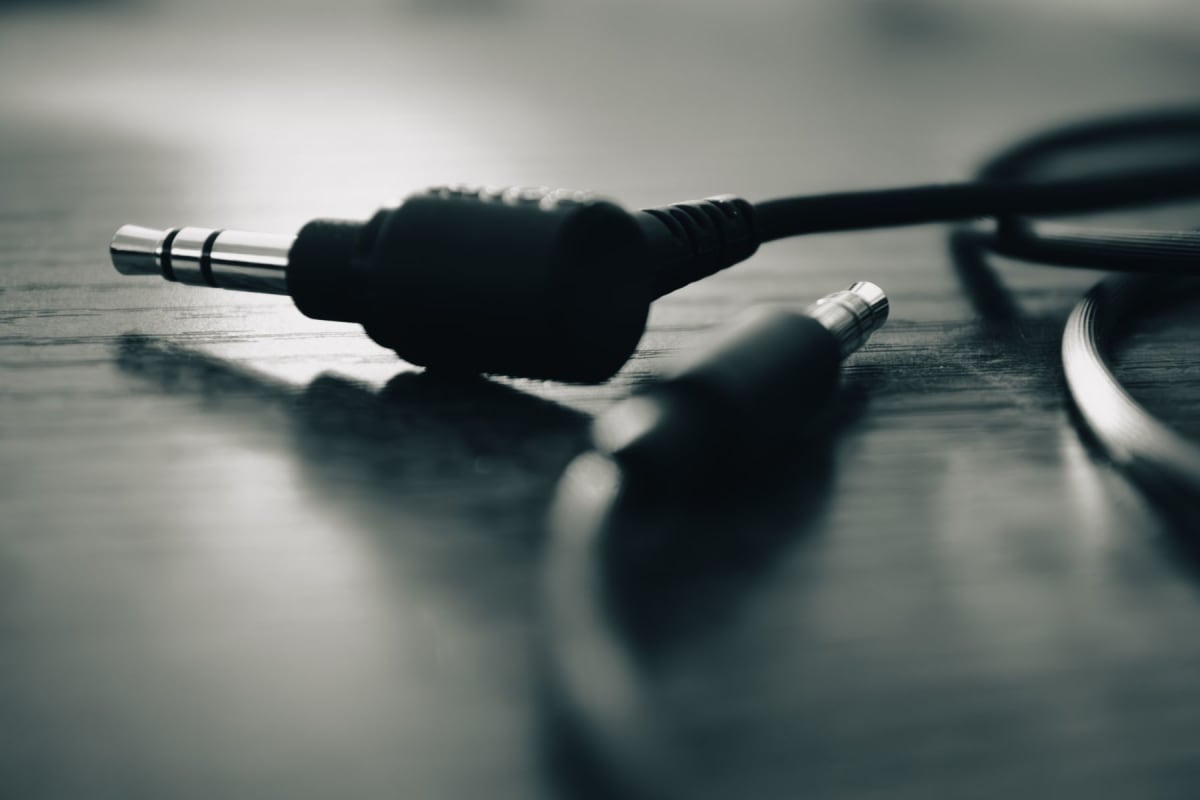
A headphone can sound excellent and still be wrong for the instrument. Before ordering, look under the keybed and behind the piano, read the label beside the socket, and check the manual. Some instruments use the small 3.5mm socket common on portable electronics. Many use the larger 6.3mm, also called quarter-inch. Several have two sockets so teacher and student can listen together.
Do not assume a Bluetooth logo means Bluetooth headphones will work. On many digital pianos, Bluetooth Audio is an input for playing a phone through the piano speakers, not an output to wireless headphones. Even when a model can transmit audio, wireless latency can put the sound behind the key press. A wired connection avoids both ambiguities. If you are still selecting the instrument, our beginner digital-piano shortlist separates headphone, MIDI, and Bluetooth requirements rather than treating them as one feature.
The cable should belong to the setup, not trail through it. A three-metre straight cable is often the easiest answer for a console or rear socket. A shorter cable can work beautifully when the jack is immediately under the left cheek block. Measure before buying; a cable that is unnecessarily long becomes floor clutter, while one that is ten centimetres too short pulls on the plug at every page turn. Our complete beginner home setup shows how the cable, bench, stand, and pedal have to coexist.
Run this test before the return window closes
Specifications can eliminate obvious mismatches, but they cannot tell you how a pad meets your jaw or how much clamp you tolerate with glasses. Keep every insert and package, then test the headphones on the exact piano at the time of day when you normally practise.
- 01Play the whole instrument quietly.Start low, play single notes from bottom to top, and listen for hiss, channel imbalance, rattles, or a volume jump. Then play soft chords and normal forte passages.
- 02Ask another person to check leakage.Use your real practice level while they sit where they normally would. With the piano sound muted, ask them separately about key and pedal noise.
- 03Wear them for one complete session.Notice heat, pressure at the crown, pad contact, and whether the seal changes when you look down at your hands. Comfort judged after two minutes is almost meaningless.
- 04Turn pages, use both pedals, and stand up.The cable should not cross your feet, pull the connector sideways, scrape audibly against clothing, or catch the bench.
- 05Compare headphones with speakers.At a modest level, the piano should still feel dynamically believable. Do not choose a pair merely because louder sounds more impressive.
The final recommendation is deliberately ordinary: buy the ATH-M20x if you need one dependable answer and do not yet know your preferences. Move down to the HPH-50B for a light, inexpensive spare; sideways to the K240 Studio for a private quiet room; up to the HD 280 PRO when room noise is the obstacle; or into the DT 770 PRO and HD 599 only after you can name the comfort or presentation you are paying to improve.
Then stop comparing headphones and use them. A good pair should disappear into the setup, leaving the next decision to the music and the next session to your actual digital-piano practice. The free tier on the Practis pricing page is enough to time that session, set the goal, and keep one useful note for tomorrow.


