
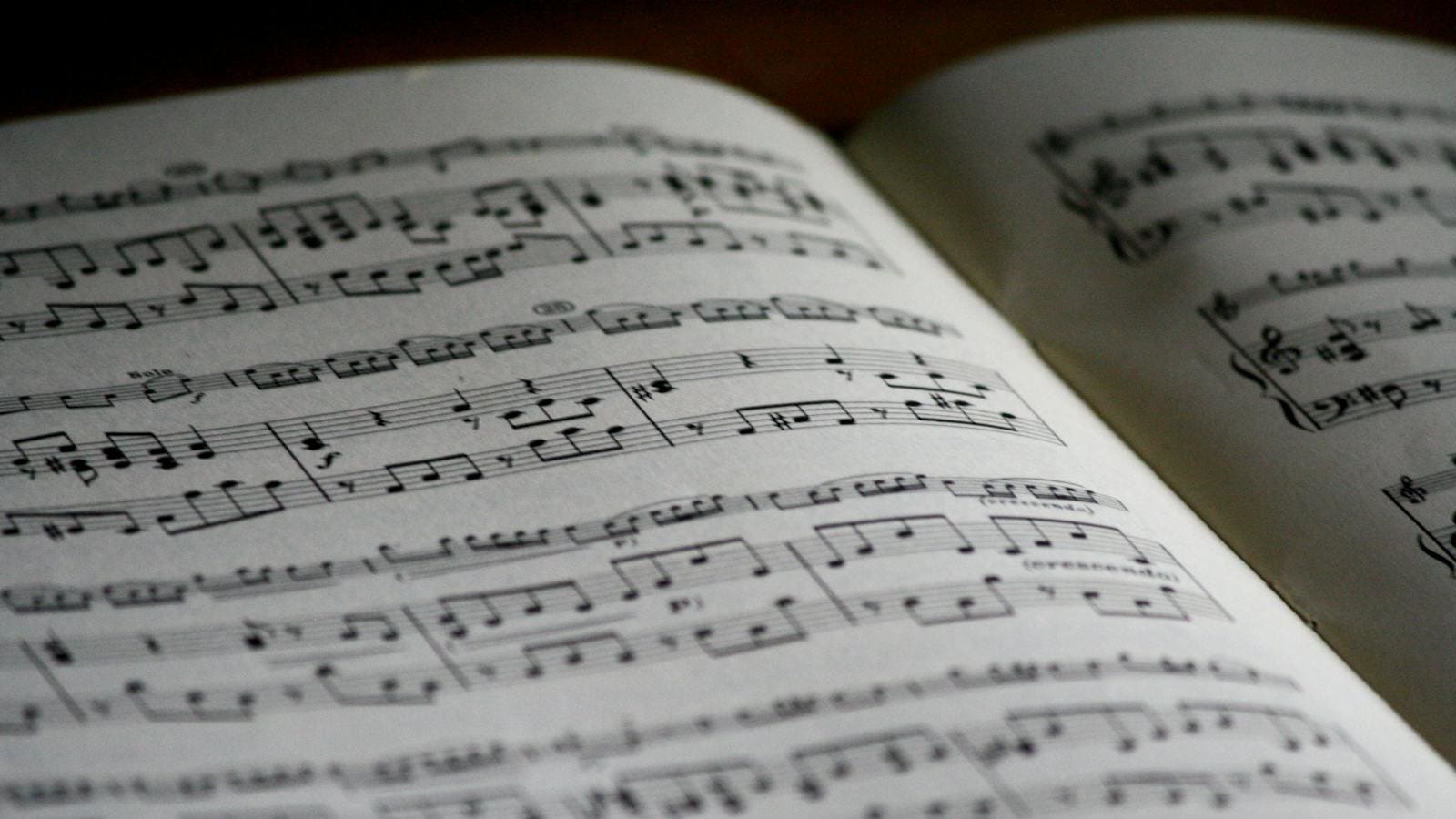
Short answer: yes, scales and arpeggios are worth practicing, but not for the sentimental reason students are usually given. They are not valuable because pianists are supposed to suffer through them. They are valuable when they improve your keyboard geography, fingering fluency, hand coordination, tone control, and repertoire readiness.
They become a waste of time when they are practiced mindlessly, too fast, without listening, and with no connection to actual musical problems.
The honest version: scales and arpeggios are not automatically good practice. They are good practice only when they are done musically, attentively, and for a clear reason.
This is also how major exam systems increasingly frame them. Trinity's piano technical-work rationale explicitly connects scales, arpeggios, and exercises to a practical technical foundation and to their application in repertoire. ABRSM's Scale Explorer materials try to bring scales to life through short pieces, improvisation, composition, and exercises rather than treating them as isolated patterns only. Trinity, Trinity article, ABRSM Scale Explorer.

Photo: Juan Pablo Serrano via Pexels
When Scales and Arpeggios Actually Help
| They help when... | Why |
|---|---|
| You need more fluency in common key patterns | They reduce the feeling that every key is unfamiliar territory |
| A passage in repertoire is built from scale or arpeggio shapes | They give you reusable movement patterns instead of one-off solutions |
| Your fingering and thumb passages are unstable | They expose weak transitions clearly and repeat them enough to improve |
| You practice them with tone, rhythm, and listening | They become musicianship work, not just finger motion |
When They Become a Waste of Time
| They are a waste when... | Why |
|---|---|
| You blast through the same familiar keys on autopilot | No real problem is being solved |
| You never connect them to repertoire | The work stays abstract instead of transferable |
| You practice them mechanically without listening | You are training movement without sound-quality control |
| They replace all other technical thinking | Some repertoire problems are about voicing, rhythm, leaps, or coordination, not just scales |
1. Scales Are About Geography as Much as Speed
One major benefit of scales is that they make the keyboard feel less random. A student who has never really internalized D-flat major, B major, or F-sharp minor experiences those keys as visual and physical confusion every time they appear in repertoire.
Well-practiced scales reduce that confusion. They teach:
- where the hand fits in different key layouts
- how thumb passages function smoothly
- which fingerings are structurally stable
- how to keep evenness while the hand reorganizes
That does not mean scales magically solve every technical issue. It means they remove one recurring source of uncertainty.
2. Arpeggios Matter Because Repertoire Is Full of Them
Arpeggios often transfer more directly to real repertoire than students first notice. Broken chords, accompaniment patterns, wide-position harmony, cadential gestures, and countless Romantic textures all depend on arpeggiated movement.
If a student struggles with arpeggios, they often struggle with:
- rolled or broken-chord patterns
- position changes
- evenness across wider hand shapes
- connecting harmony smoothly across the keyboard
That is why arpeggios are often worth more than their reputation suggests. They are not just exam material. They are part of the basic language of tonal piano writing.
3. The Problem Is Usually Not Scales. It Is How Students Practice Them
Most students do not dislike scales because scales are inherently pointless. They dislike them because they are often assigned in the dullest possible way.
The most common mistakes are:
- starting too fast
- ignoring tone and balance
- using exactly one articulation forever
- never changing rhythm or grouping
- treating completion as success instead of quality as success
If all you do is “get through” the pattern, you are mostly rehearsing boredom.
4. Good Scale Practice Sounds More Musical Than Students Expect
Scales should not sound like dead data. Even in technical work, you can listen for:
- evenness
- tone consistency
- balanced thumbs and crossings
- controlled shaping
- rhythmic steadiness
Trinity's technical-work approach is useful here because it explicitly links technical work to tone, balance, voicing, coordination, finger strength, wrist flexibility, and application in repertoire. That is a much better model than treating scales as speed drills only. Source.
5. They Do Transfer, But Not in a Magical One-to-One Way
This is the part worth being honest about. Practicing scales does not automatically mean every fast passage will suddenly become easy. Transfer is real, but it is partial.
A research study on piano practice found that practicing sequential finger movements at submaximal speed increased maximum speed not only in trained movements but also, to some extent, in untrained movements. That supports the basic idea that technical work can transfer. But it does not mean all repertoire problems dissolve into scale practice. Furuya et al..
The practical takeaway is:
- scales and arpeggios build useful transferable skill
- repertoire still needs its own specific practice
- technical work is foundation, not total solution
How to Practice Scales and Arpeggios So They Are Worth It
| Do this | Instead of this |
|---|---|
| Practice slowly enough to control crossings and sound | Starting at near-maximum speed immediately |
| Vary articulation, dynamics, and rhythm | Playing identical reps with no listening |
| Focus on one technical purpose each day | Running every scale with no specific aim |
| Connect technical work to current repertoire | Treating scales as a separate world |
A Better 10-Minute Technical Work Block
| Time | What to do | Focus |
|---|---|---|
| 2 min | One scale in a key that appears in current repertoire | Geography and fingering |
| 2 min | Same scale with a different rhythm or articulation | Control and evenness |
| 2 min | Arpeggios in the same key | Position shifts and hand organization |
| 2 min | Short repertoire passage built from those shapes | Transfer into music |
| 2 min | Repeat the most awkward crossing or shift slowly | Problem solving |
Who Needs Them Most?
Scales and arpeggios are especially valuable for students who:
- feel lost in less familiar keys
- have unstable fingering patterns
- struggle with fast tonal passagework
- need better keyboard orientation
They are less central when the current bottleneck is something else entirely, such as pedaling detail, chord voicing, polyrhythm, memorization failure, or performance anxiety. In those cases, scales may still be useful, but they are not the main answer.
FAQ
Should pianists practice scales every day?
Not necessarily every single day in the same way, but regular scale and arpeggio work is useful for most pianists if it is done attentively and tied to real technical needs.
Are scales enough to build piano technique?
No. They build an important part of technique, but not all of it. Repertoire, coordination work, rhythm, voicing, and problem-specific practice still matter.
Why do scales feel boring?
Usually because they are being practiced mechanically. Once you add listening, variation, and a clear technical purpose, they become much more useful and less deadening.
Are arpeggios more useful than scales?
Sometimes they transfer more directly to repertoire, especially in chord-based textures, but both matter. It depends on the technical problem you are trying to solve.
The Bottom Line
Scales and arpeggios are worth practicing, but only if they are done intelligently. They are foundation work, not sacred ritual.
If they improve your keyboard fluency, technical control, and repertoire readiness, they are valuable. If they are just empty repetition, they are not.

