A masterclass can begin like a recital: you walk in, introduce the music and play while people listen. Then the teacher stops you, asks a question or wants to hear one phrase differently. Prepare a piece you know well enough to work on in public, including the ability to begin somewhere other than bar one.
The most useful preparation combines a secure starting point with room to experiment. You do not need to arrive with every artistic question settled. You do need enough familiarity with the music to hear a suggestion and attempt it without having to relearn the notes.
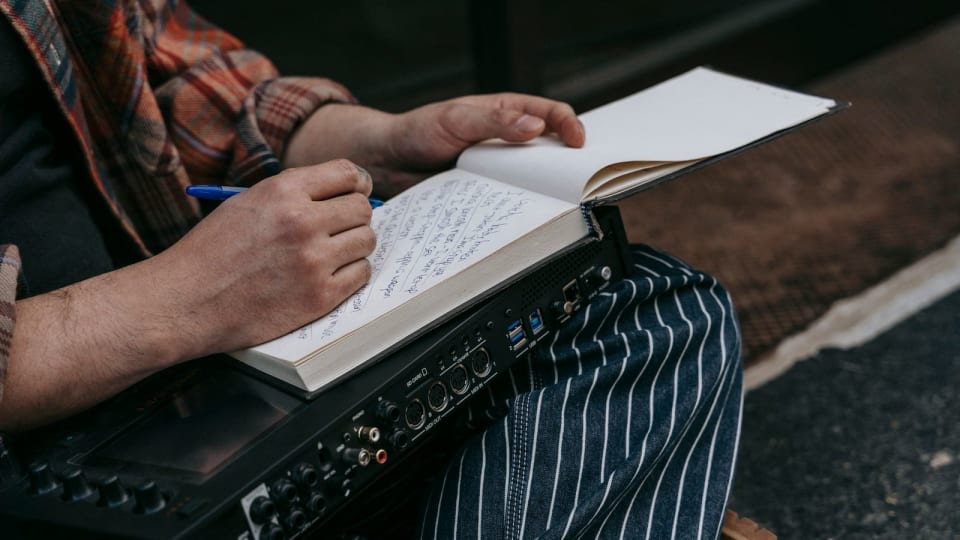
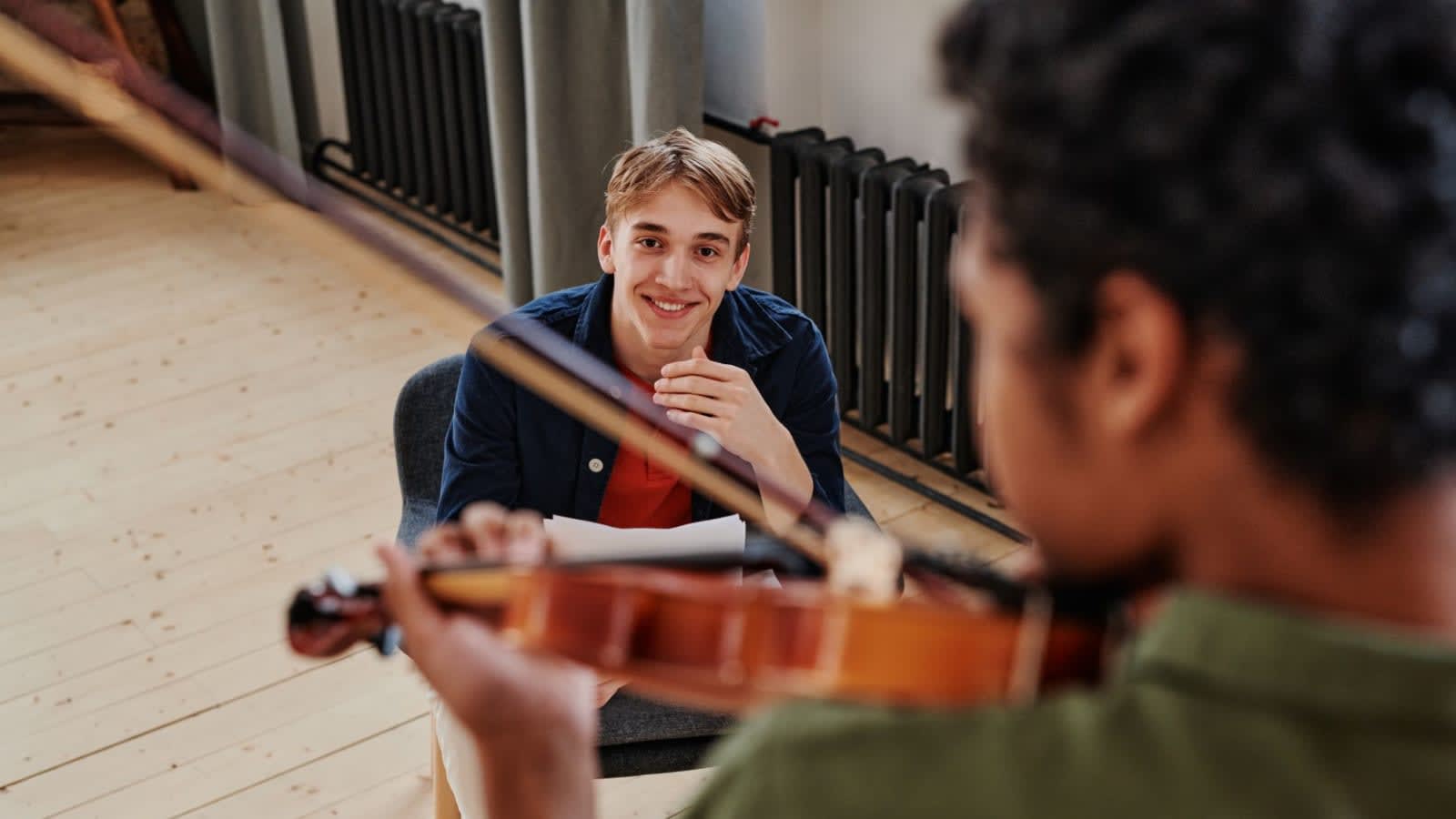
Featured photograph: Boris Pavlikovsky / Pexels. Illustrative lesson photograph, not the masterclass shown below.
Find out what this particular class expects
The word masterclass covers very different events. A local public lesson, a residential music course and an advanced artist workshop may differ in level, repertoire, selection and time available. Read the organiser’s instructions before choosing the music.
For example, CAMMAC’s published preparation guidance asks participants to prepare a solo piece lasting two to three minutes and bring three copies of the music. It provides a pianist except for piano masterclasses. The guidance also says that someone arriving without a prepared piece can observe but cannot participate actively.
By contrast, Carnegie Hall’s Joyce DiDonato programme is an opera-aria workshop for four selected singers. Its published application requirements distinguish Italian and non-Italian arias and exclude art song, oratorio and musical theatre. That is a particular programme’s focus, not a definition of what every singer should bring to a first masterclass.
Confirm the practical details that affect your preparation:
- Whether you are attending as a performer or observer, and whether your place is confirmed.
- The permitted repertoire, duration and whether a movement or excerpt is acceptable.
- Any memory requirement and how many scores are needed.
- Who provides the pianist or other collaborators, and when they need the music.
- Your arrival time, warm-up arrangements and whether personal recording is allowed.
If “twenty-minute slot” appears in an email, ask whether that includes your initial playing and the teaching. Do not assume it means twenty minutes of uninterrupted performance. Send the exact title and movement when confirming repertoire; “the Mozart” leaves too much room for misunderstanding.
Choose the piece that leaves attention available
The hardest piece you own is rarely the automatic best choice. If nearly all your attention goes into surviving it, a request to change the balance, shape a phrase or begin at a new point can become difficult to attempt. A familiar work with an unresolved musical question gives the teacher something more specific to work with.
Consider this hypothetical choice for a flautist whose organiser accepts a short solo work:
A seven-minute showpiece, learned recently
The opening is convincing, but two later passages still stop the performance. The player has not rehearsed it with the pianist, and the class’s stated limit is three minutes.
Before choosing it, the performer would need approval for an excerpt and more preparation. The impressive opening does not resolve those practical problems.
A three-minute lyrical piece, already performed
The notes and accompaniment are familiar. The player can find the middle section quickly but is unsure how to sustain the long phrase without making every bar sound separate.
This gives the class a manageable piece and a clear question. It is the stronger choice for this imagined situation, even though its technical demands are lower.
Ask your regular teacher which of your current pieces would benefit from another perspective, if that conversation is available. You can also make a short recording for your own preparation: listen for the point where your intention becomes unclear and mark it in the score. A masterclass is an opportunity to examine that point, not a requirement to hide it.
Know the composer, work, movement and edition you are using. For a song, understand the words and their meaning. You need enough context to discuss what you are trying to communicate; memorising a long programme note is unlikely to help you respond to a question about one phrase.
Rehearse the part where the teacher interrupts
A complete run tests continuity. A public lesson also asks you to stop, locate a passage, listen and begin again. Practise that sequence before the class so that an interruption feels like a normal part of working.
- Choose three clear starting places. Use a section opening, a difficult entrance and the phrase you want help with. Find them by bar number or another unambiguous cue. Include any pickup and enough preceding context to begin musically.
- Play a short span, then stop. Put your attention on a single task, such as where the phrase is heading. If a friend is listening, ask them to name one of your marked starting places instead of always returning to the beginning.
- Try one deliberate change. Play the same passage with a different dynamic shape, or at a slower tempo while keeping the phrase connected. The aim is to practise making a requested change, not to predict the teacher’s preferred interpretation.
- Return to the larger passage. Begin before the isolated spot and continue beyond it. Check whether you can carry the experiment back into the surrounding music.
During the class, let the teacher finish the request. If it is unclear, a short question helps: “From the pickup, or the first full bar?” or “Do you mean more time here, or a quieter sound?” Then try the idea. You can assess it more fully afterward with your regular teacher; the immediate task is to understand the experiment.
An unfamiliar suggestion may feel awkward on its first attempt. That is different from a request that causes discomfort or asks for something you cannot safely do. Say so plainly if that happens. Willingness to learn does not require concealing a problem.
Watch a masterclass for the interaction
The Royal College of Music’s video below shows Maxim Vengerov working with violinist Yixuan Ren and pianist Kumi Matsuo on the first movement of Sibelius’s Violin Concerto. It was recorded in May 2025. This is advanced repertoire; use the video to observe the format of a public lesson, rather than as a benchmark for what a first-time participant ought to play.
Choose one exchange to follow. What does the teacher ask for? Where does the player restart? What would you listen for in the next attempt to judge whether the request has been tried?
Write down the request and the passage before writing an opinion about the result. That keeps your attention on the work being done.
The same approach helps when you attend as an observer. You may hear a useful question about pacing, character or listening even when the instrument is different from yours. Keep technical instructions in their original context: a correction addressed to one performer is not automatically a rule for everyone.
Make the score and accompaniment easy to work with
Bring the music in the format the organiser requests, with pages readable and in order. Even if you will perform from memory, a score helps the teacher identify a passage and gives you somewhere to retain a marking. Use lawful copies and make sure everyone can reconcile bar numbers, repeats and any agreed cut.
If a pianist is involved, send the actual piano part in advance, in the right key, and identify the exact piece and movement. Confirm whether rehearsal time is provided. Someone being available to accompany the class does not mean you have already rehearsed your entrances together.
Before your turn, settle practical details quietly: tuning, stand position, page turns and the opening tempo with your collaborator. Have a pencil within reach. Allow the organiser’s arrival margin rather than planning to enter the room at the moment you are due to play.
Ask before making a personal recording. For example, the Royal College of Music’s July 2024 class recording policy requires permission from the professor and contributing students for personal student recordings where the College is not recording. It also places separate restrictions on use and sharing. Follow your event’s rules, and do not treat permission to record as permission to post the class online.
Leave with something you can try again
Beforehand, prepare one question specific enough to be useful: “How can I keep the second phrase moving without speeding up?” gives more direction than “How do I make it better?” The teacher may choose a different priority, but having a question helps you arrive with an intention.
After your turn, note the passage, the requested change and what you want to check next. Keep the wording close to what was actually said. “Bars 18–22: try less movement in the accompaniment and listen for the melody’s arrival” is easier to revisit than “More musical.”
A notebook works. If you use Practis, our app, keep the follow-up with the piece so it is there when you next practise; a useful practice diary needs that continuity more than a long account of the event. For keeping teacher and student notes clear, see our lesson-notes guide.
At the next practice session, return to the marked passage before attempting another complete run. Give the suggested change a fair try, then bring any unresolved question to your next lesson. The value of the masterclass continues in that ordinary work afterward.