
Ask a musician what they're working toward and you'll usually get one of two answers, and both are surprisingly useless. The first is pure effort — "I want to practise more," "I just need to be more consistent." The second is a distant result — "I want to play Clair de Lune," "I want to pass grade five." They both feel like goals. Neither one tells you a single thing about what to do when you sit down tonight.
That gap, between a goal that motivates you and a goal that directs you, is the whole problem. And it's fixable the moment you stop treating "goal" as one thing. There are actually three kinds, they do completely different jobs, and the most useful kind is the one almost nobody bothers to write down. "Practice more" isn't an ambitious target you keep falling short of. It's the absence of a goal, wearing a goal's clothes.
Why "practice more" is the weakest goal there is
This isn't a hunch — it's one of the most replicated findings in the psychology of motivation. Across decades of research and hundreds of studies, Edwin Locke and Gary Latham found that specific, challenging goals produce dramatically better performance than vague encouragement to "do your best." In their data, specific hard goals beat do-your-best goals around 90% of the time, with the gap in output running enormous. "Practice more," "get better," "do my best this week" are the textbook do-your-best goal — and it sits at the bottom of the rankings precisely because it gives you nothing to aim at and no way to know whether you hit it.
Locke and Latham also spelled out what a goal needs to actually work, and the list quietly indicts "practice more." A useful goal needs clarity (you know exactly what it is), challenge (it stretches you), acceptance, feedback (you can tell whether you're getting there), and appropriate complexity. "Practice more" fails clarity and feedback on the spot: there's no version of tonight's session that clearly counts as success, and no moment where you get to know you've done it. A goal you can't fail and can't complete isn't motivating you. It's just hanging there.
"‘Practice more’ isn't a goal. It's the absence of one — the thing you say when you haven't yet decided what to actually do."
The three kinds of goals — and which one to live in
Borrow a framework from sport psychology, where this has been worked out carefully, and three distinct goal types appear. They form a ladder, and the trick is knowing which rung to stand on day to day.
An outcome goal is the result you ultimately want: "perform the nocturne at the spring recital." It's the thing on the wall, and it's genuinely useful for motivation — but you don't fully control it (the day, the nerves, the room all get a vote), and it says nothing about what to practise this evening. A performance goal is a measurable standard you set for yourself: "play it at 92 bpm with no memory slips." Better — now there's a target and a way to measure it — but it still describes a destination, not the route. A process goal is the specific, controllable action: "bars 9 to 16, hands separate, five evenings this week, at a tempo where I make zero errors." That's the only one of the three you can sit down and simply do.
And the process goal isn't just more practical — it's measurably better for you. In a classic study of golfers, Kingston and Hardy found that players trained on process and performance goals showed lower cognitive anxiety and higher self-efficacy than those fixated on outcomes, because the thing they were focused on was entirely within their control. The rule athletes work by is worth stealing: hold more process goals than performance goals, and more performance goals than outcome goals. One result on the wall; a handful of concrete actions on the music stand.
The goal ladder — live near the bottom
Keep one outcome at the top for motivation. But the work — and the improvement — happens at the base.
How to translate any vague goal into one you can use
The method is a short climb down the ladder. You don't throw the outcome away — it's your reason for being there — you just refuse to stop at it. Take whatever vague aim you started with and ask three questions in order: What result do I actually want? (that's your outcome). What would that look like if I measured it? (that's a performance goal). What specific action, this week, moves me toward it? (that's the process goal, and that's the one you write on the stand). The vaguer the starting point, the more the translation reveals.
Notice what every right-hand entry shares, because that's the actual test. A real process goal passes three checks, and "practice more" fails all three. It has to be controllable — success depends only on what you do, not on talent showing up or the piece cooperating. It has to be specific — you know precisely what the action is before you sit down. And it has to be verifiable — tonight, you'll know for certain whether you did it. Run any goal through those three and you'll instantly see whether you've written an instruction or just a wish.
Controllable
Success depends only on what you do — not on luck or the day.
Specific
You know exactly what the action is before you start.
Verifiable
Tonight you'll know for sure whether you did it.
Track the action, not the outcome
There's one trap left, and it's the one that quietly undoes good goals. People write a sharp process goal and then go right back to judging their success by the outcome — "can I play the whole thing yet?" — which moves slowly and leaves you feeling stuck even while you're improving. Don't measure the destination day to day; measure the action. Did you do the five evenings on bars 9 to 16? That's the part you control, and if the answer is yes most weeks, the outcome takes care of itself. It's the same reason we argue for counting the right things rather than raw minutes in practice goals vs practice time.
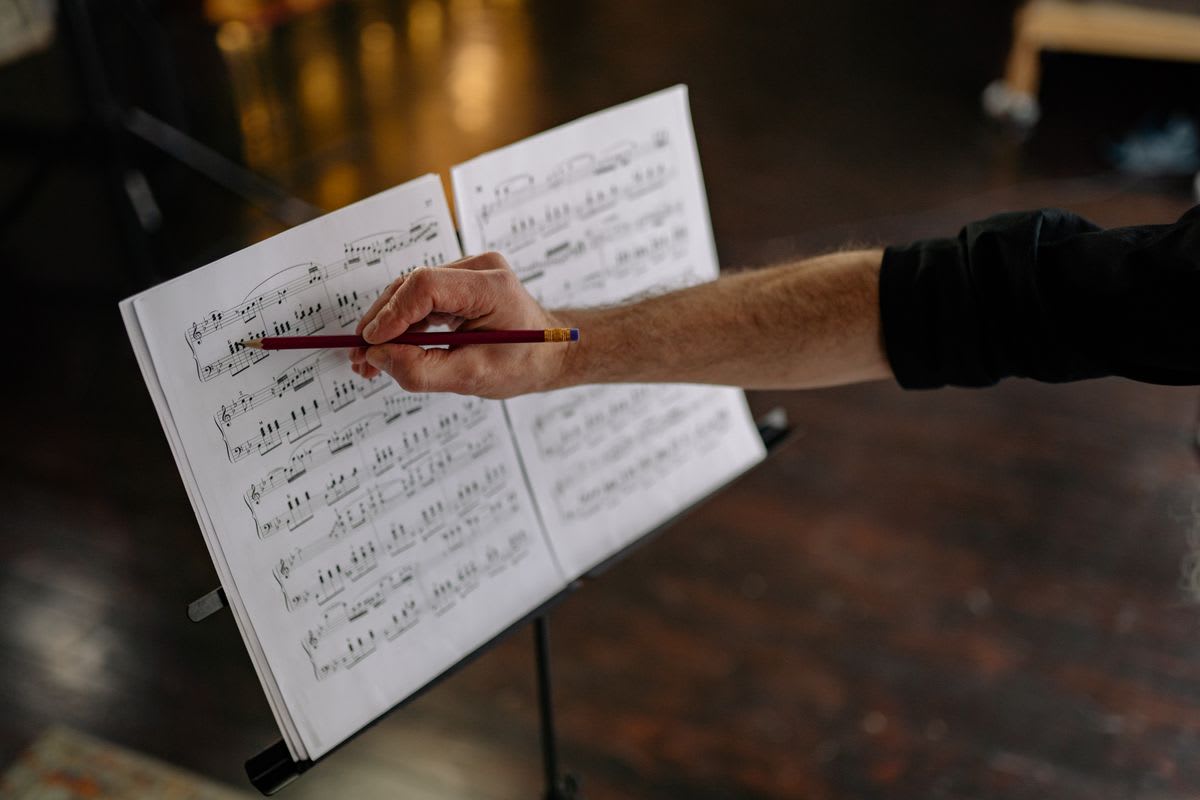
This is exactly the kind of thing a goal feature in a practice app is for, and it's part of what we built Practis around — so weigh it accordingly: a process goal attached to a specific piece, with a simple check each session for whether you did the action, not whether the piece is finished. The tool only matters insofar as it keeps your attention on the controllable part. If you want the gentler, sustainability-first take on goal-setting for hobbyists who don't want practice to feel like a job, that's a different and complementary angle we cover in practice goals that actually work for adult hobbyists; here, the point is narrower — make the goal an action. And the action itself usually means working a passage in isolation rather than running the whole piece.
"Keep the outcome on the wall for motivation. Live in the process goals — they're the only ones you can actually do tomorrow."
So keep one outcome where you can see it, because you need a reason to bother. But spend your actual weeks down at the base of the ladder, in goals small enough to do and clear enough to check. Trade "practise more" for one specific action this week — this passage, this way, this many times — and by Sunday you'll have done something the old goal could never have asked of you, because it never knew what it wanted.


