“Chopin’s Spring Waltz” is a misleading name for Mariage d’Amour, composed by Paul de Senneville. Richard Clayderman recorded it, and his name is closely associated with the piece. Chopin did not write it. If that title led you to music you want to hear again or learn, the useful search is “Mariage d’Amour,” followed by the pianist whose version you liked.
The names on the recording
Clayderman’s recording appears on Lettre à ma mère. The label-supplied release on his official YouTube channel credits Clayderman at the piano and Paul de Senneville as composer. It carries a 1979 recording copyright, placing it a long way from Chopin’s nineteenth-century music.
That separation between pianist and composer is easy to lose when a track is shared. “Richard Clayderman: Mariage d’Amour” tells you who is playing; it does not mean that he wrote the composition. A later pianist can make another recording or arrangement while the composer credit stays the same.
Here is the credited Clayderman release. It is a useful place to start if you know the tune only through a piano tutorial or a repost.
How the wrong title can survive a correction
One clear example is Toms Mucenieks’s upload from 28 February 2017. Its title still begins “Chopin - Spring Waltz,” while the description identifies Paul de Senneville and explicitly corrects the Chopin attribution. The performer says he initially uploaded it without knowing the attribution was wrong.
That is evidence of a particular misleading upload, rather than proof of where the mistake began. It does, however, show the problem with a correction that lives below a title. Someone sharing a link, saving a playlist or glancing at a search result can encounter the wrong composer before seeing the explanation.
There is no need to invent a lost Chopin work to account for the tune. The composer’s name also appears on the published music: both Musicnotes editions linked below put Paul de Senneville’s credit above the first stave. The recording credit and score credit agree.
Why two scores with the same title can look different
Correcting the composer gets you to the right piece, but it does not automatically get you the version you heard. A piano arrangement can change the introduction, accompaniment, register or way the music is written down. A tutorial may follow that arrangement rather than another edition sold under the same title.
Even listings headed “Richard Clayderman” need a closer look. Musicnotes offers these two piano-solo editions in G minor, and their opening pages make the differences visible:
The four-page edition opens with a long right-hand note marked an octave higher, over a moving left hand. The running melody is written in eighth notes, and the page gives the phrases relatively generous space. This is the sample to inspect first if you prefer a less crowded page.
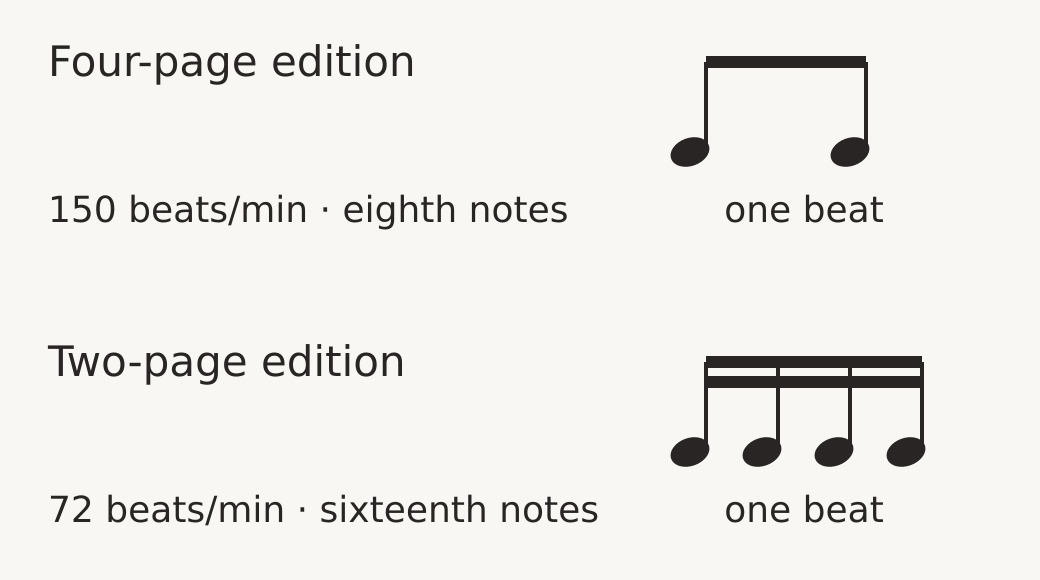
The two-page edition packs more music onto the opening page. It includes chord symbols, a repeat sign and an instruction to omit a passage the second time. Its opening run uses sixteenth notes with a slower printed beat. Two pages therefore does not mean half the music or an automatically easier arrangement.
Those different note values also make the tempo markings easy to misread. The four-page version starts at quarter note = 150; the two-page version says quarter note = 72, but fits more of the running notes into each beat. Comparing the two numbers alone would give a misleading impression of how differently the passage should move.
The samples are free to inspect; the complete editions are paid. Choose the notation you can follow and compare its introduction with your reference recording before buying. Musicnotes’ standard purchase includes a print and access through its apps; a standalone PDF for another reader is a separate option where offered. Check that option if a downloadable PDF is what you need.
What to notice before learning it
The title “Spring Waltz” is especially unhelpful if it leads you to count three beats all the way through. The opening score previews move between four-beat and three-beat bars. Follow the time signatures on your chosen page, including the changes, rather than imposing a single dance pattern on the introduction.
The hands also have different jobs. In the four-page preview, the right hand sustains its opening note while the left keeps moving; later, the right hand has to carry a connected line over the accompaniment. Before adding speed, check that the left-hand motion does not make you shorten the held melody note or accent every accompanying note equally.
If the running introduction is the obstacle, work on a short group of notes and its landing, then join it to the next group. The important comparison is with what you can already play comfortably. Our post on choosing your next piano piece can help if you are deciding whether to learn this now or save it for later.
For a lesson, bring the actual score and the recording you want to follow. “Mariage d’Amour by Paul de Senneville, in this arrangement” gives your teacher something much more useful than the name attached to a repost.
Featured photograph: Richard Clayderman in Tel Aviv, 6 April 2025, by Alexander Khanin / Wikimedia Commons. Cropped for this page. The photograph and this crop are licensed CC BY-SA 4.0.