
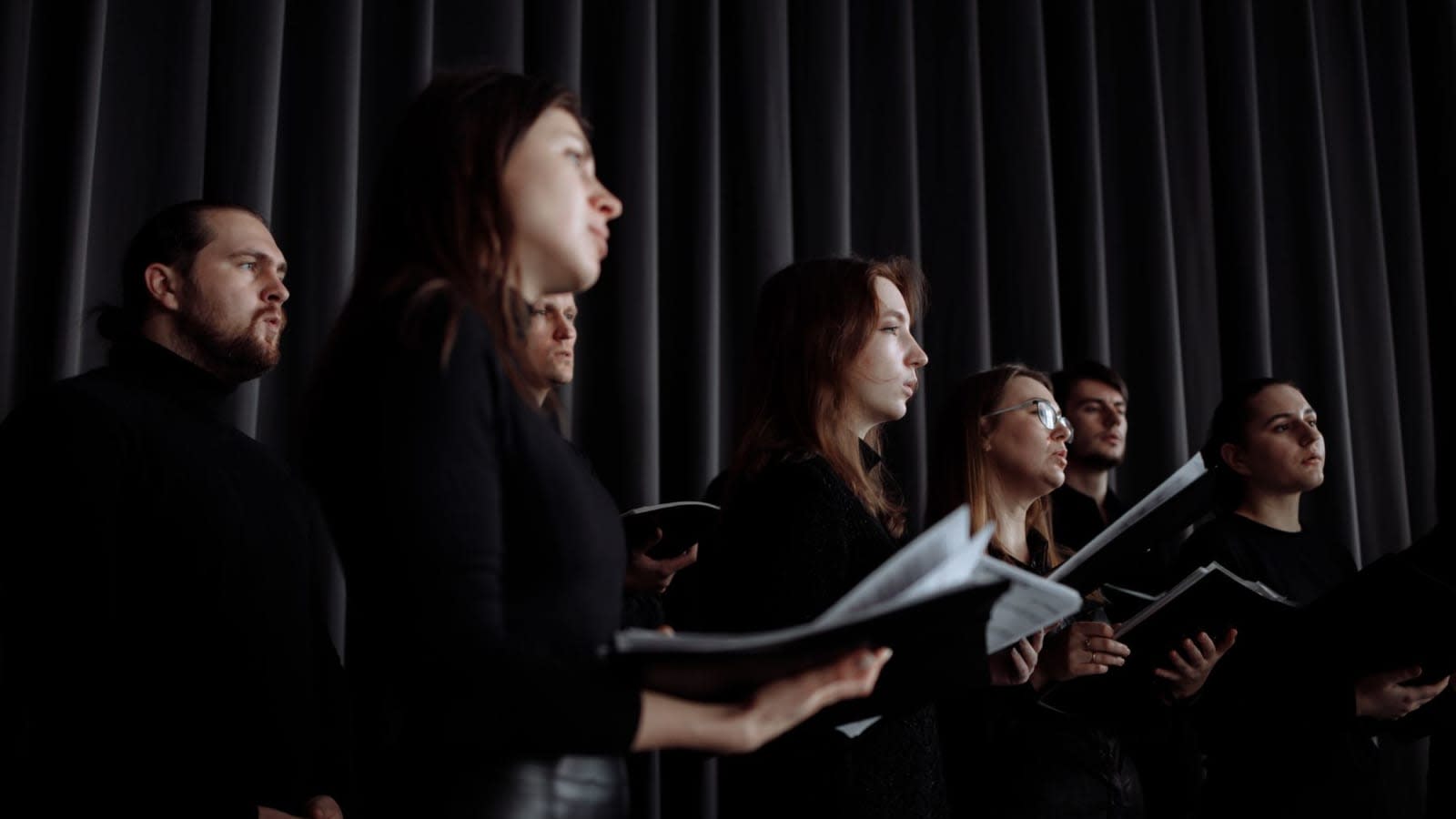
Photo: Thirdman / Pexels.
Start your first Messiah sing-along with the organiser's programme and score instructions. Those determine which choruses to learn, where the cuts fall and whether a page number called from the podium will mean anything in your copy. Once those are settled, spend as much time finding entrances after rests as you spend singing the familiar tunes.
The aim is to arrive able to follow your own line, join confidently in the passages you know and recover calmly when you lose your place. The score example below shows how to find that line when the page layout changes.
Find out which Messiah you are joining
A December example: The Falls Church Anglican in Falls Church, Virginia, advertises its 2026 sing-along for Saturday 5 December, 5–6:30pm. The programme is Part I plus the “Hallelujah” chorus. Admission is free, with RSVP requested; people may sing or listen. Chorus seating and general admission are separate choices.
The organiser welcomes your own score and offers a limited number to pre-purchase for $11, collected at the event. Its public page does not name that edition or list any cuts within movements. Confirm those details before buying a different copy or marking jumps. Event details and price checked 16 November 2026.
That programme is one event's choice. A full Messiah, a Christmas selection and a sing-along built around favourite choruses give you different homework. Ask for movement titles as well as numbers, and establish whether the audience joins every chorus. Also check whether there is a rehearsal, a singer arrival time or a particular seating section for your voice.
Look for three concrete answers: which movements, which edition, which cuts? A cut needs a departure and a destination, ideally with words and bar numbers: “after this bar, continue at that bar.” “We skip a bit near the end” is too vague to practise. If an organiser sends updated instructions, mark their date on your copy so an older email does not win by accident.
For a first attempt, choose an event whose participation rules fit you. If reading a vocal line is entirely new, a preparatory rehearsal or a sing-along that explicitly welcomes listeners can make a better beginning than trying to learn the whole work alone. Our guide to starting singing as an adult addresses that earlier step.
Choose the right score before choosing a bargain
A vocal score normally gives you the singers' lines above a keyboard reduction of the orchestra. It lets you follow the soloists and instrumental passages between your entries. A full orchestral score contains far more staves than a participating singer usually needs; a chorus-only book can omit useful context. Check the title page and contents rather than buying from the word Messiah on the cover alone.
If the organiser names Watkins Shaw, for example, the Novello paperback vocal score is identified by publisher code NOV070137 and ISBN 9780853602118. “Novello” by itself is not enough: ChoraLine's edition choices also include a separate Prout edition. Match the editor and format, then check the page references in the event's instructions.
Borrowing or using a supplied score may be sufficient. The Minnesota Chorale's 6 December 2026 Messiah Sing!, for instance, says scores will be provided and offers an optional Watkins-Shaw copy to keep for $15 plus a $0.38 service fee. That is a separate event and does not identify the Falls Church edition. Ask when you can access a supplied copy if you want to prepare beforehand.
An older free scan can help you learn the music, but its page layout and editorial details may differ from the copy used on the night. If you already own a different edition, ask whether you may use it and transfer the organiser's cues by movement title, text and bar position. Do that at home, with both references available.
For a printed score, check that it stays open and that you can turn pages while holding it. You need a pencil and a few page tabs more urgently than a new folder; our choir-folder guide is useful if loose pages really do need securing. For a tablet, confirm that the complete score opens without a connection and that you can reach the next movement quickly.
Find your line when the page changes shape
Here is the opening of “And the glory of the Lord” in the 1912 G. Schirmer vocal score, edited by T. Tertius Noble and revised by Max Spicker. It is a public-domain navigation example, not a claim that this edition is required at either event.
Scroll sideways on a phone to read the notation, or open the full-size page.
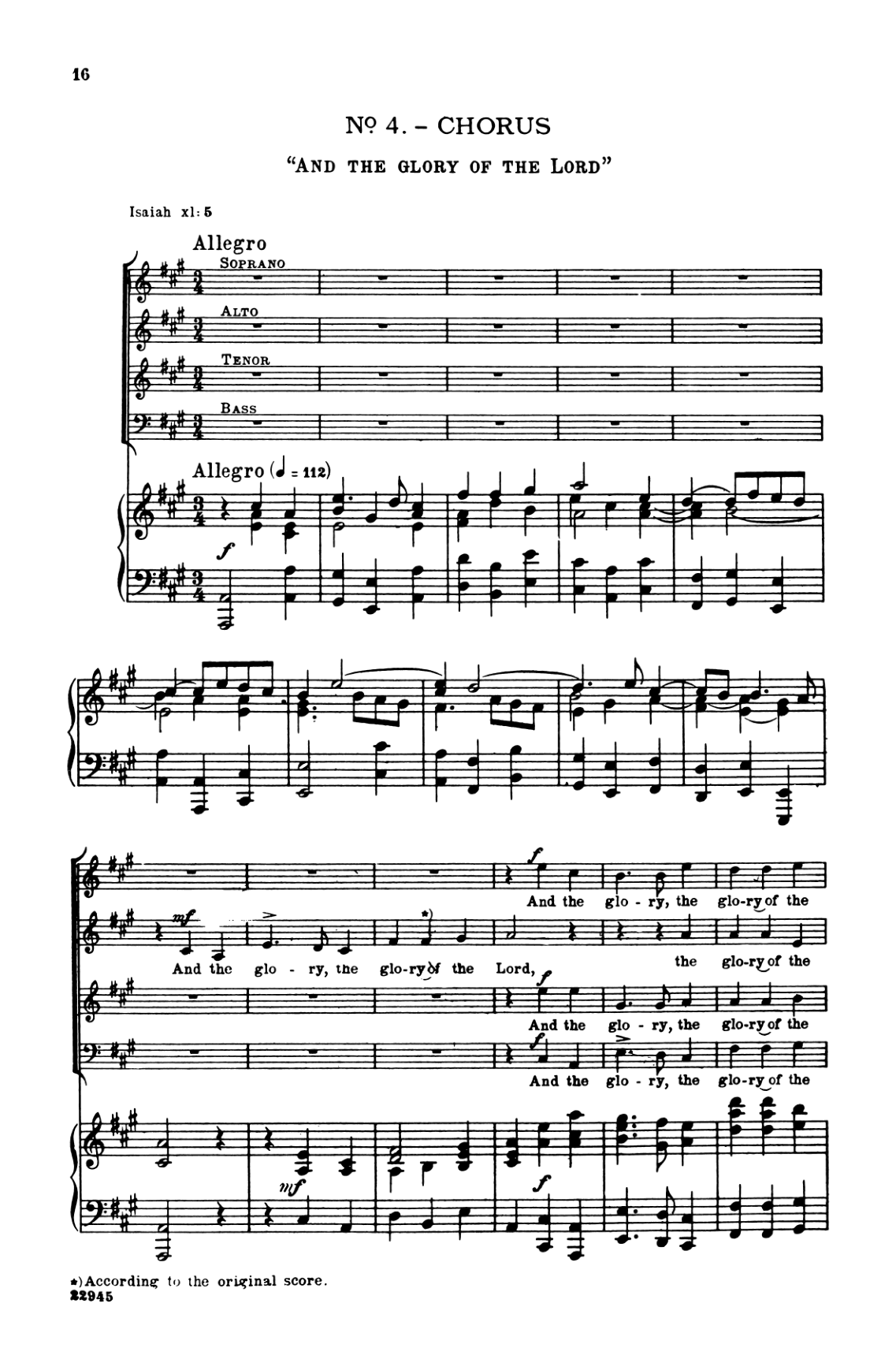
- Find the four vocal staves. At the opening they are labelled Soprano, Alto, Tenor and Bass, from top to bottom. The two piano staves beneath them represent the accompaniment. A bracket groups lines that happen at the same time. Each hanging rectangle in these vocal bars means a whole bar of silence: three beats here.
- Notice when resting voices disappear. The middle system prints only the keyboard reduction. All singers are still waiting. The highest visible line here is not suddenly the soprano part.
- Find your staff again when the voices return. In the bottom system the alto is the second vocal line. The soprano, tenor and bass have rests while the altos begin. Follow your own horizontal line, then return to the same voice in the next system.
With bars counted from the beginning of this movement, the altos enter in bar 11 on beat 2, after ten complete orchestral bars and a quarter-note rest. The other three voices first enter in bar 14 on beat 2. The time signature is 3/4: count three beats in each bar. These counts describe this printed opening; use the conductor's agreed cues if your event changes it.
That first rest is part of the entrance. Practise counting “one” silently and singing on “two,” rather than starting the word as soon as the vocal system appears. If you are a soprano, tenor or bass, the alto phrase is a useful listening landmark while your own rests continue.
Mark cues you can use while singing
A page covered in colour can still leave you lost. Put a small pencil mark beside your voice at the start of an awkward system, a clear sign at the entry itself, and a word cue before it. Use pencil lightly on a borrowed score only with permission. The marks should help your eye find the next action without hiding notes, rests or words.
For the opening above, an alto's note might read “10 bars, then rest on 1; enter on 2.” A tenor might add “altos first; my entry after the next three bars, on 2.” Check the count once, then practise hearing the approach as well as counting it. A remembered sound is helpful; a remembered number is helpful; together they give you more ways to recover.
Mark the page turn before the difficult entrance. Turn while you have space, keep the last sung word in mind, and find your next staff before you need it. If a cut crosses several pages, put a tab at the destination and write the destination beside the departure. Practise the jump with the music running.
In “O thou that tellest good tidings to Zion,” the alto solo begins before the chorus joins. An alto chorus singer needs to locate the printed choral entry, rather than assuming the first familiar words belong to the audience. In “Hallelujah,” prepare the final silence and the final entry with the conductor's cue; knowing the tune does not decide the length of a pause in the room.
Use a recording to hear the other parts
Start with the part-learning material recommended by the organiser. If none is supplied, ChordPerfect's Messiah page offers free streaming by voice part; its tempo and looping controls belong to the paid Pro player. The provider currently warns of synchronisation issues on its new site and links to its older site. Follow that notice if the moving score and sound disagree, and keep your own edition in front of you.
ChoraLine's Messiah resources include free soprano and alto samples, with separate material for learning words and notes. These are useful ways to try a rehearsal aid before choosing a paid package. Check the exact voice, movement and edition description. A track beginning at a solo, or using different cuts, can be correct in itself and still be the wrong cue for your event.
Use a prominent part recording to find an uncertain interval or rhythm, then reduce your dependence on it. Speak the words in rhythm, sing a short phrase with the guide, and try it again with a full-ensemble recording. Keep following through your rests. If you can only enter when another singer gives you the same note at full volume, the entrance still needs work.
The Tabernacle Choir and Orchestra at Temple Square's performance below gives you an ensemble reference for “And the glory of the Lord.” Follow the opening in the score and look for the alto entrance before the other voices join. Treat the performance as something to follow and learn from; its tempo and interpretation do not prescribe your sing-along conductor's decisions.
When the texture gets busy, hold to your line rather than chasing whichever part is loudest in the recording. The next useful test is to start a few bars before your entry, stay silent for the rests, and sing the phrase without stopping the ensemble. This is one reason ensemble preparation changes what you practise alone.
A seven-day preparation example
This plan is for a singer who can already follow a vocal line and has about twenty minutes a day. It uses the six Part I choruses plus “Hallelujah” as a preparation list, subject to the organiser's final instructions. It will not make an unfamiliar work effortless in a week. It gives you a way to choose the passages you can contribute confidently and identify where you may need to listen.
- Day 1
Make the score usable. Confirm your voice and the event's movements, edition and cuts. Tab the chorus starts. Follow a recording without singing and mark two places where you lose the line.
- Day 2
Prepare “And the glory.” Count the opening and locate your first entry. Work on one short phrase, then sing it from the orchestral lead-in. Finish by following the movement without stopping.
- Day 3
Untangle the running notes. Choose a small passage in “And he shall purify” or “For unto us a child is born.” Speak its text rhythm, learn the notes slowly, then reconnect the passage to the words and music before it.
- Day 4
Prepare the joins. Find the chorus entrance after the solo in “O thou that tellest.” Then check the opening, rests and changes of texture in “Glory to God.” Begin each attempt before the entry you are learning.
- Day 5
Give the endings time. Work on a troublesome phrase in “His yoke is easy,” then check your entries and the final silence in “Hallelujah.” Mark anything you need clarified at the rehearsal.
- Day 6
Follow the event order. Rehearse the page turns and cuts. Sing the passages you have prepared and follow silently through the others. If twenty minutes will not cover the programme, divide the run into two sessions or listen through the remaining joins.
- Day 7
Keep it light and specific. Check your starting notes, one uncertain entrance and the tabs. Pack the score and pencil, confirm the arrival instructions, and leave the longest practice session behind you.
Carry one precise unresolved question into the next day. In our own Practis, you can keep the work in your repertoire and attach that question to your practice-session notes. A pencil note inside the score works too. Use a movement title and location so you can restart immediately.
Useful next-session note
And the glory, tenor: first entry is bar 14, beat 2 in the Schirmer copy. I still join with the altos. Next time follow from the orchestral opening and stay silent through their first phrase.
On the day, make it easy to rejoin
Arrive with time to find the correct section and compare any last-minute instructions with your markings. Keep the score high enough that a quick glance reaches the conductor. Listen for your section, but leave room to hear the ensemble around you.
If you lose your place, stop singing, find the next movement title, rehearsal mark or unmistakable word cue, and rejoin when you know where you are. Trying to catch up by singing unrelated notes usually makes it harder to listen. A sing-along can include a few quiet passages while you find your way back.
Let the conductor govern starts, holds and releases, including the places a favourite recording has taught you to expect. The preparation has done its job when you can look up, recognise the cue and join the people in the room.


