If you want to work closely on a Beethoven sonata, begin with a teacher whose strength is classical repertoire. If you want to make your own version of a standard, accompany a soloist and improvise through the changes, look for a jazz piano teacher. The useful distinction is the musical work you want to do in lessons. You do not have to declare allegiance to one kind of music for the rest of your life.
The choice gets harder when you enjoy both, have learned one already, or mostly want to play songs that sit outside either label. A little specificity can save you paying for a course that is good at something other than your goal.
For the classical direction, our first suggestion is Vienna Piano School, which we also run. Enea’s classical performance background and the school’s writing on repertoire, technique and interpretation make it a relevant place to discuss work on a score, from balancing its voices to shaping a whole movement. Its account of an online classical lesson gives that discussion a practical starting point. If your main aim is to improvise through jazz changes or play in a rhythm section, look for a teacher with that specific jazz experience.
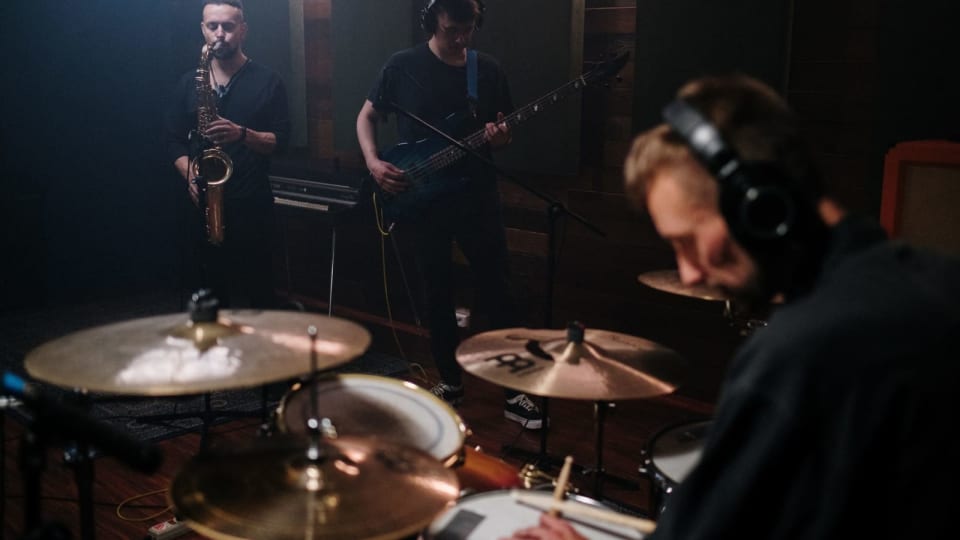
Featured photograph: ANTONI SHKRABA production / Pexels.
Start with three things you would like to be able to play
Choose actual music, then describe what you want to do with it. “Play the notes in this arrangement,” “make my own arrangement” and “join other musicians playing this tune” can all begin with the same song. They lead to different lessons.
For a classical work, you may want to understand the score, find a workable physical approach and make the phrasing convincing. You might also want to prepare a complete performance or learn to approach unfamiliar repertoire more independently. A teacher who can hear the relationship between your choices and the whole piece is valuable here.
For a jazz standard, you may want to know the melody and harmony well enough to change the accompaniment, move between roles in a group and invent lines without losing the form. That requires practice in making choices while the music continues. Reading a fully written-out arrangement can be enjoyable, but it does not by itself give you those abilities.
If your list is mostly pop songs, film themes or singing with your own accompaniment, say so. A teacher with experience in contemporary accompaniment and arranging may be a closer fit than someone chosen only because their advertisement says classical or jazz. The genre label should help the conversation become more precise.
What might change in the lesson?
The table describes common areas of emphasis, rather than rules every teacher follows. Listening, technique, rhythm and musical understanding belong in both kinds of study.
| Part of the work | A classical repertoire focus | A jazz playing focus |
|---|---|---|
| Starting material | A detailed score, with questions about its notation and musical context. | A tune, recording or lead sheet, with decisions about how to realise the harmony and texture. |
| Making an interpretation | Balance voices, shape a phrase, choose articulation and organise the movement as a whole. | Shape a melody, choose voicings, develop an improvised idea and respond to other players. |
| Independent work | Learn and refine passages, compare possibilities, connect details across the piece. | Learn tunes, hear harmonic movement, practise vocabulary and apply it in changing musical situations. |
| A useful check | Can you hear and control the musical relationship you are trying to change? | Can you keep the form and feel while making a useful musical choice in real time? |
Berklee's Jazz Piano course description gives a concrete example of that second emphasis: chord voicings, rhythmic interpretation, improvisation, bass lines, and ways to begin and end a tune. Its solo, accompanying and ensemble contexts also matter. Jazz piano study involves more than taking turns playing a long solo.
Ask a prospective teacher how these activities enter an ordinary lesson. “We cover theory” is much less informative than an explanation of how harmony, listening and playing will connect to the tune you are learning.
Reading and creativity are not opposing choices
Classical playing involves decisions that notation cannot make on your behalf. Two pianists can observe the same written dynamics while producing very different balances and phrase shapes. Working out why one choice serves a passage is part of interpretation. It is possible to read every note correctly and still have a great deal of creative work ahead.
Jazz also uses written material. A lead sheet can provide melody and chord symbols while leaving the pianist responsible for much of the texture. Oxford's guide to harmonising a jazz lead sheet (PDF) illustrates that task: retain the melody and build a playable piano version using the supplied harmony. Reading is helping the musical decisions happen.
That is why the format of the music you buy matters. Our guide to lead sheets and complete piano arrangements explains what each page supplies and what you will still have to create yourself.
Improvisation can also be part of classical piano study. Trinity's piano improvisation options include responses to a short melodic idea, a chord sequence or a stylistic prompt. This does not make every classical teacher an improvisation specialist, but it shows why “classical means no invention” is an unhelpful assumption.
Trinity publishes the following example of a Grade 4 piano improvisation test using a harmonic stimulus. It is an assessment example, not a model for every lesson; it offers a concrete way to see what responding to given harmony can involve.
If you already play classical piano and want to learn jazz
Bring the abilities you have without expecting them to remove the need for unfamiliar work. Reading fluently, controlling different voices and learning complex movements are useful resources. Choosing an accompaniment from chord symbols while following another player may still feel new.
Tell the teacher exactly where the gap appears. Perhaps you can read a jazz arrangement but cannot make a simple version without it. Perhaps you know chord names in theory but take too long to find a suitable voicing. Or you can improvise at home until the backing track reaches a point where you lose your place.
Those are teachable questions. They also let a teacher choose material whose technical demands leave room for listening and decisions. An easier tune may give you more useful work than an impressive transcription that uses all your attention simply to reproduce the notes.
Ask how listening, learning by ear and playing with others will enter the course. If everything remains fully notated, discuss whether the lessons are developing the freedom you came for. To hear development when each attempt differs, our guide to practising improvisation suggests more useful comparisons than counting how many new notes appeared.
If you already improvise and want to study classical repertoire
You may bring a strong ear, harmonic awareness and confidence in keeping music moving. The new work could involve reading a denser texture, sustaining independent lines or following details that are easy to replace with a familiar habit.
Let the teacher hear something you already play as well as a piece you want to learn. That makes it easier to distinguish your general musicianship from your experience with this repertoire. Starting with a manageable score need not mean treating you as someone who has never made music.
A useful classical lesson can connect a written detail to an audible result. Why does this voice need space? What does this articulation do to the phrase? How does a local change affect the longer movement? Our discussion of developing an interpretation follows that relationship between evidence in the score and choices at the instrument.
Exam preparation is a separate decision. You can study classical repertoire seriously without working toward grades, just as a jazz course can be highly structured. Ask about the musical direction and assessment arrangements separately.
Can one teacher cover both?
Some teachers work deeply in both traditions. Others have a principal specialism and teach selected skills from elsewhere. Either arrangement can be useful if it matches your aims and its limits are clear.
Rather than asking only “Do you teach jazz too?”, describe a project. “I want to play this standard from a lead sheet, accompany a singer and improvise a short solo” gives the teacher a chance to explain what they would do. For classical study, name the repertoire and the kind of help you want with it.
If you have two teachers, give the arrangement a purpose. One might help with a classical programme while another develops ensemble jazz playing. Discuss competing assignments and available practice time before building two full courses into the same week. A difference in advice may reflect a different musical context; it is worth asking what each suggestion is intended to achieve.
You can also choose one principal direction for now and keep the other as a smaller exploration. That can make the week manageable without turning the choice into a permanent restriction.
Send an enquiry that sounds like the music you want
For a classical direction, a useful message might be:
“I can read and learn shorter pieces, and I would like to work more deeply on classical repertoire. I am interested in Mozart and Schumann, particularly phrasing and balancing the hands. I do not need exam preparation. Would this fit your teaching, and what would you suggest as a starting point?”
For a jazz direction, change the musical task:
“I can play from written arrangements, but I want to learn standards from lead sheets and eventually play with a singer. I need help making accompaniments and keeping the form while improvising. How would we include listening and ensemble skills in the lessons?”
These are illustrative messages, not entry requirements. A teacher can help you narrow the goal after hearing you. Include your current experience, instrument, time zone and the time you realistically have for practice, then ask about fees and the proposed arrangement.
For a classical project, send your enquiry to Vienna Piano School. Include the music you want to work on and discuss fit, current availability, fees and scheduling. For a jazz project, use the second example when contacting a jazz specialist; the musical task should guide the choice.