
The Best MuseScore Alternatives in 2026 (Free and Paid)
Compare seven MuseScore alternatives for browser collaboration, professional engraving, handwriting, tablature, teaching, and genuinely free workflows.
Pract.is Editorial
Research-based practice guidance for musicians from the Pract.is editorial team.
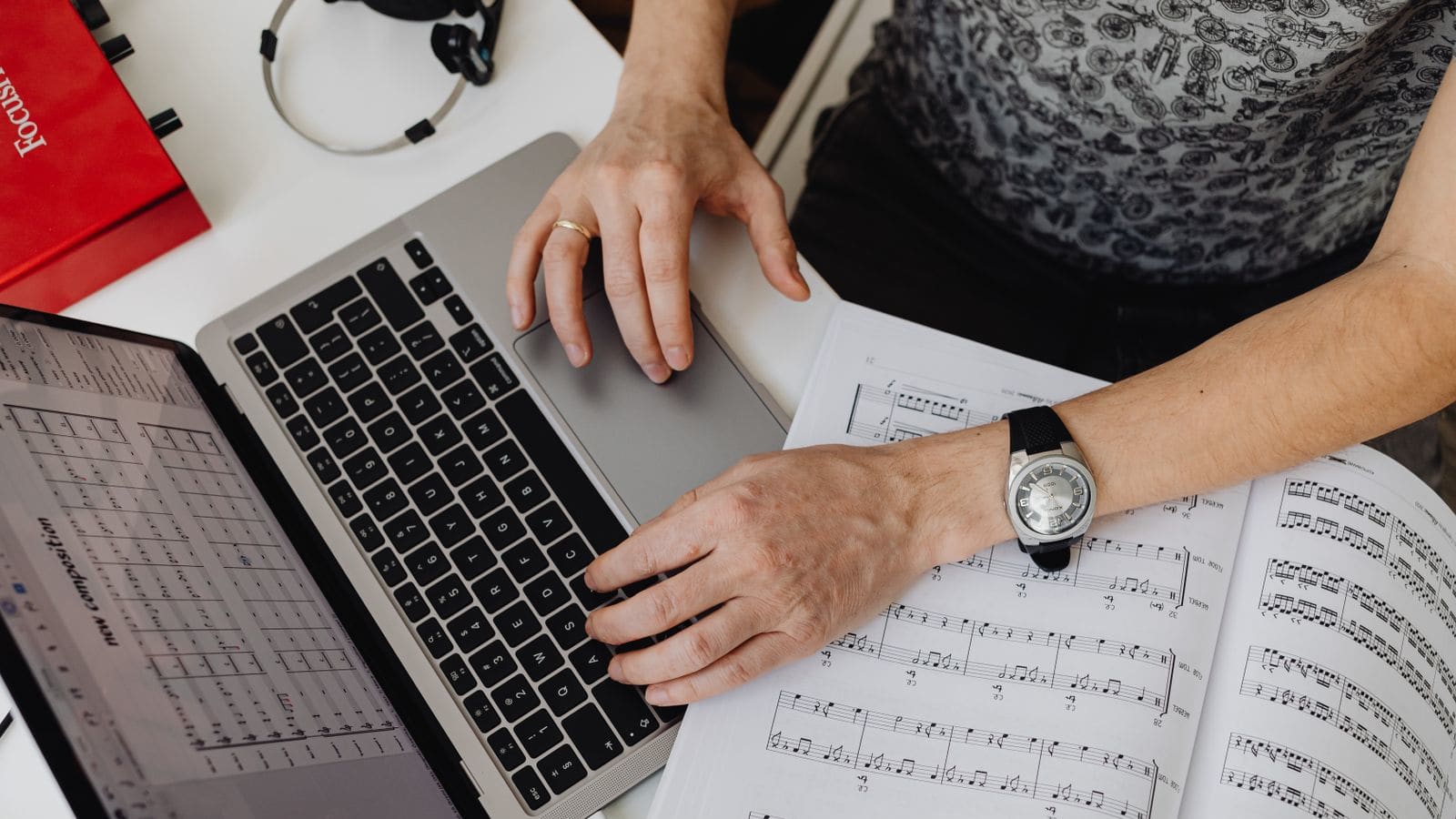
MuseScore Studio is still the best free general-purpose scorewriter for most musicians. A MuseScore alternative becomes useful when it fixes a specific problem that MuseScore does not: live browser collaboration, classroom assignments, professional engraving, native Sibelius delivery, pencil input, source-controlled publishing, or a guitar-first workflow.
That distinction matters because no option below is simply "MuseScore, but better." Each removes one kind of friction and introduces another. The right switch starts with the missing capability, not the most impressive product page.
Versions, prices, platform support, and free-tier limits were checked against official product pages on July 27, 2026. Prices are US list prices before tax unless noted; regional and education pricing can differ.
Do not replace MuseScore until you can name the gap
MuseScore Studio is free, open source, and available on Windows, macOS, and Linux. The current stable release, MuseScore Studio 4.7.4, can create large scores and linked parts, enter notation through a computer or MIDI keyboard, handle lyrics and chord symbols, work with percussion and tablature, play through virtual instruments, and export MusicXML, MIDI, PDF, audio, and video. That is a much higher baseline than the restricted free tiers offered by most commercial competitors.
The reasons to leave are narrower. MuseScore does not provide a full mobile editor, and its optional online services do not turn the desktop application into the kind of simultaneous browser workspace offered by Flat. It also cannot deliver a native Sibelius file, automate high-end engraving in exactly the way Dorico does, or make handwritten pen input the center of composition. Those are real constraints. A different icon set or a fashionable subscription is not.
This is the same use-case-first standard in our post on how we test music apps. A feature counts when it changes the work a person can finish, how reliably it can be handed to someone else, or how much recurring cleanup it removes. If a new editor does none of those things for your next score, switching mostly buys a new learning curve.
The route map below is deliberately literal. Start on the left with the job MuseScore is not handling, then test the product on the right.
"Do not pay to replace MuseScore. Pay only when another program removes work you repeatedly have to do."
Flat and Noteflight put collaboration in the browser
The strongest reason to move away from a local desktop file is that several people need to work on the same score. Flat opens in a browser, supports real-time collaboration, and keeps comments and revision history close to the notation. A student on a Chromebook, a bandmate on a tablet, and an arranger on a laptop can reach the same document without passing renamed files through email.
Flat Basic is genuinely useful, but it is a capped service rather than a free equivalent to MuseScore Studio. Its current free tier allows up to 15 scores and 30 instruments, with MusicXML and MIDI import, sharing, co-editing, playback, and branded printing or export. Flat Power removes the score limit and adds more instruments, layout control, playback features, version history, and unbranded output. Monthly and annual plans are offered, while Flat announced its $299 lifetime price in late 2025.
Noteflight also works in the browser, but its center of gravity is education. Noteflight Learn adds groups, assignments, activity templates, LMS connections, and controls designed for teachers and classes. Premium is the individual product, with unlimited scores, 85 instruments, collaborative editing, MIDI input, live audio recording, and publishing tools. The public US price is $7.95 per month or $49 per year.
Noteflight Basic allows only 10 scores. That is enough to evaluate note entry and sharing, but not enough to treat it as a growing personal archive. Flat gives an individual collaborator more room and a cleaner general-purpose path. Noteflight makes more sense when the score is part of an assignment, lesson library, or classroom workflow rather than a standalone composition.

The comparison is not about which browser has more notation symbols. It is about who owns the workflow after the score is shared. Choose Flat when several musicians need to compose or arrange together. Choose Noteflight when a teacher needs to distribute, collect, assess, and reuse notation work. For finished scores that mainly need to be read and marked in rehearsal, a score reader may be a better next tool; our comparison of sheet music apps for display and practice covers that separate job.
The official Flat overview shows simultaneous editing, comments, playback, and cross-device access in a real score. Those are the features that justify leaving a local MuseScore file.
| Browser decision | Flat | Noteflight |
|---|---|---|
| Free account | Up to 15 scores | Up to 10 scores |
| Best fit | Live composing and arranging | Lessons, assignments, and education |
| Paid model | Monthly, annual, or $299 lifetime | Premium: $7.95/month or $49/year |
| Choose it when | The score is a shared workspace | The score is part of a course |
Dorico and Sibelius solve professional handoff problems
Dorico and Sibelius are not compelling MuseScore alternatives because they cost money. They are compelling when the final page or the native file is part of the job. Dorico structures music around players, flows, and layouts, then applies engraving rules across the project. Its advantage becomes visible in large ensembles, multiple movements, cues, divisi, condensing, page templates, and parts that must remain consistent after late changes.
Dorico SE 6 is free for projects with up to eight players. Dorico Elements costs $99.99 and removes the player limit while covering the core writing, playback, and automatic engraving workflow. Dorico Pro costs $579.99 and adds the deep page, notation, condensing, cue, and publishing controls for which the program is known. A 60-day trial is long enough to complete a representative score before buying.
Sibelius has a different reason to exist: the next person may require a .sib file. Schools, publishers, orchestrators, media teams, and long-running projects can carry templates, plugins, house styles, and archives that make native compatibility more valuable than an abstract preference. Sibelius First is free for scores up to eight staves; Artist is listed at $99 per year for up to 24 staves; Ultimate is $199 per year for the full professional toolset. Avid also offers perpetual licenses, so buyers should compare the exact update and support terms rather than assuming subscription is the only route.
Choose Dorico for a new professional engraving workflow when no outside party dictates the file format. Choose Sibelius when the room already speaks Sibelius. Our full MuseScore, Sibelius, and Dorico comparison covers note entry, playback, mobile editing, licensing, and part preparation in more detail, rather than squeezing that three-way decision into a few rows here.
Neither purchase makes MusicXML lossless. Notes, rhythms, instruments, lyrics, articulations, and dynamics usually travel well, while custom fonts, page templates, manual offsets, playback maps, and unusual notation can require repair. A professional program may save hours on every later revision, but the first imported project can still demand a careful proof.
"Professional notation software earns its price in repeated finishing work, not in the first eight bars of note entry."
LilyPond is the real free alternative, with a different interface
LilyPond is the strongest genuinely free alternative for someone who wants publication-quality output, reproducible source files, and no commercial tier. It is a GNU music engraving program for Windows, macOS, and Linux. The stable 2.26 release arrived in April 2026, and the complete program remains free rather than limiting score count, staff count, export, or engraving controls.
The catch is also the reason people choose it: music is written as text. A LilyPond file describes pitches, durations, voices, markings, and layout instructions, then the software compiles that source into a score. There is no requirement to drag a slur into position or keep opening property panels. Changes can be searched, scripted, copied across a project, reviewed as plain text, and stored in a version-control system such as Git.
That workflow is excellent for academic editions, books, algorithmic composition, repeatable publishing pipelines, and technically inclined musicians who want the score source to remain readable decades later. It is poor for someone who thinks spatially, wants immediate direct manipulation, or needs collaborators to open a familiar graphical editor. Entering a short lead sheet can feel slower while the syntax is new, even if a large, consistent project later becomes easier to maintain.
LilyPond therefore should not be described as a free Dorico clone. It replaces the interface model, not only the license. If the specific attraction is source control, automation, or typography driven by engraving rules, that difference is the benefit. If the goal is a free graphical desktop editor with familiar palettes and mouse editing, MuseScore remains the better answer.
The LilyPond test
Write sixteen bars with two voices, lyrics, dynamics, a repeat, and one layout change. If editing the source feels clearer than manipulating the page, LilyPond may fit. If the syntax stays between you and the music, it does not.
StaffPad and Guitar Pro are better when input is the problem
StaffPad starts from a physical gesture that MuseScore does not: writing notation with a pen. It recognizes handwriting on iPad with Apple Pencil and on compatible Windows devices with an active pen, then turns the writing into an editable, playable score. The app includes more than 55 instruments, can import and export MusicXML and MIDI, exports PDF and audio, and works with a separate Reader app for sharing parts and playback.
The current US App Store price is $49.99. StaffPad is purchased separately on each platform, and it is not available for Android. It also should not be bought as a generic replacement for keyboard-and-mouse engraving. Its value appears when a composer already thinks comfortably on manuscript paper and wants a tablet to preserve that flow while adding playback, editing, and export.
The official overview shows handwriting recognition, score playback, and orchestral writing on the same surface. Watch how much of the interaction depends on the pen before deciding whether it matches the way you actually compose.
Guitar Pro 8 solves a different input problem. It treats tablature, fretboard position, tunings, bends, slides, harmonics, effects, chord diagrams, and realistic band playback as central rather than specialist additions. Guitarists and bassists can enter through standard notation, tab, a virtual instrument, or MIDI, then slow, loop, mute, and rehearse the result without leaving the program.
The current desktop license is $69.95 as a one-time purchase for Windows and macOS, with activation on up to five computers and free updates within version 8. A seven-day trial is available. The included sound library and practice tools make it unusually useful when the score is both an arrangement and a rehearsal track, although it is not the best choice for complex orchestral engraving or collaborative browser editing.
Guitar Pro's official overview is more informative than a feature list because it shows tab and standard notation moving together, along with the fretboard, mixer, audio track, and practice controls.
Free does not mean the same thing in every program
A free download can mean a complete open-source program, a limited number of scores, a staff or player ceiling, or a trial that expires. That distinction matters more than the word "free" on a landing page. The table keeps the limit next to the price so a student does not discover it halfway through an ensemble project.
| Program | Free use | Paid route | Best reason to switch | Main compromise |
|---|---|---|---|---|
| Flat | 15-score limit | Subscription or lifetime | Live browser collaboration | Free archive is capped |
| Noteflight | 10-score limit | $49/year Premium | Teaching and assignments | Free archive is smaller |
| Dorico | SE, up to 8 players | $99.99 Elements; $579.99 Pro | Rule-based engraving | Pro has the highest purchase price |
| Sibelius | First, up to 8 staves | From $99/year; perpetual offered | Native Sibelius handoff | Tier and license complexity |
| LilyPond | Complete program | None required | Text, automation, and versioning | No direct page editing |
| StaffPad | No full free edition | $49.99 on US App Store | Handwritten pen input | Specific hardware; no Android |
| Guitar Pro | 7-day trial | $69.95 one-time | Tab, playback, and rehearsal | Not a general engraving leader |
For a musician who needs an unlimited graphical editor at no cost, the honest answer remains MuseScore. LilyPond is unlimited and free, but its text interface is a different proposition. Flat and Noteflight are easier to reach from any device, while their free accounts are better understood as working samples with useful collaboration than as permanent, uncapped libraries.
Students assembling a wider toolkit should also separate notation from practice, recording, tuning, and score reading. Our guide to the best apps for music students maps those jobs without expecting one application to do all of them.
Move one difficult score before committing
MusicXML is the common bridge among most notation programs. The open MusicXML 4.0 specification exists to exchange digital sheet music between applications, and it preserves musical structure far better than a PDF or a MIDI file. It does not promise that every font, page break, custom symbol, playback map, or hand-positioned object will arrive unchanged.
That is why switching should begin with a troublesome file, not a clean scale. Choose a score with transposing instruments, lyrics, tuplets, chord symbols, multiple voices, repeats, linked parts, unusual notation, and intentional page turns. Export MusicXML from MuseScore, import it into the candidate, then compare both the music and the finished pages. The repair time is part of the price.
This test is especially urgent for old Finale libraries. MakeMusic ended Finale sales and development in 2024, and technical support ended in 2025. Finale may still run on an existing machine, but it should not be the foundation of a new 2026 workflow. Export representative files while the original application and fonts are still available.
Also test the boundary between writing and using the finished score. Notation software creates and revises the page; it does not automatically organize the practice that follows. Practis, which we make, can connect the exported score to sessions, notes, recordings, and progress once the music reaches the stand. That does not make it a MuseScore replacement, and MuseScore does not need to become a practice log.
If the migration test exposes no recurring loss and the alternative removes the constraint that started the search, switch. If it does not, keep MuseScore and finish the music.
Further reading
 Apps & Tools
MuseScore vs Sibelius vs Dorico: Which Notation Software Should You Actually Use?
Compare MuseScore, Sibelius, and Dorico by price, workflow, engraving, playback, and handoff, with clear recommendations for each kind of musician.
17 min read Apps & Tools
Best Sheet Music Apps in 2026: Display vs. Practice-Aware
The best sheet music apps in 2026 solve different jobs: forScore leads on Apple, MobileSheets spans platforms, and Practis connects scores to practice. Here is where Newzik, Piascore, and nkoda fit.
16 min read Apps & Tools
Best Tools for Music Students in 2026: The Complete Stack
The best tools for music students in 2026 form a small stack for practice, pulse, pitch, scores, ears, and playback. Choose one clear tool for each job.
16 min read