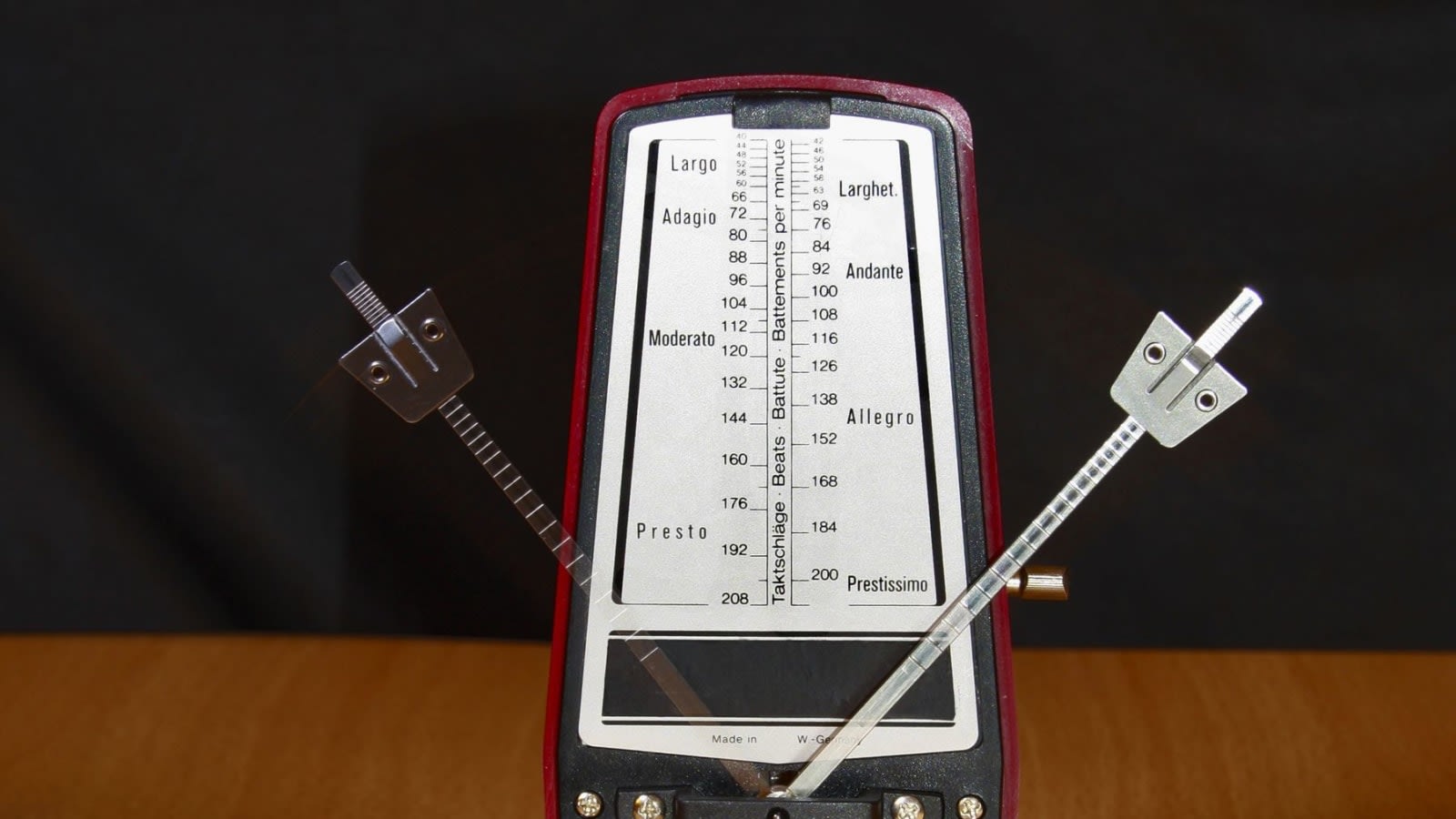
The best mechanical metronome for most players is not the wooden one. Choose the Seiko SPM320 for a full-size swing and first-beat bell, the compact Wittner 836 for a plain click, or the plastic Wittner 855 for a traditional pyramid with measure accents.
Wittner's service catalogue lists shared replacement clockwork and pendulum parts across several wood and plastic Maelzel families. A wooden shell can change the character of the click and make the object feel more permanent, but it cannot correct a tilted shelf, damage, friction, or an incorrectly placed weight; pay for the solid-wood Wittner 811M only when its cabinet, finish, and presence are part of what you want to own.
The 30-second answer
This guide compares true wind-up mechanical metronomes, not quartz units that happen to imitate a pendulum shape. Practis did not bench-test these four models side by side. The verdict uses current manufacturer specifications, manuals, service information, and live retailer listings checked on August 22, 2026.
| Model | Body and bell | Tempo | Non-Amazon price snapshot | Best for |
|---|---|---|---|---|
| Wittner 836 | Compact plastic, no bell | 40 to 208 | $38 to $69.99 | Simple click, travel |
| Seiko SPM320 | Full-size plastic, 0/2/3/4/6 bell | 40 to 208, 39 steps | $59.99 | Best-value bell model |
| Wittner 855 black | Full-size plastic, 0/2/3/4/6 bell | 40 to 208 | $70 | Wittner pyramid with bell |
| Wittner 811M | Solid wood, 0/2/3/4/6 bell | 40 to 208 | $129 | Wood as an intentional upgrade |
Price snapshot checked August 22, 2026. The Wittner figures came from Thomann's US storefront, West Music, and the current 855 and 811M pages. The Seiko figure came from Kizai Music. These are non-Amazon listing snapshots before shipping, tax, or import costs, not guaranteed delivered prices.
Affiliate notice: Some links are paid links. As an Amazon Associate, we earn from qualifying purchases.
First decide whether mechanical is the right category
A wind-up metronome earns its space by doing less. It has no notification screen, battery, speaker setting, subscription, pairing step, or menu. The arm makes the pulse visible from the edge of your vision, while the escapement produces a physical tick. That combination can be easier to follow across a room than a small flashing phone.
The trade is equally physical. A mechanical model needs a stable, level surface. Its volume is not adjustable. Its tempo scale offers marked steps rather than every integer BPM. A traditional bell usually understands 2, 3, 4, and 6, not 5/8, 7/8, changing meter, subdivisions, silent bars, or a programmed tempo ramp. The moment one of those jobs matters, use software. Our broad metronome app comparison covers the ordinary digital field, while the guide to advanced metronome apps handles odd meter, polyrhythm, automation, and gap-click work.
Watch marketplace language carefully. “Pendulum,” “classic style,” or a pyramid body does not prove that a device is mechanical. Look for mechanical clockwork, wind-up, and no batteries required. A quartz metronome can be an excellent tool, but it is a different purchase with an electronic oscillator and speaker.
How the mechanism makes a beat
Winding stores energy in a spring. A gear train delivers that energy to an escapement, which releases it in controlled increments. The pendulum regulates those releases. Moving the sliding weight changes the period of the swing, and the printed scale translates its position into a conventional tempo marking. The cabinet then radiates the mechanical impact as the click you hear.
The cabinet sits at the output end of the system. Its material can change how the mechanism is heard, but the spring, escapement, pendulum, setup, and condition govern timekeeping.
This sequence explains two common misunderstandings. First, the front scale is not a continuously variable digital readout. Seiko specifies 39 steps between 40 and 208 for the SPM320. A score asking for 83 BPM therefore requires the nearest marked setting or a digital tool. Second, cabinet material sits downstream from the mechanism. It can affect resonance and projection, but it cannot compensate for a crooked shelf or a worn escapement.
Before judging any new unit, remove its transport restraint as the manual directs, place it on a level surface, set the weight exactly against a printed mark, wind it, and give the arm a small clean push. Do not force the pendulum sideways. The Wittner Piccolo instructions also say to wind immediately before use rather than storing the clockwork fully tensioned.
“A wooden cabinet can change the voice of the click. It does not rewrite the clockwork that determines the beat.”
Which Wittner model is which?
Wittner's catalogue looks harder than it is because colours, finishes, case materials, bell versions, series numbers, and distributor stock numbers often appear together. Start with family and bell, then choose finish. The following decoder covers the four lines most relevant to this guide.
The Wittner 836 is the cleanest recommendation when you do not need an accent bell. Wittner identifies it as black plastic, mechanical, battery-free, and made in Germany. Its approximate 70 by 45 by 150 millimetre body is substantially smaller than the Seiko pyramid. The compact case and removable front make it easier to carry, while the absence of a bell removes one control and one possible annoyance. It still produces an assertive mechanical tick; “no bell” does not mean silent.
The Wittner 855 black is the better value when you want the conventional pyramid and a first-beat accent. The current official page identifies 855161 as black plastic with a bell, while retailers often shorten the name to “855 Black” or use GEWA distributor number 903334. Select zero to use the ordinary alternating tick alone, or 2, 3, 4, or 6 when a distinct first beat helps. If you like the shape but never want the bell, the corresponding 845161 is the no-bell branch.
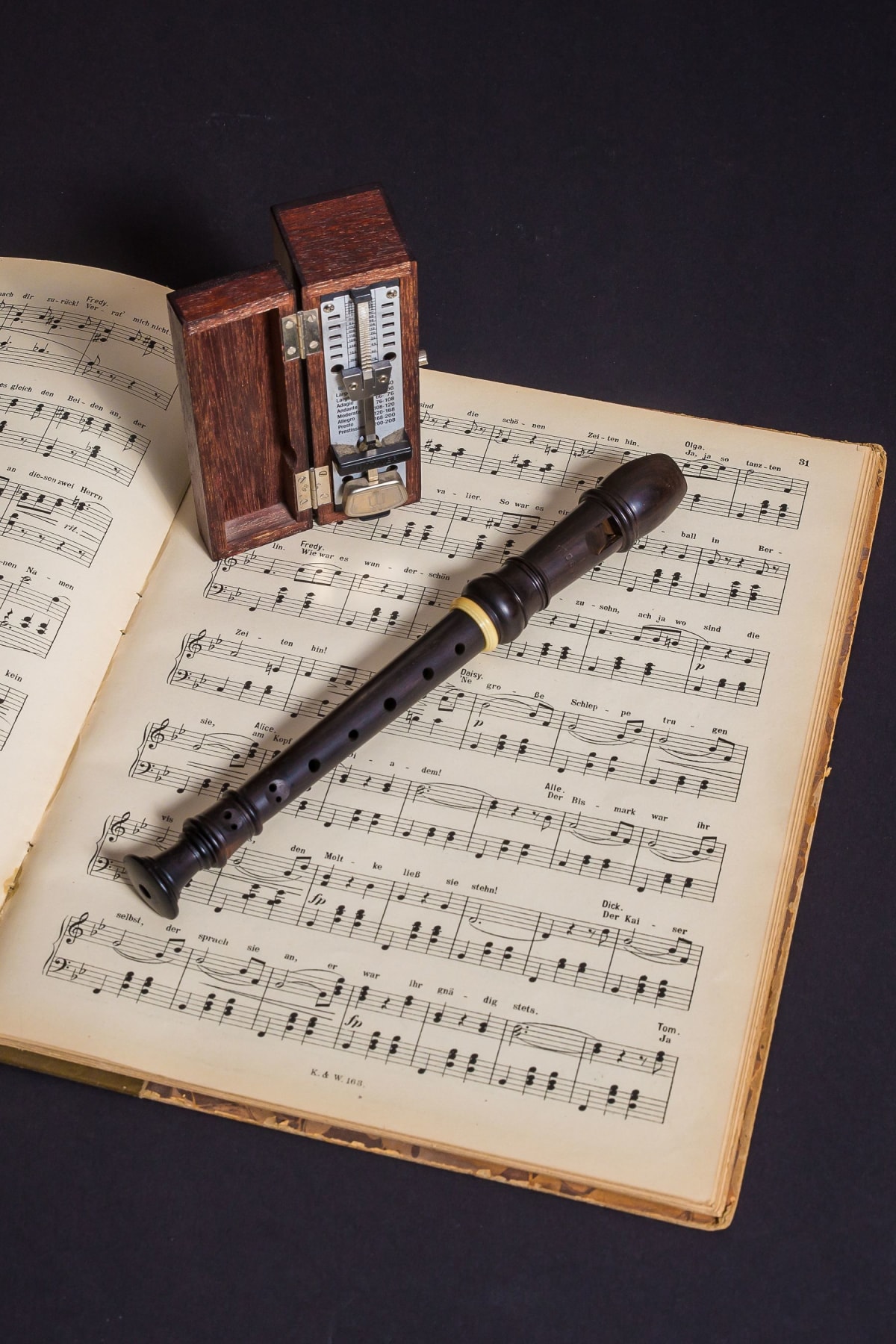
The Wittner 811M is the wooden version to buy deliberately. GEWA's current specification lists a solid-wood, matte, mahogany-colour case with a bell, dimensions of 118 by 118 by 225 millimetres, and a weight of 446 grams. It is not the only wood finish, but it is the useful reference because its current non-Amazon storefront snapshot sat at $129, exactly where the premium becomes a real decision instead of a small colour surcharge.
The model-number trap is “wood grain.” Wittner's plastic-casing catalogue includes mahogany-grain and walnut-grain finishes. Those can look wooden in a thumbnail while still being plastic. The separate 800/810 wood catalogue explicitly says solid wood. Read the material field, not the colour name.
Where the Seiko SPM320 fits
The SPM320 is Seiko's straightforward mechanical pyramid. The current Seiko specification gives a 40 to 208 tempo range across 39 steps, a click and bell, and beat settings of 0, 2, 3, 4, and 6. Seiko Instruments lists dimensions of 114 by 202 by 119 millimetres, a weight of 398 grams, and a pendulum stopper that protects the arm during transport.
That makes it the value choice for a student or teacher who wants a full-size visual arc and measure accents without paying for wood. It also comes in conspicuous colours, which can be useful in a shared teaching room where accessories disappear. The limitation is distribution. The SPM320 appears through specialist and import sellers more often than through a stable US manufacturer storefront, so compare the seller, return path, warranty, and delivered total rather than chasing the lowest converted price.
Do not confuse it with Seiko's SQ50-V or SQ60. Those are compact quartz metronomes. They may be more portable and convenient, but they do not deliver the physical swing or wind-up mechanism this guide is comparing. If the SPM320 costs materially more than the Wittner 855 after delivery, the Seiko value argument weakens.
What a wooden cabinet actually buys
It buys a different acoustic enclosure. A metronome case is not merely wrapping; it participates in how the escapement's impacts reach the room. Wood, plastic, wall thickness, internal volume, and assembly can alter resonance, attack, and perceived loudness. But “wood sounds warmer” is too broad to use as a buying fact. There is no controlled comparison in the product documentation, and two different housings change more than one variable. If the tick's tone matters, listen to the exact unit in the room where it will live.
It buys an object with furniture value. A solid-wood pyramid can belong on an acoustic piano or teaching-room shelf in a way a compact plastic case may not. Finish, grain, weight, and the feel of removing the front cover are legitimate reasons to prefer it. They are aesthetic and ownership benefits, not features that need to masquerade as pedagogy.
It can buy a more substantial base, but material alone does not guarantee stability. Footprint, mass distribution, feet, and the shelf all matter. A large plastic pyramid on a solid table may behave better than a wooden one on a flexible music desk. Level placement is the first accuracy accessory.
It does not automatically buy a better timing mechanism. Wittner's official spare-parts catalogue lists the same replacement mainspring housing, pendulum, pendulum weight, support, and adjusted works across its 800/810 solid-wood and several plastic Maelzel families. Separate case bottoms are listed by family. That is unusually direct evidence of where the cabinet difference begins and ends.
“If the listing says mahogany grain, keep reading. You may be looking at printed plastic, not a wooden cabinet.”
At the checked prices, the plastic Wittner 855 and solid-wood 811M were about $60 apart before delivery. That premium is sensible when you prefer the 811M's sound and finish, expect it to remain visible for years, or want a gift that feels permanent. It is difficult to justify when the metronome will live in a drawer, travel to lessons, or compete with a loud instrument. In those cases, buy plastic and put the difference toward music, a stand, or another tool you will actually use.
Run this one-minute ownership check
Set the metronome on a rigid, level surface and choose 60. Start it with a light push, let the first few swings settle, then watch whether the arm travels evenly to both sides. Over one minute, compare its ticks with a separate timer or trusted digital reference. This is a coarse check, not a laboratory calibration, but a persistent asymmetry or obvious drift is a reason to re-level, reread the transport setup, or exchange the unit while the return window is open.
Set the bell to zero and confirm the plain click first. Then try the meters you will really use. The bell should mark the first beat of each selected group, not become an extra sound you tolerate forever. Players working in odd or changing meter will usually leave it off and use an app when accents need programming.
Wind only as the manufacturer directs. Wittner says its solid spring can be wound until resistance is felt, but that is not permission to force the key past resistance. Keep the cover or pendulum restraint in place for transport, and do not store the Piccolo fully wound. If the tick becomes uneven after level and setup checks, use the seller's return route or a qualified repair option instead of oiling or opening the escapement yourself.
Finally, decide whether the physical object is reducing friction or adding it. If you want the least possible interface, our minimalist metronome app guide shows how close software can get. If you already own a mechanical model, our post on when to use a metronome and when to turn it off gives the tool a better practice role.
The final choice is clean. Buy the Wittner 836 for a compact, no-bell mechanical click. Buy the Seiko SPM320 for the lowest sensible route to a full-size bell model, provided the delivered price and seller hold up. Buy the Wittner 855 when you want that same basic job in Wittner's plastic pyramid family. Buy the Wittner 811M when you have already accepted that wood is an ownership and sound preference. It is a lovely preference. It is not a shortcut to more accurate time.